Semiotic Review 12: Dialogues between Continental Semiotic and Linguistic Anthropology | article published September 2025 |
DOI: https://doi.org/10.71743/37dgwy75 | Copyright © 2025 Mariem Guellouz CC BY-NC-SA 4.0
Entextualizing Thanatopolitics: About Self-Immolation, Images, and the Enunciation of Negation
Mariem Guellouz
mariem.guellouz@parisdescartes.fr
Abstract: On December 17, 2010, Mohammed Bouazizi, a 27-year-old street vendor set himself on fire on the public square facing the Sidi Bouzid town hall in Tunisia. This social event became an irreversible turn in the history of the Arab World. What remains of his immolated body? Drawing from two concepts, entextualization and enunciative praxis, this article explores the semiotics of self-immolation as a critical enunciation and counter- interpellation of state biopolitical discourses. Can death, silence, martyrdom, or the burning body enunciate? The entextualization of thanatopolitics (or the politics of death) thus appears as the production of memorial traces that organize a performance of popular resistance. This also entails a process of the reverse de-/re-contextualization of infrapolitical enunciation, as exerted by institutional power in order to claim and deform emancipatory discourses for the profit of an imposed truth. Understanding the dialectics between subaltern and institutional/official modes of entextualization and perspective leads us to a better understanding of the complexity of enunciative praxis of the immolated body, of which this paper offers a fourfold analysis: enunciation, image, truth, and (artistic) trace.
Keywords: Tunisian revolution; thanatopolitics; image; entextualization; enunciative praxis
Introduction
On December 17, 2010, Mohammed Bouazizi, a 27-year-old street vendor set himself on fire on the public square facing the Sidi Bouzid town hall in Tunisia.1 After an altercation with the police and the seizing of his merchandise, the young man tried to approach municipal officials to claim his right to practice his profession. Turned down at the very entrance of the building, he set himself on fire on the public square, a gesture of anger and despair. He died from his wounds two weeks later in the hospital. On January 14, 2011, President Ben Ali was ousted after a 23-year dictatorship, one month after Bouazizi’s immolation. While this social event of Bouazizi’s immolation could have been lost in the mass of miscellaneous news, it became an irreversible turn in the history of the Arab World, by sparking social unrest that spread through Tunisia before proliferating to various other countries. How can self-immolation become the site for enunciating resistance? Can death, silence, martyrdom, or the burning body enunciate?
In order to understand these particular enunciations, we must move away from a definition of enunciation restricted to the marks of subjectivity (Benveniste 2014[1970]) in order to address what is enunciated in death, silence, martyrdom, and in the disintegrated body. Drawing from two concepts, entextualization (Bauman and Briggs 1990; Silverstein and Urban 1996) and enunciative praxis2 (Fontanille 1999), the following analysis explores the semiotics of “thanatopolitics” (Murray 2006), a politics of death that can be conceptualized as a critical enunciation of state biopolitical discourses (Foucault 1994).3 Entextualization is, as linguistic anthropologists have argued, a form of de-contextualization (Bauman and Briggs 1990), the de-centering of discourse from its event of happening. Yet such de-contextualization itself always implies some future event of re-contextualization. In the case of self-immolation, in order to enunciate, the text of a martyr/hero/immolated body must be decontextualized from its particular moment of happening (Bouazizi’s protest about being denied access to his profession) so as to be recontextualized by witnesses who attribute a specific ideological status to the act of immolation within a wider context of political resistance (namely, about a history of domination and repression by the state).
In his definition of thanatopolitics, Murray (2006:196) writes: “Death is unspeakable. It is silenced by the austere and pious rhetoric of nationalism, ‘honor’, ‘compassion’, and the ‘culture of life’ itself.” Yet if it is unspeakable, how is it entextualized? And does such a “text” enunciate? In an attempt to provide answers to these questions, this article explores the semiotic praxis of self-immolation as a thanatopolitical staging of the tactics of subaltern resistance social groups (Ben Yakoub 2018).
Immolation, Enunciation, and Entextualization
What remains of an immolated body? The question is a sensitive one; and in order to conduct an analysis whose ambition is to grasp enunciations decentered from the human (that of the living dead, of ghosts, of martyrs, of flames, of silence, and of death) one must, in a way, sidestep it. Such an analysis calls for a larger definition of enunciation, such as that conceptualized by Latour (1998:3): “[enunciation is] what makes it possible to remain present, that is to be, that is to exist. We never come upon someone or something, we never come upon an essence, but on a process, movement, a passage, literally, a pass, with the meaning that this word bears in a ball game” (my translation). This is a call to go beyond a restrictive theoretical vision in order to apprehend enunciation through its processual multiplicity, and to understand it as the presence of, and networks that exist among, those sensitive and political relationships that exist between the world and the social environment.
Paris School semiotics and linguistic anthropology intersect in their formulation of a critique of Benveniste’s conceptions of the uniqueness of the subject and subjectivity. On either side of the Atlantic, the two theoretical traditions have broken away from a restrictive notion of enunciation defined as an individual act of appropriation of language (langue) in discourse (Benveniste 1970, 2014). While Paris School semiotics favors the consideration of the complex processuality (or enunciative praxis) between different “modes of existence” (virtualized, actualized, realized, potentialized),4 linguistic anthropology, by prioritizing field approaches and the study of interactions in context, highlights a dynamic perspective on the notion of subjectivity that takes into account reflexivity and indexical fields. Indeed, while recognizing the contributions of Benveniste's theory of enunciation, linguistic anthropology has taken a critical distance from it by developing a conceptual system that allows for addressing the issue of subjectivity by expanding its analysis to various types of metapragmatic calibrations (Silverstein 1993; Nakassis 2020a).5 Since the 1970s, the notions of polyphony and dialogism (Bakhtin 1982; Ducrot 1984) have also disrupted any straightforward relationship between subjectivity and language by challenging a self-referential definition of the “I” as the origin of enunciation (Urban 1989). Further, in the wake of Goffman’s (1981) critique of notions of speaker and hearer, linguistic anthropologists have also rejected the restriction of the subject to a coherent, uniform, fixed, and individualized entity. Drawing on ethnographic approaches, these studies aim to move away from any form of Eurocentric fetishization of the notion of the subject (Keane 1997), which is instead addressed in its complex contextual and interactional plurality. In both traditions, thus, it is no longer about opposing discourse (discours) and history (histoire), personal and impersonal, but about thinking of subjectivity outside of these oppositional pairs as a particular mode of presence to the world. Subjectivity is thus no longer limited to the bodily presence of a subject that establishes itself as the origo of enunciation, but as a plural possibility of corporeal and incorporeal modes of being.
How might we analyze, then, the particular type of enunciation of martyrdom or of the immolated body? Not simply defined by its absent presence, these enunciative processes, we can suggest, are shot through by a sociodiscursive memory common to the struggles of peoples in positions of subordination. Highlighting this trace of memory (Parret 2018) allows us to apprehend enunciations from their processual dimension, as the passage of sensory, cognitive, and somatic effects, from one plane of signification to the other. In this sense, the enunciation of martyrdom and of the immolated body involves an enunciative praxis, that is, as “a history of praxis, usages that would be anterior types of praxis, assumed by a collectivity and stocked in memory” (Fontanille 2006:196). Such a praxis, however, depends on a prior passage, what linguistic anthropologists have discussed as the process of entextualization: the emergent making of “text,” of iterable coherences of signs (textures) that are situated in and creative of some “context” which they index, that is, which they invoke and in which they intervene. The analysis of Bouazizi's self-immolation can thus be productively situated on this line of suture between the two traditions and their critique of discursive subjectivity. In this sense, it unfolds by making three different analytic moves. First, the subject/individual/human is not taken as the only site of enunciation. In particular, we might understand enunciation as a particular mode of presence constituted through its absence: in the case of Bouazizi, the absence of speech (parole) by his immolated body, this body’s absence of image, and its absence of trace. Enunciative subjectivity is thereby defined as a mnemonic trace of intensities, texts, and social networks. The body in flames and the martyr's body are understood as a set of polyphonic and dialogic intensities that enunciate a thanatopolitics and a singular relationship to life.
Second, entextualization is conceptualized as a process of memorialization (Masquelier 2015): it is through the entextualization of absence that the thanatopolitical myth of a hero/revolutionary is created and inscribed into a network of assemblages that are both intertextual and institutional; this, however, also makes it highly vulnerable to the risks of institutional reterritorialization and being defanged in its political force. On the one hand, the figure of the martyr actualizes a memory of the Tunisian anti-colonial struggle even as it also references other struggles (e.g., in Palestine) and thus a historical solidarity with other Arab citizens (Buckner and Khatib 2014; Khalili, 2007).6 On the other hand, such performances of popular resistance also make possible what I call in this article reverse entextualization, a process of the reverse (de/re-)contextualization of infrapolitical enunciation,7 where institutional power is exerted in order to claim and deform such thanapolitical discourses for the profit of the state’s imposed truth (Sung-Yul Park and Bucholtz 2009). The third move, as this implies, is to see that enunciation and entextualization are perspectival phenomena and thus subject to forms of ideological struggle and contestation.
As the case of self-immolation reveals, the marks of subjectivity can no longer rely on the presence of physical corporeality. Memorial, these marks traverse discourse (discours) and history (histoire), thus forming collective and institutional arrangements where before the “I” there exists a plural memory of texts, modes of presence, and intensities.8 If the martyr/the immolated body enunciates, then, it is already as part of a collective subject and distributed process, of a movement between subjects constructed in and by the act of self-immolation.
I’m Dead: An Impossible Enunciation
In a commentary on Edgard Allan Poe’s 1845 short story, “The Facts in the Case of M. Valdemar” (Poe 2018), Barthes carries out the analysis of a specific utterance of the dying M. Valdemar, who wakes up in a state of therapeutic hypnosis and says: “Yes;—no;—I have been sleeping—and now—now—I am dead.” Barthes interrogates this possibility of stating one’s own death and qualifies the utterance as a “logical scandal” (1988:280, 1985:351) which stretches living into death. What he calls “a true hapax of narrative grammar” (1988:285) is an unusual and peculiar form of entextualizing the infringement of death on life and of life on death. It is, in a word, “speech impossible as speech” (Barthes 1988:285, emphasis in original; Barthes 1985:351). But how can an “I” self-attribute death as a predicate? The predication of death reveals the strangeness of an utterance that denies the “I” while maintaining a hint for the possibility of its survival. This is what Barthes calls “the impossible utterance of [a] statement” or an impossible enunciation.9 He writes: “this is the paroxysm of transgression, the invention of an unheard-of category: the true-false, the yes-no; the death-life is conceived as an indivisible, incombinable, non-dialectic whole, for the antithesis implies no third term; it is not a two-sided entity, but a single and a new term” (Barthes 1988:287, 1985:353). Barthes concludes his analysis by citing a commentary of the same utterance by Derrida (1973[1967]) in Speech and Phenomena. While Barthes does not develop a dialogue with Derrida’s analyses, Derrida, for his part, takes up Barthes’ study and apprehends this “impossible [enunciation]” as a temporal issue, a conflict between the duration of past time and its actualization in an imminent future, between potentialized death and realized death (Hamerit 2024).10
As long as one’s utterance is in the present, death can only be a projection in the future: it is an unrealized possibility, a “potentialization” in Fontanille’s (1999) sense. The singularity of the “I am dead” consists in the infringement of death on life, of past on future, of subject on cadaver, of personal on impersonal, of the shifted-in on the shifted-out, and vice versa. How might one enunciate one’s self as a being while enacting self-deletion and non-existence? Derrida interrogates the unthinkable of being in death: “If, in the ‘metaphorical’ etymology of the word being, there is something that means living, if being equals living, being-dead is unthinkable. Or, rather than unthinkable ... being-dead would be unrepresentable, unpresentable, unsayable” (Derrida 2020:24, 2019:23).
Commenting on Lebanese artist Rabih Mrouhé’s 2000 performance (in collaboration with writer Ilyes Khoury), “Three Posters,” Jalal Toufic questions the complexity of the utterance “I am the martyr” (Toufic 2003). In “Three Posters,” the artists stage the video of Jamâl Sâti, a Lebanese Communist activist, in which he films and introduces himself: “I am comrade martyr Jamâl Sâti.” The video was filmed in 1985, a few days before Jamâl Sâti’s death which happened during an operation against the Israeli Army. As Toufic notes, Sâti announces his suicide to come by qualifying himself as a martyr; yet as he knows, it will only be watched by the audience if he dies (it was indeed broadcast on Lebanese television). Yet how can a martyr enunciate his status as a martyr through a video of himself, alive, enunciating? By positioning himself in front of a camera11 and pointing to his own self, the martyr offers a metapragmatic frame for his utterance “I am a martyr.” Pointing to himself as a martyr before death creates a blur, an aporia, an enunciative dissonance, and spatio-temporal and indexical disparity that, recorded on film, allows him to enunciate after his suicide, after he became a martyr (Khalili 2007). This makes the unthinkable—that is, “being-dead” (Derrida 2020)—thinkable, enunciable, and representable.
Recalling our earlier discussion, in order to grasp this enunciation of the martyr or of the blazing body (what I will call the “fire-body”), thus, we need to follow Latour and broaden the traditional concept of enunciation by breaking apart the living, human individual subject it presupposes. Commenting on Latour’s arguments, Dondero writes:
Latour conceives of the subject as an n minus 1 plane in relation to the action identified at the enunciative plane n; the subject is thus only ever beneath the point of departure, a result of action. In fact, the subject, who to Greimas is a result of discourse and not the source of discourse, is described by Latour at another level, that of the course of action, and actually the technical doing—because that is where it emerges. (2017:4, my translation)
Here, enunciation is no longer consubstantial with an I-you-here-now; rather, “the impersonal event is first and the subjectivities that could embody it are second and occupy actantial positions opened by the event” (Dondero 2017:10, my translation). It is this shifted-out history, which is indexically invoked in the act of self-immolation (if seen, of course, from a particular perspective) that is actualized through the diverse actantial positionings that are figurated in the process of entextualization; it is this process that enables witnesses to cite the act of immolation, to appropriate it, to transform it, and to transmit it, even sometimes risking to freeze it. Immolation as a social and political performance (Guellouz 2022) creates an event of discourse that can be mapped out from the perspective of a witness (whoever has seen, or not seen but heard what others have seen) within the envelope of a particular history of resistance and power. The immolated body only enunciates, thus, through the enunciation of (direct or indirect) witnesses to the event who, in entextualizing the act as a particular kind of political act (i.e., as a self-immolation; and who thereby enunciate their own subjectivity as witnesses) constitute the immolated body as having enunciated. This entextualization, further, requires stitching the event of immolation into wider intertextual chains, (re)contextualizing immolation within an enunciative praxis of oppression, struggle, and resistance. How does this happen?
In the next section, I focus on the sociopolitical and historical circumstances that contributed to constructing the sacrificial figure of Bouazizi as a martyr, further focusing on the role of the witness in entextualizing self-immolation. In subsequent sections I unpack further strands of the enunciative praxis through which Bouazizi’s self-immolation enunciated.
I’m Bouazizi: The Impossible Witness
In Caravan of Martyrs, David Edwards (2017) draws on his anthropological fieldwork in Afghanistan in order to propose a cultural and political understanding of self-immolation as conducted by the Taliban.12 In his study, the author introduces the notion of feedayeen (plural of fidayee) (فدايين), which he distinguishes from shaheed (martyr) through a distinction in semiotic status, that is, as a shift from one form of life to another. Feedayeen is associated with a group of persons who engage in armed struggle and are getting ready to die through suicide bombing or otherwise. They are within a sacrificial becoming: “those willing to sacrifice themselves to those who have succeeded and become martyrs” (Edwards 2017:94). A feedayee is, thus, an actualization of the virtual figure of the martyr, who is only realized through his death (i.e., through becoming a shaheed).13 Khalili (2007) also offers a meticulous analysis of the construction of the figure of the martyr in Palestine through nationalist and international discourses. She presents another explanation for this transition from feedayee to shaheed, which she links to the historical and political circumstances of Palestinian resistance (lost battles, refugee camps, the influence of Islamic reference movements). An intertextual thread links all these forms of sacrifice together without conflating them. Thus, suicide bombing and the feedayeen are linked to an ideological and political project to which they adhere and for which they give their lives in order to change reality. This is a gesture which is given a political status at the very outset; by contrast, the gesture of immolation is not necessarily linked to ideological belief. It erupts from within an infrapolitics; it surprises at a moment when it is not expected and is realized (or not) as a political act by its spectators. In both cases, however, the actant is absent from the semiotic interpretation of the gesture that the collectivity entextualizes according to a particular ethical perspective as resistance, terrorism, despair, madness, and so on.
Anthropologists in the field can only ever access a feedayeen or a living shaheed (al shaheed al hayالشهيد الحي ) (Khalili 2006). This al shaheed al hay (the living martyr) is important since this figure is grounded in a temporal division that is consubstantial to the not-yet-realized semiotic status of the shaheed. But was Bouazizi a martyr if he was never a feedayee? That is, why was he never qualified as a feedayee? And what are the political circumstances that contributed to the construction of his figure as a martyr?14
For twenty-three years, the Tunisian authoritarian regime exercised various forms of repression (torture, arrest, daily intimidation) in order to stifle any possibility of uprising (Camau and Geisser 2003). Yet, opposition groups continued to organize and resist despite the heavy sanctions they endured. In 2008, a popular uprising in the Gafsa mining basin represented a key moment in efforts of local resistance that succeeded in destabilizing the regime. In March 2010, a young man, Abdessalem Trimeche, set himself on fire in Monastir, but the regime was able to quickly hush the matter. Bouazizi's self-immolation materializes in this tension between a repressive context and the repeated emergence of acts of resistance. Despite the protests and riots that broke out in Sidibouzid the day after Bouazizi’s self-immolation, the official and mainstream media remained silent about the events.15 It was through social media (Twitter, Facebook) and opposition media that the self-immolation was made public.16
On December 18th, 2010, one day after the self-immolation, the first tweets mentioning #sidibouzid were posted. They described Bouazizi's act as a “suicide” or a “self-immolation attempt,”17 and they reported it as a political event by linking it to social issues such as unemployment or police violence.18 Alternative media also supported the ideological interpretation of Bouazizi's act, which was quickly entextualized as a political act.19 In the days following his public self-immolation, Bouazizi was still referred to as a “young man,” and the notion of martyrdom only appeared later, after his death, solidifying with the end of Ben Ali's regime.20
Just like the mainstream media, the official religious authorities of the time condemned Bouazizi's act. Subservient to the regime, these institutions acted as its mouthpiece, as evidenced by the reaction of the Mufti (or Islamic jurists) of the Republic who called for not praying over the self-immolated.21 For the most part, Arab religious institutions condemned Bouazizi's act, pointing out the prohibition of suicide in Islam and labeling the young man an apostate (Avron 2011). Despite this near unanimity, some dissenting religious voices, such as that of Sheikh Yusuf Al Qardhawi, distanced themselves from these denunciations and, without accepting to attribute martyr status to Bouazizi, called for prayers for him, considering his act as a response to the humiliation by the state's repressive apparatuses.22
Whether they condemned Bouazizi's act or not, most religious authorities refused to grant him the status of martyr. On this issue, Burhani (2021), in an article dedicated to the confrontation between the religious debate and popular will surrounding Bouazizi's death, emphasizes this gap between the two perspectives and explains how, despite religious prescriptions, the term shaheed (martyr) was nevertheless imposed by popular will and media support. But why, despite censorship, religious condemnation, sanctions, and a state of high crisis, was Bouazizi recognized as a martyr (shaheed)?
Not living either in a context of war nor in a situation of colonization, not being affiliated with a resistance collective or a political party, Bouazizi couldn’t be recognized as a feedayee. Nonetheless, Bouazizi became a martyr through the effects of several levels of entextualization. First, uptake of Bouazizi’s self-immolation presupposed as doxa that “dignity is a necessity for living.” In doing so, such uptake entextualized his self-immolation as a response to the repressive apparatuses of the State which denies dignity to its citizens.23 On this view, claiming the right to a life of dignity, the body is immolated as a gesture of absolute refusal of humiliation and of the structural violence of the state apparatus (Uzel 2012; Ben Yacoub 2018; Guellouz 2022). The immolated body is thus constituted as the site for double and aporetic enunciation: that of life and that of death. These aporias are consubstantial to what Bargu calls “necroresistance” insofar as the immolated body stages the end of its own existence while claiming, through this very gesture, the right to a life of dignity: “it asserts agency at the moment of its abnegation. Understanding this aporia is crucial for an accurate evaluation of self-immolations as a form of refusal that is determined both by the extreme lack of agency and its intensely politicized exercise” (2016:33). As I discuss further below, addressing the enunciation of martyrdom from the perspective of this impersonal shifting-out requires broadening to a longer historical expanse—that of the claim for a life of dignity, the refusal of humiliation, and the opposition to biopolitics—that calls for grasping the memorial force that runs through the whole of the social and linguistic resources of subaltern people, or zwewla (زواولة) in Arabic.24
Second, as noted above, the being of the dead has its own enunciation, one enunciated through the voice of the living witnesses. In this case, Bouazizi’s public self-immolation was entextualized by witnesses that framed it as a political gesture, recognizing Bouazizi as having sacrificed for the nation or for the revolution. It is thus in a context of censorship that Bouazizi’s immolation was recognized as a transformative act of thanatopolitics. Silence no longer enunciated death but instead the possibility for the popular emancipation of subalterns (Dakhlia 2011, Yousfi 2017). Resistance to biopolitics was thus performed through the very process of making the act of immolation visible. This act interpellated the state apparatus, forcing it to see what it was trying to confine to the backstage of resistance. The text of immolation was thus constituted as a counter-interpellation in response to the biopolitical interpellation from the locus of power. In this sense, thanatopolitics is a politics of death enunciated as a critique of biopolitics (Murray 2006; Ben Yakoub 2018). The social and political meaning of an act of self-sacrifice is thus inferred through the co-construction of signification between witnesses to the immolation and the immolated subject/body. Here, the act of witnessing, as a kind of semiotic uptake that enunciates the subjectivities of the “witness” and “martyr” retrodictively, entextualizes the act of burning as a self-immolation, conferring to it a significance as an enunciation in what it constructs as a context of political resistance. Yet such an entextualization depends on a particular ideological perspective; indeed, it depends on the act of burning being differentiated from other conventionally recognized (i.e., enregistered) types (or paradigms) of pragmatic action: in particular, the individual suicide and the act of suicide bombing.
The third way in which Bouazizi’s immolation was entextualized was as testimony. Self-immolation made Bouazizi the witness of a shared existence among subalterns. In Arabic, the term for martyr, shaheed (شهيد), stems from the triliteral root shahada (شهد), meaning to bear witness or to attest, and it shares the same root with shaahed, (شاهد), the witness, and mushahed (مشاهد), the spectator. Not only witnessed, the martyr is also a witness (Sadallah 2021).25 The shaheed (martyr) and the shaahed (witness) see and attest for the passage, the duration, and the movement toward what appears to be (an) “impossible (enunciation).” And here, again, temporality is key, since it is the retroactivity of the act of witnessing which enunciates the martyr (and the witness) as witness (Ameur 2015). In discussing Jayussi’s (2004) propositions that martyrdom implies someone’s potential to being sacrificed without being killed, Asad (2007) considers that the shaheed is a witness for his own death who, in this sense, has triumphed by achieving his goal. I argue that a martyr is both a shaheed in the sacrificial and political sense and also a witness because, through his choice of death, he testifies for a desire for dignity for others who are not only his witness but also testify, as living witnesses, for that same desire.
Yet if the immolated body enunciates only by being witnessed, how is this witness constituted and who does the immolated subject/body, thus, address? In order to deal with this question, we need to situate self-sacrifice within the global context of a history of political and structural violence. As Foucault (1994) argued, biopolitics regulates bodies (hygiene, sexuality, reproduction, etc.), conditioning the way in which subjects can and will live. In Tunisia and elsewhere, such a politics of living unfolds within limits, sanctions, and distinctions that are instated with regards to a system of values set by secular and religious authorities. Through public self-immolation, the subject of immolation attempts to address this biopolitics and, by rejecting it, enunciate the taking-control of its own destiny. In self-immolation, the subject attempts to exert a form of control over its life and death not seemingly available outside of the act of a public self-destruction.
I Am the Martyr: The Impossible Image
If there were witnesses, what was seen? That is, who saw and how? In 2010, in Sidi Bouzid, few people owned smartphones or had cameras available. Though Bouazizi burned, there were no visual traces, no images, no ashes. I can currently find no images of Bouazizi’s immolation or of the altercation that preceded his act of lighting himself. Images of an immolated body circulate on social networks, of course. But Bouazizi cannot be positively identified as the referent of those images. During the fieldwork I conducted in Tunisia more than a month after Bouazizi’s death, I gained access to no positive or official image of his immolation. If this (lost) visual image exists, it is not accessible or visible today, and it is this absence and this inaccessibility that I question in what follows: why would one refuse to watch, record, and rewatch the immolation of a martyr?26
Bouazizi was neither an activist nor affiliated to any party or political organization. He acted on the spot, without any seeming premeditation. There is therefore no video image or manifesto announcing his act, as is the case for Jamâl Sâti mentioned above. Instead, Bouazizi was later recognized and qualified as a “martyr of the revolution” without having claimed this title himself. His fire-body, as a site for semiosis and testimony, became “a complex semiotic operator, whose multiple facets (reference point, memory-envelope, flesh-movement, etc.) have well specified functions” (Fontanille 2006:13). How might we grasp this site of semiosis when the body becomes the spectacle for the end of the “memory-envelope”? What trace remains of this evanescent body?
Immolation as self-performance stages the self and points to itself, just as it points toward its relations to power and the world. The immolated person, by carrying out the act of publicly lighting up their own body, makes themselves visible to the power in place. The issue is not to perform a hidden text or to militate clandestinely “in the back of power” (Scott 1985), but rather to demand to be heard by the power in place through the injunction to vision and visibility. Seeing the immolated body thus implicates, as we noted above, a perspective—listening to it or ignoring it, welcoming it, or rejecting it—, since, as Nakassis suggests with regards to the political ethics of vision, “to entextualize is to take a perspective, and to take a perspective is to open a world as a horizon of sensibility (for sighted creatures, visibility), intelligibility, and action” (Nakassis 2023:2).
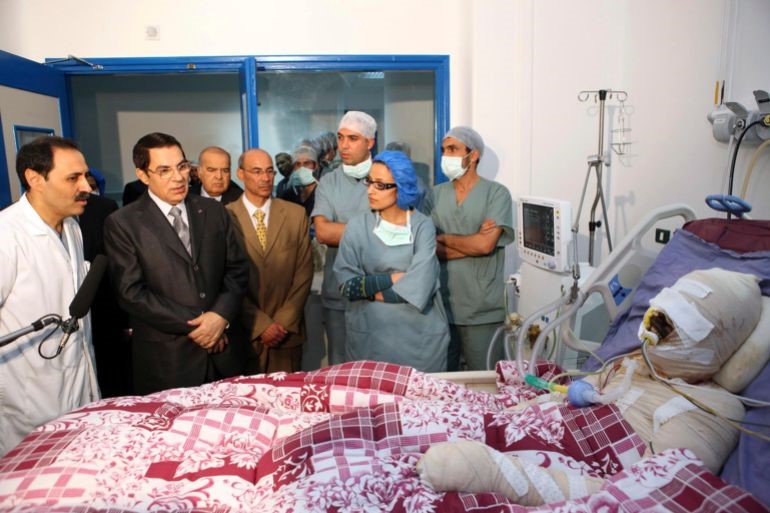
Figure 1. Official photograph of Mohamed Bouazizi in the hospital
Power finally did see Bouazizi. His body was transported to the hospital and protest marches and sit-ins started on the very public square where he immolated himself. In order to respond to public unrest, the President came to visit Bouazizi in December 2010 and for the first time an official image circulated in the form of an obscene mise-en-scène (Figure 1). In the photograph, the body is entirely covered in bandages and plugged into breathing machines. Every aspect is carefully crafted in this scene: the tone of purple of the bedsheet refers to the official colors of the Presidential party, whose leader is placed at the left-center contemplating the inert, immobile, and hidden body of Bouazizi, as the medical staff look at the leader looking at Bouazizi (Buckner and Khatib 2014). Face covered in bandages, the martyr doesn’t see anymore, doesn’t look anymore. He is sanctified, displayed like a mummy in a museum. Is it really his body? On one reading, humiliating him through a look of empathy and pity, power (in the form of the onlooking leader) has made Bouazizi immortal as a victim of its own repression. Of Bouazizi's body, only his teeth and mouth are visible. This important detail contradicts the central position of the president, who is placed in the middle of the medical staff as the principal actor of the scene, and arguably gives Bouazizi a form of agentivity. It is worth noting that some media outlets chose to crop the image in Figure 1 in order to zoom-in on Bouazizi’s body (Figure 2).27
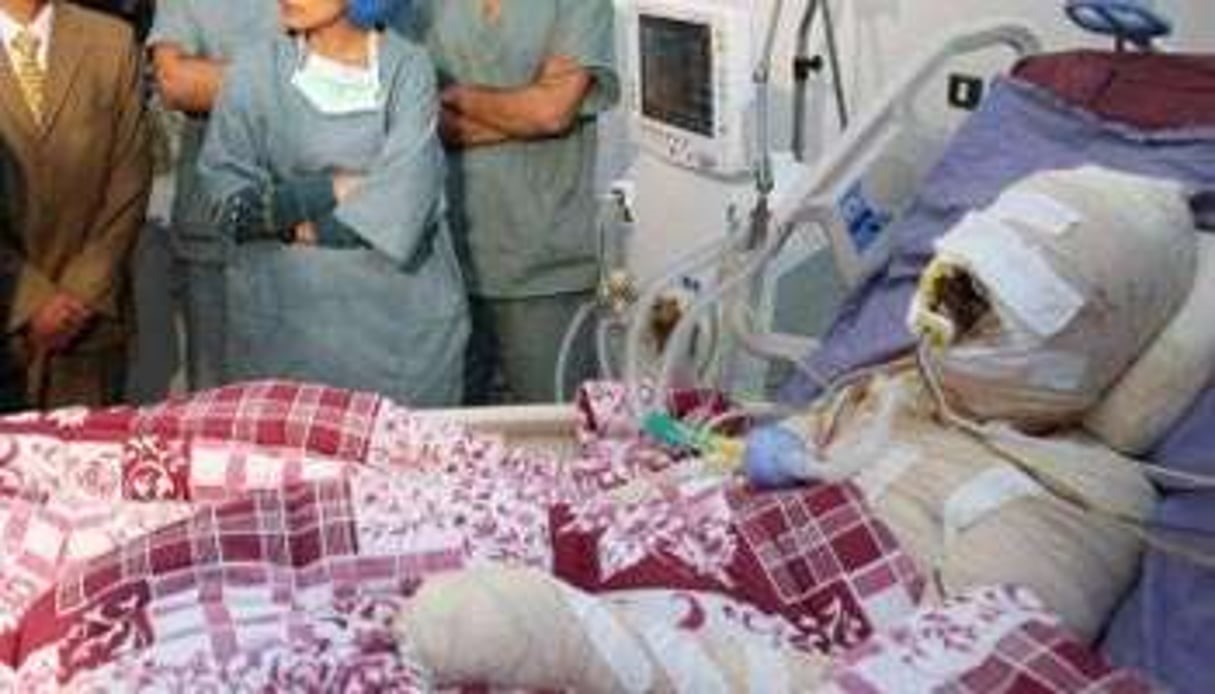
Figure 2. « Mohamed Bouazizi sur son lit d’hôpital, lors d’une visite du président Ben Ali ».
The copyright signals this version’s official status. Notice how this truncated image censors the looks of both the witness and of the martyr, an erasure or blind spot which attributes an ethical and emotional dimension to the image that, at the same time, undermines the semiotics of enunciative witnessing that would transform an act of bodily burning into a political act speaking against power. In other words, visual erasure correlates with enunciative erasure, where a particular kind of shifting-out signals an institutional recuperation of Bouazizi’s political act, one which shifts back in by reactualizing a discourse of state force and threat.
Bouazizi died a few days after the publication of this image. Yet despite discourses of appeasment and attempts to repress social activism, the revolutionary process had already started, and subsequently propagated to the whole region. The immolated body disappeared, leaving behind narratives, memories, words, emotions, and sensations. A few months after the act of immolation, academics began to ask, What happened? How can a revolution break out so quickly? They set out to describe and analyze post-revolutionary social activism and its political and social dynamics. Just like these academics, I returned to Tunis two weeks after January 14th, a video camera and notebook in hand. I, too, wanted to study political slogans of struggle and their performativity. But hadn’t I gotten there too late? Didn’t I miss what was going on in the backstage of the struggle (Guellouz 2024), that is, the infrapolitics of the revolution (Scott 1985)? Rather than an in vivo analysis of the living event, I was left with a post mortem, in vitro research carried out through traces, trying to grasp at what was left of a revolutionary act: narratives, memories, sensations, words engraved on walls, images, and videos. The immolated body had permanently disappeared and placed us in front of silence while giving us a long testimony of events to reconstitute through the exercise of listening, excavation, the deciphering of traces, so as to find the trace of some truth.
Immolation as Thanatopolitical Assemblage
As we have seen, as an extraordinary, peculiar, and unexpected act, self-immolation draws the limits between biopolitics and thanatopolitics. It breaks off from codification, institutional inscription, and the law and opens up possibilities for corporal reappropriation. In his paper “Des formes de vie émergentes: provocations éthiques et esthétiques. Le cas du beau geste,”28 Jacques Fontanille presents Greimas’s conceptualization of the beau geste (Greimas 1993)—or noble (literally, ‘beautiful’) gesture—as developed in Greimas’s last article, published posthumously. In this paper, Fontanille defines the notion of the beau geste, where beauty is not understood in its aesthetic meaning but as a discontinuity, an alteration, a singularity. The beau geste is:
an intersubjective spectacle where the observer is supposed to reconstruct the meaning of a scene, struck by an emotion. Here, the “beauty” of the gesture comes from the fact that it brings forth a singular and identifiable narrative program in the chain of social behaviors, one that can be reconstituted because it has a “good shape,” extracted from the matrix of ordinary conduct. (Fontanille 2015:77; my translation)
Singular, event-natured and spectacular, the beau geste breaks with a number of codified and predictable social practices and enables “the emergence of a form of life.” Likewise, Bouazizi’s immolation as a semiotic event created new intersubjective relationships to public space, to the body, and to time. The singularity of the physical action (geste) of immolation staged in public space broke from predictable, expected, and codified embodiments of urban space. Fontanille distinguishes the beau geste from the act of sacrifice since the latter reinforces social alterity and is “a renunciation (to a good, to life, etc.) without immediate return” (Fontanille 2015:67); it leaves a perennial mark. By contrast, the beau geste doesn’t expect any return and “calls neither for recognition, nor for remembrance,” it is thus “absolutely intransitive” (ibid.).
The gesture of immolation is both a self-sacrifice and a beau geste. It is a sacrifice since it constitutes a radical renunciation to life that marks collective memory and it emerges as a beau geste in its absolute intransitivity, its singularity and its evenemential nature. It brings forth a new “form of life”—the martyr—which has a plane of expression (the public staging of the individual in their singular act) and a plane of content (the political and ethical reach of the gesture).
It is important to be wary, however, of the use of the notion of beau geste, in order to avoid falling into the trap of the romanticization or the aestheticization of immolation, both of which are particularly improper in this specific context. Nevertheless, drawing on the notion of beau geste makes it possible to understand immolation as a semiotic event without annihilating its violent and political depth. To Fontanille, the beau geste “virtualizes an existing form of life and actualizes a new one [i.e., makes it available], without having the required properties to realize it [i.e., materially manifest it]” (Fontanille 2015:78, my translation and additions in parentheses). To be realized it has to be taken up by others beyond its singularity. Being individual, the realization of a beau geste is thus a form of entextualization, where the gesture is resemanticized in relation to ethical and political perspectives and slowly precipitated in a collective memory of struggle that brings about the form of life portended by the act.
Indeed, as the political theorist Banu Bargu stresses, in the case of self-immolation as a political act of sacrifice, such perspectives are not reducible to a process of simple identification with the subject of sacrifice. She writes:
It is misleading, in my opinion, to read the veneration for Bouazizi simply as a reminder of a popular desire for identification with heroes. Rather, it can be seen as the symptom of a different problem: the need to impart meaning to history, its movement and direction. The socially constructed meaning of Bouazizi’s death rather presents itself as the expression of the need to forge a link between individual agency and history, especially where this link is no longer obvious, given the absence of painstakingly organized, sustained, and forward-looking mass struggles that might otherwise provide the ideological narrative on historical change. (Bargu 2016:29)
This thanatopolitical reading, thus, highlights the multiplicity of the immolated subject/body’s address, as this body, through its gesture of counter-interpellation of biopolitics, also interpellates the memory of other popular struggles. It is this memory, this praxis, as we noted above, that enables the entextualization and enunciation of the self-immolated body. And this calling on other struggles as the context for Bouazizi’s act of self-immolation allowed it to be reactivated, and re-contextualized, among other subjects similarly positioned in forms of subordination.
I Am (Not) a Victim: The Impossible Truth
The first account I heard after Bouazizi’s self-immolation made reference to a scuffle with a policewoman who allegedly had slapped him in public. After the slap, experienced as public humiliation, Bouazizi had tried to file a complaint. When this failed, he then set himself on fire. The following analysis engages with Nakassis’s (2020b) analysis of a slap in the context of the South Indian (Tamil) motion picture industry.
The slap that Nakassis discusses is quite different in nature from what transpired that day in Sidi Bouzid. A scene in the Tamil fiction film Mankatha (Venkat Prabhu 2011), shows two characters in a scuffle, where one character—played by the young and relatively unknown actor Vaibhav Reddy—slaps another—played by Ajith Kumar, a Tamil movie star considered as a “mass hero.” This image of a mass hero slapped by a low-status actor caused anger among Ajith’s fans, hostility and even aggressive behavior towards the junior actor. Beyond a simple fictive event, the slap was what Nakassis calls an “image act.” In other words, beyond its political and performative dimension, it held an important affective charge. The image performs, entails effects, and thus calls for including the consideration of what Nakassis (2020b:82) calls “the sociological realism of the image-act,” the way in which the fact of the slap—as a relation between socially positioned subjects: a low-status actor in relation to a powerful film star (before an audience of the latter’s fans)—constitutes the image (of the slap) as a particular kind of performative act, one which turns on the intense presence of the image-act of the slap (its conspicuously visibility and undeniability) and thus of the actors entangled by it.
In Sidi Bouzid in 2010, by contrast, some witnesses maintained that they saw the policewoman’s slap, while others denied this and even denounced it as a false account. The policewoman herself also denied the slap, and explained, during a television report: “He jumped on me, caught my clothes and insulted me.”29 Who really saw the slap? Was Bouazizi really slapped? The slap became a key situation in the process of interaction between the immolated hero and witnesses.30 Whether it was real or invented, the slap became a non-visual image located beyond the criteria of veridiction and effectuated anger, protests, and social activism. As one of the martyr’s cousins asserted (in the same report where the policewoman denied that a slap occurred), what was important at the time was not to know what was true or false, but to federate people around a feeling of anger and to amplify that feeling. What was relevant, in other words, was a particular perspective on the slap as one injustice within a longer history of infrapolitical struggles, that is, to re-actualize the memory of the daily trauma of disadvantaged youth under the dictatorship. Whether or not Bouazizi was actually slapped, the quotidian reality of being assaulted by delegates of the state indexically invoked a memory whose truth far surpassed the truth claim in the instance (i.e., of the slap). This non-visual dimension of this image of the slap actualized a memory stock shared by victims of police repression. It thus became necessary to adhere to an (absent) image of the slap to bring to life the image of a martyr-hero who refused humiliation.
In Nakassis’s example, the highly visible image was denigrated and experienced by fans as a performative and sociological reality, a reality the actor Vaibhav attempted to deny, claiming in the film’s credits and in television appearances “I didn’t really slap him!”, that it was “just” a fiction. In Bouazizi’s case, the power of the slap is defined by its absence, by the negation (there is no visual image) while affirming a heroic presence in the knowledge that slaps like this happen all the time (even if ignored and erased in public media). Belief in the truth of the slap was thus instilled through the filter of a certain ideological perspective and historical memory. Controversial or denied, it encompassed fields of indexicality and traced a memory of power’s repressive logics.
In the example of the Tamil movie hero being slapped or in the case of Bouazizi, we observe dynamic movements between what Benveniste called discours (face-to-face, fully shifted-in discourse) and histoire (shifted-out narrative, myth, history). Discours shifts out to histoire (“I didn’t really slap him!”) and histoire that shifts into discourse (no matter the truth, the myth of the hero is anchored in a memory that stokes a feeling for us, here, now). These moves of de- and re-contextualization that traverse different “modes of existence” (Fontanille 1999) are articulated to processes of perspective that are conventionalized, or enregistered (Agha 2007). In particular, in this political field of subaltern resistance and state power, they manifest in two “registers” or “ways of seeing” (Nakassis 2023): the first is popular and revolutionary, the second institutional/official and counter-revolutionary. The emergence of a revolutionary perspective—where a real or fictional slap has to be recontextualized into an activist and political narrative—now competes with an official perspective, one which constitutes a reverse entextualization, a process that appropriates the act of self-immolation so as to reconstitute its signification as anything but revolutionary (e.g., as the act of the mentally ill, as a suicide, as an individual grievance, etc.). In doing so, this reverse entextualization aims to undo and disqualify any popular desire for emancipation by dis-embedding this act from the intertextual traces of memories of subaltern resistance.
A slap leaves indexical traces: the trace of a hand, a bruise or red mark on the face. These are constituted as testimony and sites for truth. In his work with asylum seekers, Fassin explains how the body is the space where power is exerted (torture, famine, sanctions), but that it is also on these marks/traces/imprints of the body that the survival of asylum seekers depends:
The body is not only the site where power is exerted or resisted, it is also the site where truth is sought or denied. … Instead of analyzing the origin of violence, as is usual, either explicitly or implicitly, I suggest examining its effects. Or better said: its trace. If power leaves traces on bodies, what sort of truth does the state—and more generally society—extract from them? I describe power and truth as mirror images since they are intimately but symmetrically related around the body. (Fassin 2011:284)
The truth is that of the traces of state violence that affects the bodies of the zwewla (subaltern), by erasing them, humiliating them, disgracing them, and negating their right for a life of dignity. The trace of institutional and political violence on these bodies is thus constituted as a site for truth. In Bouazizi’s case, the trace is lost, it is reduced to ashes, but reinvigorated through narrative, through remembering, through protest. The conflict around truth value then equates to the insistence on a particular perspective in the tussle between entextualization and reverse entextualization, between a thanatopolitics of emancipation or one that, in the name of combatting public disorder, exacts further violence. The subaltern body bears within it the truth of a history of violence, whether it has been marked or not, whether it has been materially assaulted or not. And it is this that made the question of the slap so critical for the enunciation, and enunciative praxis, of Bouazizi’s self-immolation.
When in the Tamil film Mankatha, the film image represents and brings to light the trespassing of the status of and disrespect for the hero, it also makes it possible to fix in time this gesture that, from then on, can be seen again beyond the control of fans or of actors. In this case, the image brings about the risk of unmaking (and thus remaking) the hero. Bouazizi was not a hero at the time of the slap; he held a disadvantaged and subordinate status. It is rather the absence of an image which created the hero. He became present as a martyr through his absence. The absent image of Bouazizi is atemporal, achronic, and is thus constituted as a mythology. After his death several photographic portraits of him smiling circulated on social networks and were displayed in public space, thus affirming the only possibility for representing the martyr through his qualities as human and as living (Buckner and Khatib 2014; Edwards 2017). The impossible image of immolation or of the becoming a martyr created the image of a revolutionary hero.
Jacques Fontanille (2011) defines two regimes of beliefs linked to truthfulness: obviousness and trust. In the case of the Tamil cinema hero being slapped, spectators were on the side of the regime of obviousness: “I have seen it, therefore it’s true.” In Bouazizi’s case, it is trust in collective memory, in the common destiny of the subaltern, the common of the zwewla, which holds as proof, despite the absence of a sight. By distinguishing these two regimes of belief, Fontanille gives bodily experience its sensitive and ethical place within the enunciative régime of narrative/history. He writes:
The distinction between these two regimes of belief draws on the difference between, on the one hand, an intersubjective relation (the trust of S1 to S2) and, on the other, the relationship of object (the obviousness of O for S1). Under the fiat regime of obviousness, the word of the other does not instill trust and does not lead to any contractual engagement; as a result, the historian must make sure that for their reader too, what they are talking about shows a character of obviousness, and corresponds to a corporal experience: how can one do this, since the reader is not meant to have participated in the events? (Fontanille 2011:143, my translation)
What should the fieldworker believe, then, when they arrive in the field after the fact? On what regime of belief should they rely? What type of perspective and what mode—of entextualization or of reverse entextualization—should they take? It is not possible to answer these methodological questions in a general way, but they call for a reflection about the processes of subjectivation which shoot through any kind of academic production understood as enunciative praxis. In the interviews I conducted with artists and choreographers from 2011 onwards (4 months after the immolation), there was almost no mention of Bouazizi. I had myself forgotten to ask the artists about the place of the immolated body in their new, post-revolution creations. The fire-body wasn’t really present in the joyful and effervescent post-revolutionary context. Nevertheless, several artistic works continued to engage with the memory of the martyr, to entextualize thanatopolitics through images of fiery bodies.
The Fire-Body: The Impossible Trace
In 2022, Youssef El Shabbi directed his first feature film, Ashkal. The film is a thriller that mixes the fantastical, fiction, and documentary. I will not venture into filmic or aesthetic analysis. Rather, my interest here is to understand how processes of artistic entextualization participate in giving the act of immolation a kind of permanence as a memorial trace.
The film is about the memory of immolation. A building custodian is found immolated on his work premises in one of Tunis’s rich neighborhoods. An investigation then begins. The two policemen who investigate are puzzled as to whether it is simple suicide or a political immolation. The first inquiries rule out the possibility of suicide and the two policemen then discuss the possibility of political immolation: “why would he self-immolate alone, far from sight, far from public space, from the city center, and from any administrative building? Who is behind all this?” The two policemen are not willing to leave the political lead alone, even though their bosses urge them to rule the immolations a simple suicide.
While detailing the steps in the investigation, the film creates a parallel between their inquiry and the work of a Truth and Dignity Commission for victims of the regime.31 It confronts two semiotic objects: the silence of immolation and the Commission’s words of truth. One of the recurrent motifs of the film is the image of burning bodily figures (Ashkal, أشكال) moving forward, an image that also closes the film (Figure 3). The end of the film shows naked characters attracted, hypnotized, and magnetized by the fire, running towards it. A policewoman watches the collective immolation as a witness. This is an infinite immolation that cannot end, that cannot be erased, and which has now become contagious.
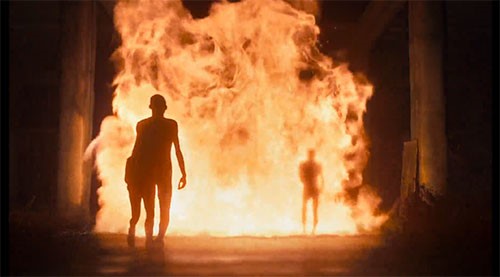
Figure 3. A screen shot of the final frame of Ashkal (Youssef El Shabbi, 2022)
Here, immolation is presented as an intimate moment, a sacred ritual. The fire-body becomes the central character of the film and is voiced through effects, screams, destruction, fear, and excitation. The film entextualizes immolation as an almost-fantasy piece where fire destroys all proof (truth about torture) and generates the possibility of emancipation (revolution).
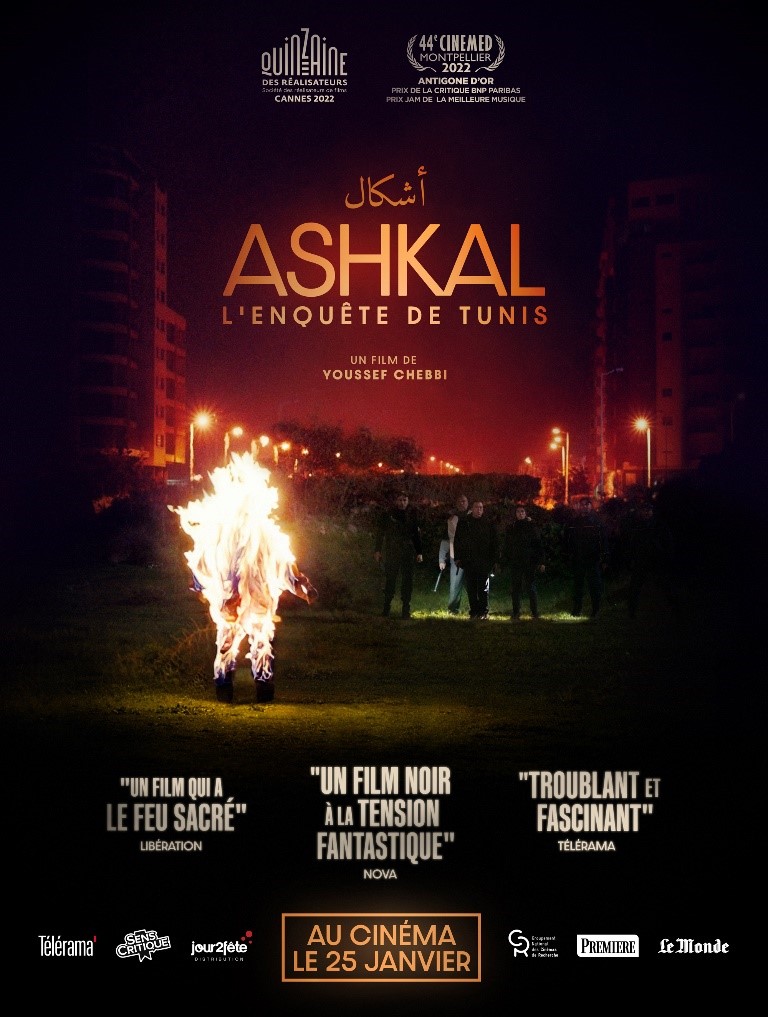
Figure 4. French film poster for Ashkal (Youssef El Shabbi, 2022)
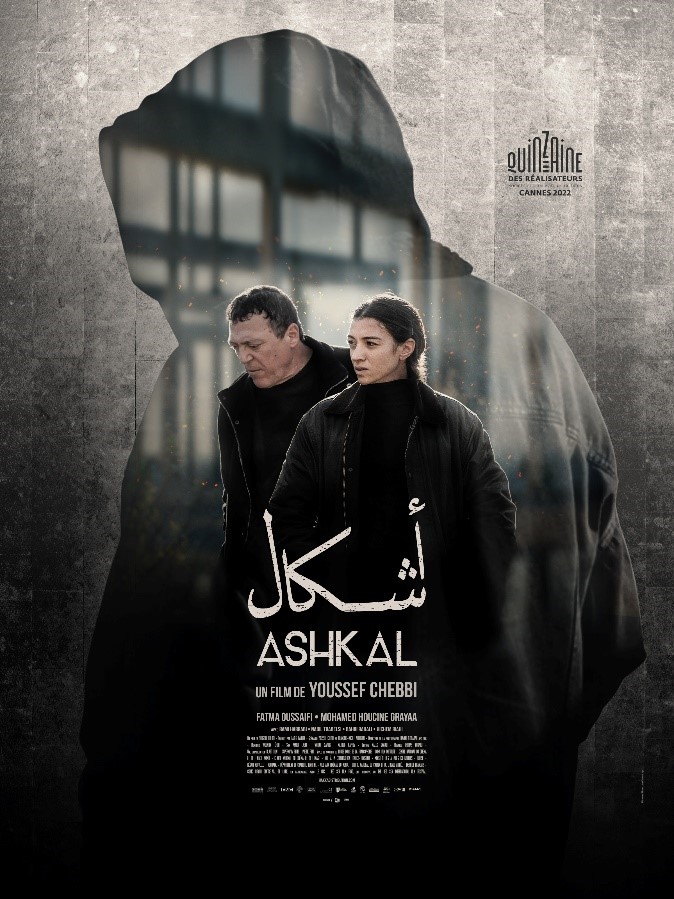
Figure 5. Tunisian film poster for Ashkal (Youssef El Shabbi, 2022)
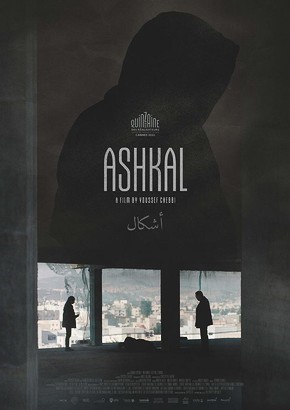
Figure 6. International film poster for Ashkal (Youssef El Shabbi, 2022)
The first film poster was censored by movie theaters in France (Figure 4). The sight of the immolating body was not possible/allowed. It couldn’t be seen/displayed. The production company opted not to replace the poster but to use billboards outside the mainstream advertising circuit. The film’s Tunisian distributor chose the second poster (Figure 5), featuring the two police officers and the shadow of the body of the man who was immolated. The third poster chosen for festivals and international competitions hides the fire-body (Figure 6). While the immolated body is hidden by fire in the first poster, it is implied in the second and third poster, where an inert black mass can be seen, displayed to the gaze of the two characters. In these three images, the immolated body is represented through negation. As a form (ashkal) hidden by fire or pointed to by another figure (an inert black mass), it is signified by absence and negation. The immolated body is mixed with flames and forms an assemblage with them, a fire-body, an entity outside the human.
Why did the Tunisian distributor (Figure 5) choose a poster that completely invisibilizes the immolation and where the martyr's body is represented as a shadow overhanging the two policemen, as a metaphor for their conscience and memory? In this poster, the two policemen are encompassed by the bodily figure of the martyr, who is present yet represented by his absence. In the third poster (Figure 6), the inertia of the body following the immolation hides the fire-body and presupposes it. The process of visual negation makes it possible for it to fulfil the obligations for respectability as defined by film industry institutions. In this sense, I agree with Dondero’s take on marks of negation in the image and its relations with modes of existence: “Through the analysis of an image, one must also account for what is not present at its surface, but only presupposed or, on the contrary, accounting for something that is inserted into figurative homogeneity by being unexpected” (Dondero 2011:3).
In 2006, Sami Tlili directed a short film Sans plomb (Unleaded) in collaboration with screenwriter Shafiq Osmane.32 It tells the story of a young unemployed man who decides to buy gasoline before going in front of the factory who refuses to employ him to self-immolate. The factory workers stop him from realizing his project (Figure 7). The next scene shows the character in work attire in the factory. He has been recruited, thanks to the threat of self-immolation. In the final scene, the viewer sees the image of two dozen young men waiting for their turn in a long line in front of a gas station with their can in hand to buy fuel.
Filmed four years before Bouazizi’s immolation, the short film (a docudrama) was prescient. The director’s vision was realized four years later with Abdessalem Trimeche’s immolation in Monastir, and then Bouazizi’s in Sidi Bouzid. In a conversation I had with the director, he explained that the idea of the film came from an utterance in Arabic:
With the screenwriter Shafiq Osmane, we were in a café in Sousse, it was in 2006, a difficult year, where everyone felt stifled (khanqa, خنقة). Youth were suffocating due to the repression and weren’t allowed to assemble in public squares. That day in the café, we heard a young man saying: “In this country either you burn (tahraq, تحرق) or you get burnt (titahraq تتحرق).”
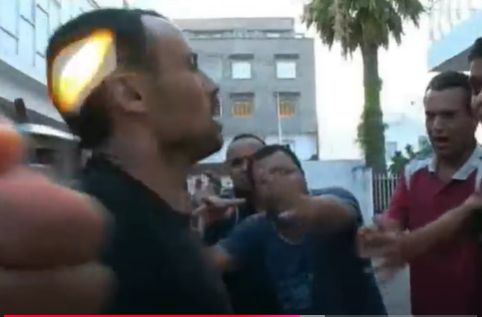
Figure 7. Factory workers stopping young man from self-immolating, Sans plomb (Sami Tlili, 2006)
“To burn” is used here in a colloquial register and it also means to immigrate illegally: “to burn borders clandestinely, to burn one’s papers” (Souiah 2018). The short film met with great success when it was first screened at the opening of the Kelibia amateur film festival. The director told me that after the screening, the audience, strongly moved by the film, started chanting political slogans and songs.
This screening must be situated within the authoritarian context of 2006, when the police state prohibited any dissenting voice and where imprisonment and torture of dissidents was practiced in total impunity. In this context, qualified by Tunisians as khanqa, (خنقة, stifling), the film’s “sociological realism”—to use Nakassis’s (2020b) phrase—was received as a space for breathing which entextualized the common despair of a generation of unstable and insecure youth. The film voiced their common destiny: humiliation, anguish, immolation.
By contrast, the press at the time reacted in a hostile manner, accusing Sami Tlili of trying to “stir trouble and to encourage the youth to violence.” The actualized, that is spectrally present, image-act of possible immolation was thus perceived as a threat, in that it entextualized the possibilities for emancipation and the truth about the social conditions of makhnoukin (مخنوقين, being choked). This anticipatory entextualization was projected into the future and thus realized, in the present of screening, as the audience’s collective enunciation of political slogans. This image-act, actualized in the film, was eventually realized in reality through the immolation of Bouazizi four years later. Sami Tlili is convinced that Bouazizi hadn’t seen his film, and the question is not whether the film inspired youth who self-immolated after its release but rather to understand the performative dimensions of these iterated, intertextually entangled acts of entextualization (histories of immolation and of representing immolation, histories of repression and acts of emancipation), setting the scene for a praxis of rhizomatic, anachronic, and mobile memory.
Conclusion
By articulating a dialogue between two theoretical traditions, Paris School semiotics and linguistic anthropology, this article has presented an analysis of the enunciative praxis of the fire-body, a praxis comprising the entextualization of an emancipatory thanatopolitics and its reverse, a counter-revolutionary, institutional entextualization. The analysis of the possibilities for the realization of the enunciation of a martyr and of the immolating body demands a rethinking of the performativity of absence and negation in enunciation, its recorded image, and its (artistic) traces. Silent, the immolated body indexes a relation to existence, to public space, to histories of domination, and to instances of power. Defined by its absence, the immolated body disappears while it keeps being voiced by witnesses attributing it with, and linking it to, various indexical relations. These processes of (reverse) entextualization can only be grasped, however, if we accept to broaden the definition of enunciation and of its relations to subjectivity.
To capture the political dynamics discussed in this article calls for a critical distance from traditional conceptualizations of the formal apparatus of enunciation, as formulated by Benveniste: “Before the enunciation, the language is only a possibility of language. After enunciation, the language is effectuated in an instance of discourse that emanates from the speaker, the sound form which reaches the listener and provokes another enunciation in return. As an individual realisation, the enunciation can be defined in relation to language as a process of appropriation” (Benveniste 2014[1970]:142–43). In order to think of enunciation beyond the code, beyond language and communication (Masquelier 2015), but as a passing, an intensity, and as ensembles of memorial traces, one must consider the sensitive and somatic charge at work in any enunciation. The analysis of the fire-body has met several hurdles in raising the following questions: how to enunciate oneself as a martyr? How to enunciate one’s own death? How to predicate death in an impossible image? How to exist, be present as a martyr immolated by the necessity of absence of the image and the trace? What truth is entextualized, and what enregistered perspective is imposed to shape the indexical signification of such texts?
The analysis of Bouazizi’s immolation as a socio-discursive and performative event makes it possible to build theoretical bridges between enunciative praxis and entextualization, and to address thanatopolitics with the modes of existence discussed by continental semioticians: it is because immolation is the actualization and realization—the making available and the instantiating—of a common (virtual) experience of infrapolitics that it is entextualized—that is, potentialized and virtualized (made iterable, sedimented)—as a political gesture by subalterns. There is a consubstantial link between enunciation in the instance of semiosis and the experience of the common stock of meaningful forms. Any kind of presence for Bouazizi (the martyr, the fire-body, the becoming hero, the young man from the neighborhood, the dead, the immolated) manifests according to different perspectives, effects, intensities, and experiences, as the infinite movement of processes of emancipation (Rancière 1987; Boitel and Danos 2024).
Acknowledgments. I express my gratitude to Constantine V. Nakassis and Tatsuma Padoan for their valuable proofreading and editing efforts, to two anonymous reviewers of the paper for their engaged feedback, as well as to Cécile Canut, Félix Danos, and Arafat Saadallah for their proofreading and comments.
Endnotes
1. Sidi Bouzid is a poor city marginalized by Tunisian authorities.↩
2. The concept of enunciative praxis offers a critique of a restrictive definition of enunciation by analyzing the movement, the memory, and the circulation of texts that can be realized and manifested according to various possibilities and uses. See below for more discussion.↩
3. The notion of thanatopolitcs is close to that of “necropolitics” proposed by Achille Mbembe: “As a political category, populations are then disaggregated into rebels, child soldiers, victims, or refugees, or civilians who are incapacitated through mutilation or simply massacred on the model of ancient sacrifices, while, after enduring a horrific exodus, the “survivors” get confined in camps and zones of exception.” (Mbembe 2006:52). Although both notions are proximate, Mbembe uses necropolitics to articulate state power and colonial violence whereas here I am concerned with thanatopolitics as a more general category that also includes forms of subaltern resistance.↩
4. In order to go beyond the dichotomies between langue and parole and competence and performance, Fontanille (1999) follows Greimas in suggesting the need to think about the process that links different “modes of existence”: virtualized, actualized, realized, potentialized. The virtualized mode is that of the possibilities offered by the system, which are actualized in an act of language in order to realize a specific enunciation. Potentialization is the inverse movement that engages with discursive memory and in which any realization has an effect on the virtualized mode. From an epistemological point of view, these modes of existence are in a consubstantial link with enunciative modalities (being, doing, willing, having to, believing, etc.) that give utterances a specific key/coloration (logical, deontic, effective, etc.).↩
5. Nakassis (2020a) notes that deictics are not always reflexive. There are types of calibration such as the reportive and the nomic where there is non-coincidence between the “I” and the instance of discourse.↩
6. In their study dedicated to the construction of the figure of the martyr in the Arab uprisings, Buckner and Khatib analyze the memory of the martyrdom in the Arab region: “The Arab Spring witnessed a process of 'travel' of the martyr symbol across borders in the Arab world. The evolution of the martyr symbol over time through its multiple uses (for example, through the changing story of Khaled Said) helped to create a collective identity among Arab citizens as activists” (Buckner and Khatib 2014:381).↩
7. The term infrapolitics is taken from James C. Scott’s (1985, 1990) theory of subaltern arts of resistance, and refers to all instances of tacit and ordinary resistance.↩
8. We might understand this, following Urban (1989) and Deleuze and Guattari (1980), through the semiotics of represented speech, where the “I” of direct discourse (Urban 1989) is merely a form of entextualization of free indirect speech. As Deleuze and Guattari explain, “My direct speech is still the indirect speech that traverses me from part to part and which comes from other worlds and other planets” (1980:101). See Padoan 2025 in this issue for a more extended discussion of Deleuze and Guattari’s take on enunciation.↩
9. In Richard Howard’s 1988 English translation of Barthes’ work, the distinction between énoncé and énonciation is rendered as “statement [énoncé]” versus “utterance of that statement [énonciation]” (Barthes 1988:287, emphasis in original).↩
10. Jacqueline Hamrit (2006) also offers an analysis of this quote in her article “‘Je suis mort’, dit M. Valdemar (E. A. Poe).”↩
11. To Edwards (2017), al shaheed al hay, he who films his farewell before carrying out his sacrificial act or who survives the act following a mishap (the bomb partially explodes or he is stopped just before the act), becomes a key source for the anthropologist willing to grasp and analyze the motivations for this act.↩
12. In this book, the author offers a review of anthropological literature on sacrifice. Reminding the reader of the importance of Mauss and Hubert’s works, he refuses to limit the study of sacrifice to that of ritual and prefers to consider it as a machine, that is, for its processual nature and from the point of view of changes in semiotic status: “They never could have imagined that [sacrificial] rites could be modified and extended as they have been” (Edwards 2017:214).↩
13. Khalili (2007) highlights the broadening of the semantic universe related to the shaheed: whether death occurs in battle, through a stray bullet, or due to a lack of medicine, whether it involves a child, a woman, a man, a civilian, or a fighter, any Palestinian who dies in wartime conditions can, according to her analysis, hold the status of martyr.↩
14. Unlike the cited study, my fieldwork in Tunisia only began after the revolutionary events and did not focus on self-immolation but on activist discourses and their links with post-revolutionary artistic productions. I arrived in the field long after Bouazizi’s death and so thus conducted research on his traces, oblivion, and the rebirth in the discourses and national history of the revolution. I did so because without this infrapolitical history it would not have been possible to understand the revolutionary processes. Every year, on December 17th, the country commemorates the death of the “martyr of the revolution.”↩
15. Internet users ironically commented on this media silence in their tweets, like in this example: “Russia today: riots in Sidibouzid.”↩
16. The online opposition newspaper Nawaat published articles from the very first days following the self-immolation to report the facts: https://nawaat.org/2010/12/21/observateurs-france24-violences-a-sidi-bouzid-apres-une-tentative-dimmolation/ ↩
17. One of the first tweets containing #sidibouzid that appeared on December 18th mentioned the events in these terms: “Because of his livelihood, a young man attempts to commit suicide.”↩
18. In this article published in the alternative online journal Nawaat, Bouazizi’s death is linked to social and economic issues in Sidibouzid: https://nawaat.org/2010/12/31/les-raisins-de-la-colere-tunisienne/ ↩
19. https://nawaat.org/2010/12/31/les-raisins-de-la-colere-tunisienne/↩
20. In the presentation sheet published on the Arabic Wikipedia page dedicated to Bouazizi, “self-sacrifice” is mentioned under the section "reason for death.”↩
21. The Mufti de Tunisie called for not praying over the immolated: https://www.youm7.com/story/2011/1/10/%D9%85%D9%81%D8%AA%D9%89↩
22. Sheikh Yusuf Al Qardhawi defended Bouazizi in Al Jazira: https://www.jeuneafrique.com/192925/societe/r-volution-tunisienne-s-immoler-pour-le-dire/↩
23. The Tunisian revolution was called by Tunisians “the revolution of dignity” and the issue of dignity (karama) was at the center of all struggles and social movements that preceded Bouazizi's death. The slogan “work, freedom, dignity, citizenship” appeared in social movements since the 1970s. The Tunisian national anthem, which also mentions the issue of dignity in one of its verses, was chanted during the Tunisian uprising.↩
24. Zwewla is the Tunisian term to qualify workers, builders, day-laborers, and the powerless.↩
25. On this topic see Arafat Sadallah’s conference on the Arabic being (in French): https://www.youtube.com/watch?v=MlEmbF_YVKE&list=PLKfAkiSKS5UEsFzp6pfh7DcLNjWHwHJzP&ab_channel=d%C3%A9constructiviste Without developing a semantic analysis of these terms, it is interesting to note the divergences among the exegetes of the Quranic text regarding their interpretation. Jihène Ameur (2015) presents a critique of the interpretations of martyrdom as a testimony and shows the divergence in interpretation between Sunni and Shia Muslims. However, there is a consensus on the usage of the term in the sense of witness and not martyr. Indeed, among the prophets are shuhada' (plural of shaheed) because they testify for their existence (Ameur 2015). ↩
26. I thank Tatsuma Padoan for pointing out to me that on June 11, 1963 in Saigon, the Buddhist monk Thích Quảng Đức self-immolated by fire in public as a sign of contestation against the repression of Buddhists. The act was captured by a photograph by journalist Malcolm Browne. Having met great success and received several prizes, the picture marked the history of Buddhist struggles and participated in making them known.↩
27. In another article published on January 2, 2010, the image is cropped with a closer zoom on Bouazizi's face. An anonymous author titled the article: “What Bouazizi Might Have Said to the President.” The article is written in French in the form of a poem where Bouazizi is voiced by imagining a speech addressed to the president during his visit: “Mr. President, I couldn't speak to you, I wanted to tell you: Today, it's the people who are getting fired up, Mr. President, it seems you are without a soul, You have not understood the people's desire or do you still want more demands? I tell you, with all due respect, without insults or blame, Leave, please, take all your things and especially your lady.” To read the article: https://nawaat.org/2011/01/02/sidi-bouzid-ce-que-mohamed-bouazizi-aurait-pu-dit-au-president/↩
28. The original French title can be translated as: “On emerging forms of life: ethical and esthetic provocations. The case of the beau geste.” Beau geste refers both to a beautiful, noble, gesture, and to a good deed in French.↩
29. In this video, the policewoman explains that she has never slapped Bouazizi, and she speaks of herself as a victim: https://information.tv5monde.com/afrique/tunisie-mythe-et-realite-sur-limmolation-de-mohamed-bouazizi-lememo-10237↩
30. In this reportage, the mother of Bouazizi speaks about the slap of her son just before his immolation: https://www.youtube.com/watch?v=47d6fyaOjRM&ab_channel=AlJazeeraEnglish↩
31. The Truth and Dignity Commission was created in 2013 and its main objective was to unveil the crimes of the regime during the dictatorship. ↩
32. https://www.youtube.com/watch?v=Akhb8q4MeCw&ab_channel=cheikhettrab↩
References
Ameur Jihène, 2015, « صورة الحسين بن علي في المتخيل الإسلامي : دراسة مقارنية بين الفكر السني والفكر الشيعي » (The image of Hussin Ibn Ali in the Islamic imaginary, my translation of the Arabic title). Tunis: Atlas Editions.
Asad, Talal. 2007. On Suicide Bombing. New York: Cambridge University Press.
Avon Dominique. 2011. Suicide, Islam and Politics. On the recent events in Tunisia, Books and Ideas, 6 May 2011. https://laviedesidees.fr/Suicide-Islam-and-Politics
Bakhtin, Mikhail. 1982. The Dialogic Imagination. Austin: University of Texas Press.
Bargu, Banu. 2016. Why Did Bouazizi Burn Himself? The Politics of Fate and Fatal Politics.”!Constellations 23:27–36.
Barthes, Roland. 1985. L’aventure sémiologique. Paris: Seuil
Barthes, Roland. 1988. The Semiotic Challenge, translated by Richard Howard. Oxford: Basil Blackwell.
Bauman, Richard and Charles Briggs. 1990. Poetics and Performance as Critical Perspectives on Language and Social Life. Annual Review of Anthropology 19:59–88.
Ben Yakoub, Joaquim. 2018. Performing Self-Sacrifice, Despite Everything or Despite Oneself? Embodying a Necropolitical Space of Appearance in the Tunisian Revolution. In Marina Gržinic and Aneta Stojnić, eds. Shifting Corporealities in Contemporary Performance: Danger, Im/mobility and Politics, pp. 251–274. New York: Palgrave MacMillan.
Benveniste, Èmile. 1970. L'appareil formel de l'énonciation. Langages 5(17):12–18.
Benveniste, Èmile. 2014. The Formal Apparatus of Enunciation. In J. Angermuller, D. Maingueneau and R. Wodak, eds. The Discourse Studies Reader, pp. 140–45. Amsterdam: John Benjamins.
Boitel, Quentin and Félix Danos. 2024. Silverstein et Rancière : anthropologie sémiotique et politique. Cygne noir 12:51–76. https://doi.org/10.7202/1112621ar
Buckner, Elizabeth, and Lina Khatib. 2014. The Martyrs’ Revolutions: The Role of Martyrs in the Arab Spring. British Journal of Middle Eastern Studies 41(4):368–84.
Burhani, Ahmad Najib. 2017, Fatwās on Mohamed Bouazizi’s Self-Immolation: Religious Authority, Media, and Secularization. In Timothy P. Daniels, ed. Sharia Dynamics: Contemporary Anthropology of Religion, pp. 63–89. Cham: Palgrave Macmillan.
Camau, Michel and Vincent Geisser. 2003. Le syndrome autoritaire Politique en Tunisie de Bourguiba à Ben Ali. https://doi.org/10.3917/scpo.geiss.2003.01
Dakhlia, Jocelyne. 2011. Tunisie: Un pays sans bruit. Paris: Actes sud.
Deleuze, Gilles and Felix Guattari. 1980. Milles plateaux. Paris: Minuit.
Derrida, Jacques. 1973[1967]. Speech and Phenomena. Evanston, IL: Northwestern University Press.
Derrida, Jacques. 2019. La vie la mort. Séminaire (1975–1976). Paris: Seuil.
Derrida, Jacques. 2020. Life Death, edited by Pascale-Anne Brault and Peggy Kamuf; translated by Pascale-Anne Brault and Michael Naas. Chicago: University of Chicago Press.
Dondero, Maria Giulia. 2011. Énonciation visuelle et négation en image: des arts aux sciences. Actes Sémiotiques 114. https://doi.org/10.25965/as.2578
Dondero, Maria Giulia. 2017. Énonciation et modes d’existence. Actes Sémiotiques 120. https://doi.org/10.25965/as.5871
Ducrot, Oswald. 1984. Le dire et le dit. Paris: Minuit.
Edwards, David B. 2017. Caravan of Martyrs: Sacrifice and Suicide Bombing in Afghanistan. Oakland: University of California Press.
Fassin, Didier. 2011. The Trace: Violence, Truth, and the politics of the Body. Social Research: An International Quarterly 78(2):281–98.
Fontanille, Jacques. 1999. Sémiotique du discours. Limoges: PULM.
Fontanille, Jacques. 2006. The Semiotics of Discourse. New York: Peter Lang.
Fontanille, Jacques. 2011. L’empreinte et la mémoire figurative. Corps et sens, pp. 103–18. Presses Universitaires de France.
Fontanille, Jacques. 2015. Des formes de vie émergentes : provocations éthiques et esthétiques. In Formes de vie, pp. 61–80. Liège: Presses universitaires de Liège.
Foucault, Michel. 1994. La naissance de la médecine sociale. Dits et écrits, tome III. Paris: Gallimard.
Goffman, Erving. 1981. Forms of Talk. Philadelphia: University of Pennsylvania Press
Greimas, A. J. 1993. Le beau geste. Recherche Sémiotique/Semiotic Inquiry 13(1–2):21–35.
Guellouz, Mariem. 2022. Ideology and Emancipation through the Prism of Performativity: Immolation and Mottos of Struggle as Moments of Popular Counter-discourse. In S. and M. Hall, eds. Mapping Ideology in Discourse Studies, pp. 67-87. Berlin: De Gruyter.
Guellouz, Mariem. 2024. Infrapolitique. Texte caché. Coulisses. De l’apport de James Scott à une approche sociolangagière des résistances. Langage et société 183(3):43–64.
Hamrit, Jacqueline. 2024. « Je suis mort », dit M. Valdemar (E. A. Poe). In G. Michele, A. Hernández, E. Jabre, A. Kuchtová, A. Hidalgo, and J. Valls Boix, eds. Repenser la logique du vivant après Jacques Derrida Plus d’une discipline : actualité de La vie la mort, pp. 237–47. Paris : Hermann.
Jayyusi, May. 2004. Subjectivity and Public Witness: An Analysis of Islamic Militance in Palestine. Unpublished paper for the SSRC Beirut Conference on the Public Sphere in the Middle East, October 2004.
Keane, Webb. 1997. From Fetishism to Sincerity: On Agency, the Speaking Subject, and Their Historicity in the Context of Religious Conversion. Comparative Studies in Society and History 39(4):674–93.
Khalili Laleh. 2007. Heroes and Martyrs of Palestine: The Politics of National Commemoration. New York: Cambridge University Press.
Latour, Bruno. 1998. Petite philosophie de l’énonciation. http://www.bruno-latour.fr/sites/default/files/75-FABBRI-FR.pdf
Masquelier, Bertrand. 2015. Les mots d’autrui, leur mise en texte, leurs publics. Cahiers de littérature orale, pp. 77–78. https://doi.org/10.4000/clo.2393
Mbembe, Achille. 2006. Nécropolitique. Raisons politiques 21(1):29–60.
Murray, Stuart. 2006. Thanatopolitics: On the Use of Death for Mobilizing Political Life. Polygraph 18:191–215.
Nakassis, Constantine V. 2020a. Deixis and the Linguistic Anthropology of Cinema. Semiotic Review 9, special issue on “Images” (Meghanne Barker and C. Nakassis, eds.). https://doi.org/10.71743/2akse703
Nakassis, Constantine V. 2020b. The Hero's Mass and the Ontological Politics of the Image. Journal of Cinema and Media Studies 60(1):70–91.
Nakassis, Constantine V. 2023. Seeing, Being-Seen, and the Semiotics of Perspective. Special issue, “Towards an Anthropology Theory of Vision,” edited by Greg Thompson and Zach Chase. Ethos. http://doi.org/10.1111/etho.12386
Padoan, Tatsuma. 2025. Ritual as Enunciative Praxis: Some Reflections from Katsuragi, Japan. Semiotic Review, 12. https://doi.org/10.71743/3sm36r97.
Parret, Herman. 2018. Une sémiotique des traces Trois leçons sur la mémoire et l’oubli Limoges: Lambert-Lucas.
Poe, Edgar Allan. 2018. The Facts in the Case of M. Valdemar. In The Tell-Tale Heart and Other Stories. Seattle, WA: Amazon Classics.
Rancière, Jacques. 1987. Le maître ignorant. Cinq leçons sur l’émancipation intellectuelle. Paris: Fayard.
Sadallah, Arafat. 2015. Le site du témoin, Ecole d'été de l'université de Montréal - Collège international de philosophie: Philosophie cinéma et appropriation de l'espace public, https://www.youtube.com/watch?v=MlEmbF_YVKE&list=PLKfAkiSKS5UEsFzp6pfh7DcLNjWHwHJzP&ab_channel=d%C3%A9constructiviste
Scott, James. 1985. The Weapons of the Weak: Everyday Forms of Peasant Resistance. New Haven, CT: Yale University Press.
Scott, James. 1990. Domination and the Arts of Resistance: Hidden Transcripts. New Haven, CT: Yale University Press.
Silverstein, Michael and Greg Urban, eds. 1996. Natural Histories of Discourse. Chicago: University of Chicago Press.
Silverstein, Michael.1993. Metapragmatic Discourse and Metapragmatic Function. In J. Lucy, ed. Reflexive Language, pp. 33–57. Cambridge: Cambridge University Press.
Souiah Farida. 2018. “Brûler” les frontières : fuite ou contestation. Tunisie au présent : une démocratisation au-dessus de tout soupçon ? CNRS Editions, pp. 377–93.
Sung-yul Park, Joseph and Mary Bucholtz. 2009. Introduction. Public Transcripts: Entextualization and Linguistic Representation in Institutional Contexts. Text & Talk 29(5):485–502.
Taoufic, Jalel. 2003. Je suis la martyre Sana Yûsif Muhaydlî. Revue d'études palestiniennes 89(4):63–68. https://shs.cairn.info/revue-d-etudes-palestiniennes-2003-4-page-63?lang=fr.
Urban, Greg. 1989. The “I” Of Discourse. In B. Lee and G. Urban, eds. Semiotics, Self, and Society, pp. 27–52. Boston: De Gruyter Mouton.
Uzell, Jacob. 2012. Biopolitics of the Self-immolation of Mohamed Bouazizi. e-International Relations 7. www.e-ir.info/2012/11/07/biopolitics-of-the-self-immolation-of-mohamed-bouazizi
Yousfi, Hela (2017). Trade Unions and Arab Revolutions: The Tunisian Case of UGTT (1st ed.). Routledge. https://doi.org/10.4324/9781315313610