Semiotic Review 9: Images | article published November 2020 |
DOI: https://doi.org/10.71743/bejcr128 |
Copyright © 2020 Christopher Ball, Meghanne Barker, Elizabeth Edwards, Tomáš Kolich, W. T. J. Mitchell,
Daniel Morgan, and Constantine V. Nakassis CC BY-NC-SA 4.0
Opening Up the Indexicality of the Image, Again: A Virtual Roundtable1
Christopher Ball, Meghanne Barker, Elizabeth Edwards, Tomáš Kolich, W. J. T. Mitchell, Daniel Morgan, and Constantine V. Nakassis
Preface. This virtual roundtable was conducted from May 10 to June 2, 2020 over e-mail, across several rounds of statements and responses. The participants were Christopher Ball (also Chris in the transcript below), Meghanne Barker, Elizabeth Edwards, Tomáš Kolich, W. J. T. Mitchell (also Tom in the transcript below), Daniel Morgan (also Dan in the transcript below), and Constantine V. Nakassis (also Costas in the transcript below), who also functioned as the moderator of the discussion. The editors of this special issue—Meghanne Barker and Constantine Nakassis—have lightly edited the text and integrated the comments in the order in which they were circulated to the group.
Given the wide range of topics—from COVID-19 and the 2020 U.S. protests against racial injustice to indexical desire and anxiety, animation, realism, ideology and ontology, Peircean semiotics versus Saussurean semiology—and inspired by Tom Mitchell’s Index of Indices (see Round II), at the end of the document we provide a topical inventory (an Index) that interdiscursively links/points-to (indexes!) issues of (indexical) interest for the interested reader.
– Constantine V. Nakassis and Meghanne Barker
Table of Contents
Round III. Open Discussion (§§15–30)
Round IV. Concluding Thoughts (§§31–38)
Round I. Opening Remarks (May 10–17, 2020)
§1. CONSTANTINE V. NAKASSIS: Opening Up the Indexicality of the Image
Welcome everyone to our virtual roundtable! I am honored and excited to have you all taking part in this conversation. To start us off, I want to offer some framing comments about the intellectual context and stakes of our topic, as situated from my own interests and point of view. This roundtable comes out of a number of related events over the last several years aimed to bring together scholars of distinct—but, allied, I think—fields (visual studies, film studies, art history, visual anthropology, linguistic anthropology) into a dialogue around questions of the image broadly construed, that is, as participants in what Tom Mitchell has capaciously called image science.2 The premise of these events has been that these fields, our fields, have much to say to each other even if, unfortunately, we often pass each other like ships in the night. This roundtable, as part of that, is about opening up and building on this dialogue. A useful and important place to do this, it seems to me, is to begin with considering—or better, reconsidering, opening up again—the question of the indexicality of the image.
Why indexicality? Language has long been (wrongly) reduced to the symbolic and images with iconicity, the iconic in language and the symbolic in images often figured as secondary or as due to the interference of other semiotic media/modalities. This has made indexicality, for many, a useful category to problematize the self-evident, ideological conceptions of language as arbitrary symbolic code and image as natural, reflective likeness. Defined by Charles Sanders Peirce as a “real connection” or “existential relation” between a sign-vehicle and its object,3 indexicality has been used in diverse fields to variously focus attention on the interdependence of text and context, sign and world, and the materiality and force of semiosis, offering a way of moving between and blurring the boundaries of sense and semiosis, world and word, nature and culture, presentation and representation, materiality and intelligibility, image and language.
Interestingly, discussions of indexicality—much like the category itself—have also tended toward a kind of ambivalence about whether, on the one hand, the index—as a sign relation—remains overly wed to the demands of representation or, on the other hand, smuggles in presentist desires for immediation.4 This ambivalence reflects, I think, the multiple ways in which “existence” and “connection,” “real” and “relation,” “text” and “context,” sign and world are conceptualized in different approaches; but also, perhaps, the ambivalence of these very terms. But rather than problematic, for me these ambivalences keep the question of the indexicality of the image productively open, even if they have (problematically) allowed distinct understandings of indexicality to remain siloed off in different fields. What can be produced with this openness? And how can such disciplinary divides be bridged?
The ambivalence within discussion and debates about indexicality are related, I think, to the kinds of signs taken as the prototype of indexicality. For photography and film studies, for example, indexicality has often been framed as the question of physical causality and the “traces” produced thereby—smoke from fire, footprint from footstep, brushmarks from stroke, photographs from light, and so on. (All iconic indexical sinsigns, in Peirce’s terms.) By contrast, for scholars of language, the canonical indexical sign is what Roman Jakobson, after Otto Jespersen, called the shifter: personal pronouns and deictics, verbal tense and evidential markers, among the many others that are replete in linguistic discourse.5 (All symbolic indexical legisigns in Peirce’s terms.) Rather different from each other, it would seem. If a photograph is presumably “fixed” or physically inscribed in some event of light-capture to travel forward in time to us, shifters “shift” across their contexts of use, their often co-present referents lost along the way of representation. One rigid, the other flexible. One non-referential, the other referential. One physical and objective, the other social and subjective (indeed, the basis of subjectivity, as Émile Benveniste long ago argued).6
What kind of a sign relation is indexicality such that it could mediate both such grounds? And what can we learn by bringing together different disciplinary approaches that have focused on one or the other side of this Janus-faced semiotic ground? Indeed, while indexicality has been debated within our disciplines, it has less often, at a first glance at least, been a bridge between our disciplinary perspectives, in particular on how they converge on the question of images.7 (Contrast this with other aspects of semiosis, such as formal symbolic syntax, which structuralists ran wild with in studies of grammar, images, myth, architecture, etc.; or iconic, poetic form—which formalists put to good work in the study of film, literature, folktales, and other cultural domains.)
How, then, might a focus on indexicality help serve to open up a conversation on the semiotics of images, to decenter our insistently modality and medium-focused heritages (that tell us that the verbal and the visual, language and image are distinct, even at odds)? How might a semiotics of the image be fortified to serve as such a bridge between our diverse disciplines? And if so, what kind of semiotic theory/method do we need? And what kind of semiotic theory/method—and concept of indexicality—do we not need? What are the horizons and limits, pitfalls and possibilities, visions and revisions of a semiotics of the image? And what role does indexicality have to play in that?
Constantine V. Nakassis is a linguistic anthropologist whose current research focuses on the Tamil cinema of South India. He is Associate Professor in the Department of Anthropology and Associate Faculty in the Departments of Comparative Human Development and Cinema & Media Studies at the University of Chicago.
§2. W. J. T. MITCHELL: Sign Function, Medium Specificity, and Media
In lieu of a lengthy reply, I offer two tables instead. The first is from my book, Image Science (p. 122), which Costas (Nakassis) kindly mentioned in his framing of this discussion. The other is from What Do Pictures Want? (p. 195). Both tables reflect my conviction that Peirce’s index can only be understood as a “sign function” that works in coordination with two other functions—iconicity and symbolization. Instead of sign “types” (pictures, words, sounds) that are confined to specific media (painting, sculpture, photography/prose and poetry/sound and music) the sign functions are independent variables in media. That is why indices can be a function of a picture (an impression or trace), of a text (shifters, deixis), or a musical score. In other words, indices are not pinned down to specific examples such as tracks in the snow or fingerprints or words such as this, that, then, and there, much less I, we, you, and now. They are functions or operations that can produce meaning and significance across the whole range of media. They are not “medium specific.” As for how many media there are, rather than an endless list, I think theory should settle on the three great orders of perception and representation, what Roland Barthes called “Image/Music/Text.” Image/Sound/Language might be another way to think of this structural triad.
The tables reflect two distinct efforts to “triangulate” our ways of making meaning with media. The first is a list of philosophers (David Hume, Nelson Goodman, Jacques Lacan, Aristotle, Ferdinand de Saussure, Michel Foucault, etc.) who have elaborated similar triads in aesthetics and models of mental life. The second is an effort to coordinate the semiotic/aesthetic, and media triads with the (obsolete I am told) anthropological categories of Idolatry, Fetishism, and Totemism.
I look forward to discussing this all with you.
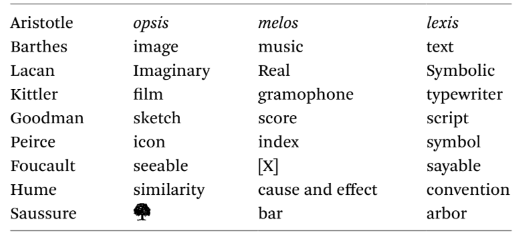
Figure 1. From Mitchell, W. J. T. 2015. Image Science: Iconology, Visual Culture, and Media Aesthetics. Chicago: University of Chicago Press, p. 122.
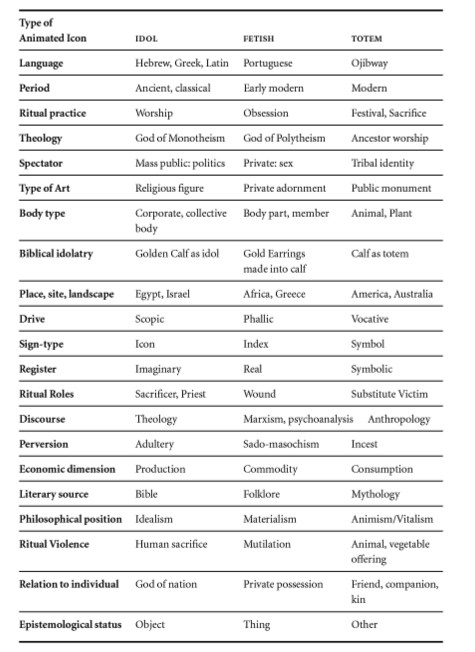
Figure 2. From Mitchell, W. J. T. 2005. What Do Pictures Want? The Lives and Loves of Images. Chicago: University of Chicago Press, p. 195.
W. J. T. Mitchell is Gaylord Donnelley Distinguished Service Professor of English and Art History at the University of Chicago. His work focuses on the history and theories of media, visual art, and literature, from the eighteenth century to the present. He is the author of a number of seminal books and essays on iconology and image science, and is the editor of Critical Inquiry.
§3. MEGHANNE BARKER: Indexicality Animates the Iconic Object
When Costas suggested I join this roundtable, I took it as an opportunity to think about how much a puppet could be considered an image (puppets have been a main interest in my research on animation), and how indexicality is important to understanding that.
When I started my research on puppetry, I was much more interested in iconicity, because of the way a puppet resembles humans (and other living creatures) but this changed, as I’ll explain below. I also didn’t think of puppetry as very similar to images at first, but Tom has helpfully offered a broad scope for the different things that get treated like images, including things that bear some kind of likeness to something else.
The puppet seems different from other types of images, of course. Movement and materiality play a role in photography, painting, and film—as you’ve all pointed out in different ways in your own work. But the roles of movement and materiality in puppet animation are unique, in that movement gives puppets the expressivity that is so important to puppeteers. If a puppet only resembles a living thing without coming to life, it’s not that different from a statue (and most puppets would make rather unimpressive statues!). This movement—so necessary to animation—is a relationship of contiguity, of co-presence, of cause and effect. It’s an indexical relationship. But that in itself isn’t that interesting; what becomes interesting are the different ways artists play with resemblance and the cause–effect, co-present relationship between themselves and their puppets.
For example, Sergei Obraztsov, a leading figure in Soviet puppetry, had a Be Ba Bo puppet as a child (see Figure 3). A simple hand puppet, it was effective not so much because of its resemblance to a human but because of its plasticity and its rather vague facial expression, so that when Obraztsov manipulated it, it took on a whole range of expressions.8 The puppet can’t achieve this range of expressions on its own. It needs the help of the puppeteer in manipulating it so that shadows hit in the right spot.
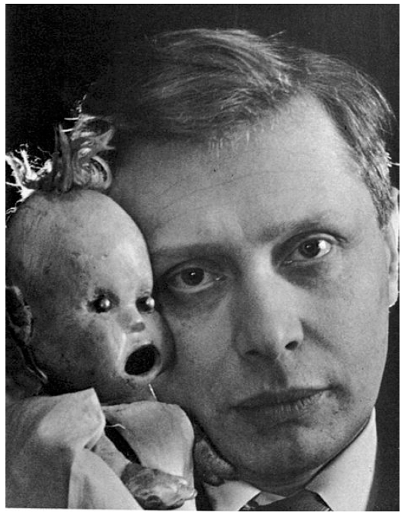
Figure 3. Sergei Obraztsov and a hand puppet (1930), perhaps one that looked something like the one he had as a child.9
It needs the spectator sitting in the right place to recognize the facial expression it makes. If the puppeteer does this right, the spectator thinks the puppet looks like a living thing because it is, in some way, really alive, really animate. Christopher Ball has taken Peirce’s writing on dicent signs to describe this creative process as “dicentization.”10 The pleasure of puppetry often hinges on recognizing the presence of the puppeteer and the puppet. If animation is done convincingly, it doesn’t matter if we can see the puppeteer standing right next to the puppet. In fact, this is what makes the technique that much more impressive.
Obraztsov was interesting because he pushed the form of the puppet to its simplest elements. He played with expectations regarding the ways the puppet resembled a human and was manipulated by one at the same time. A favorite act of his was to put a simple head—a ball with a hole in the bottom—onto his index(!) finger, so that his bare hands became body and limbs (Figure 4). Instead of trying to cover up his hand with clothing, as most puppeteers do, Obraztsov made use of the ways a naked hand could move more organically. The puppet body looked more alive because it was actually alive—it’s just that fingers replaced hands and the palm replaced the torso. Even though the body he made with his hand lacked legs and had too many arms on one side, there was something about the movements that helped spectators get over this.
The hands of the puppeteer were also important at the level of the symbolic. Hands were important to Soviet celebrations of the worker, so Soviet historians of puppetry embraced the hand puppet as a more proletarian art than the marionette theater, which they considered bourgeois art because the strings created too much distance between the hands of the artist and the marionette—though hand puppets were also probably more popular during early decades of Soviet puppetry because they are easier to manipulate than marionettes and many of the early Soviet puppeteers had no specific training in puppetry. Here, the indexical work of the fingers and instruments scales up to the level of thirdness, to an ideology, but iconicity and indexicality help achieve this.
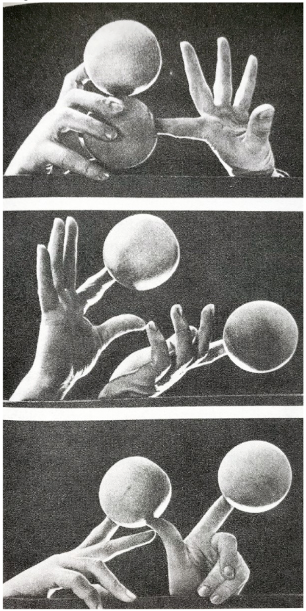
Figure 4. Sergei Obraztsov’s puppet interpretation (1930) of a poem by Vladimir Mayakovsky, “Attitude to a Lady.”
Puppeteers will often say that it is the spectator, ultimately, who does the animating through an act of projection. This can be useful to thinking about other sorts of images. Because puppetry keeps the animating artist, the puppet, and the spectator physically close, it makes explicit relationships between image-maker, image, and viewer. These relationships exist in any process of creating an image that is not simply in one’s head, even if they are spatially or temporally remote from one another. The spectator sees the puppet as alive, ideally, but also as being brought to life by the puppeteer. And the puppeteer makes this happen not for their own amusement—because they often can’t see the effects from where they stand—but for the benefit of the spectator. This gives rise to an intersubjective moment; these moments happen in any work of art, as Gell’s writing on art and agency pointed out.11 The art object points back to the artist as someone who made the object with a specific goal. At the same time, it addresses some third body—such as a child in the audience—by saying to the child, “Look at me!”
Indexicality helps make puppetry into a social encounter, rather than simply a neat trick.
Meghanne Barker works on animation, performance, and community filmmaking in post-socialist Central Asia and Southeast Europe. Working between linguistic and visual anthropology, she is currently a London School of Economics Fellow in Media and Communications.
§4. ELIZABETH EDWARDS: Photograph, the Trace, and Indexical Desire
First, a declaration: I don’t work on semiotics as such. However, I constantly encounter it, as its traces (no pun intended) work their way through my interests in materiality and the anthropology and historiography of global and cross-cultural photographic practices. So, my use of the language of semiotics—of index, referent, sign, et cetera emerges from them.
As we’re looking at bridging between disciplines and the migration and mutation of the concept of indexicality, I’m coming at the questions posed for this roundtable through a synthesis of two recent encounters I’ve had with debates about the nature of photographs and the index. One encounter is on the impact of the very existence of photographs on the practice of history (I’m working on a book on this) and the other, coming out of a project on Sami photography and history, looks at the assumptions, categories, and the critical possibility of an analytical language for global photographies.
In both encounters, I have been thinking about the ways in which photographic analysis has been the product of certain readings, philosophical positions, and anxieties in the relation to the medium. Intrinsic to such a consideration are the struggles of photography for an identity, tensioned between modernist medium specificity, where the concept of indexicality plays a major role, and post-modernist social constructivism and instrumentality, where critiques of power and representation are again entangled with indexicality—the trace and signifying properties of the colonialized or criminal body for instance. These foundations have established a theoretical position characterized by anxieties about truthfulness, the power and ethics of representation, about certain notions of realism, the workings of the sign, and the nature of the index. Within this, the notion of the index has been reified as a primary location and mode of analysis. Index becomes passed down as a mantra, and marker, almost as if it has itself becomes index of a certain analytical intention.
First, to history and to the power of the indexical and the referent to impose. Reading the how-to literature aimed at history students (and I have read a lot), the broad semiotic/linguistic influences on methodologies for “reading images” are clear. Recourse to linguistic and semiotic structures enable photographs to be folded into the desire for “text”—the historian’s safe zone—and a sense of quasi-linguistic “legibility” which enables them to be pulled into extant methodologies. This position is grounded in concepts of the index and its referent (although few want to scare their readership with term “indexicality”). But at the same time, reified notions of indexicality and a fear of the “Janus-faced semiotic ground,” tensioned between photographs’ claims to “the real” and the representational claims of the trace and the instability of the signifier, are at the base of historians’ anxiety about photographs. Mutable signifiers flirtatiously offer the reality of the past but constantly withhold it; conversely, they offer a historiographical primrose path to subjectivity and worse, speculation.
Now, of course, I simplify here on all fronts but it remains that “realism,” claims articulated through the index and the trace, has become a variously suspect term across the arts and social sciences yet more broadly a deeply desired one. Yet these engagements with indexicality, while grounded in a popular sense of the referent as representation, do not translate directly into meaning but rather into affect. Barthes’s indexical romanticism perhaps sums it up: “literally an emanation of the referent. From the real body, which was there, processed radiations which ultimately touch me, who am here.”12 However, as Barthes also claimed, in these affective desires for the power of the trace and seduced by the power of representation, the inevitable coding of the photograph is overlooked, that is, overpowered by the trace.13 Whatever their intellectual problems, the compelling power of index and trace in realpolitik constitution of histories and identities has to be acknowledged. A visceral actuality of what people believe themselves to be about is vested in the trace of the real, the trace of ancestor, the trace of land, and by implication, of spirit. Barthes himself noted, such “scorn” is “futile,” for “nothing,” he says, “can prevent the photograph from being analogical.”14 Exactly so—Janus-faced indeed.
This repositioning of photographic ontology, index amongst them, aligns with a history and historiography that shifts interests from “what happened” to what it felt like, how it was experienced. Sign systems become very important in such debates but to link photographs to one constraining concept—the index—seems unhelpful. Recent work in both historiography and photographic studies has tried to find ways of approaching historical sources/discourses and photographs respectively, shifting attention from textually-shaped questions of “meaning” and “representation” to questions of individuality and experience in an apprehended “reality,” but one uncoupled from simplistic notions of “truth.” Frank Ankersmit, in his discussion of “sublime historical experience” has described this as a shift from the centrifugality of deconstruction (in which semiotics played so major a part, at least in relation to photographs), to the centripetality of the contemporary historical fascination with the experiencing subject.15

Figure 5. The “Fallen” of the Great Western Railway; Paddington Station, London 2019. Photograph by Elizabeth Edwards.
This position was made patently clear, at least in UK, by the hyper-visualization that characterized the commemoration and memorialization of the centenary of First World War between 2014 and 2018. Photographs of soldiers, nurses, and civilians were dug out of family shoeboxes and albums, from local libraries and national institutions and made into shrines in parish churches, projects in schools, hung on railings, crocheted into poppies, adorned railway carriages, and translated into artworks and TV documentaries. But more important for our discussion here is that it revealed the depth and complexity of what we might term indexical desire, to possess and relate to the ontological scream of photographs and to entangle it with other material sign systems which are not traces but equally powerful indexes as signifying forms.
This shift is also marked by the material turn in both photographic and historical studies, notably in a post-Gellian and post-Ingoldian world. The performative materiality of photographs becomes crucial. If, in terms of semiotic theory, “shifters” shift across contexts of use, loosening certain referential links along the way, they also add them (a sort of semiotic rolling stone), gathering significances. Photographs cannot be reduced to representation via the index and its referent because they assume semiotic qualities of an object that are part of the tangible and sensual aspect of an engagement with the world. Photographs, as things, are made up of the co-presence of qualities—including, but not only, a significant resemblance between things.16 These enable the image to function in specific ways and which challenges the over-identification of photographs with the index as representational referent. For there is not merely the desire for representation but the feeling of traces.
Chris Wright gives a great example from his fieldwork in the Solomon Islands. He notes the relative unimportance of “representation” as it is normally thought of and theorized. He was he was handed a treasured photograph of a family member in which all representational qualities were worn away. The index was there, as was the material trace of chemical on paper, but the referent dwelt not in the representational trace but in memory.17 Marilyn Strathern has made a similar observation of the Highlands of New Guinea: that the values of “representation” were little valued against the delineation of the surface, the legibility of the ancestor, and a sense of projected future.18 Photographs here are seen, desired, and presented as transparent and unmodified traces regardless of the photographic modulations and illegibilities in any given instance. These examples imply the need for a different language that enables us to think how such photographic understandings might be accounted for and re-theorized, in alternative historiographies of the image in which the deep desire for the power of the indexical trace—the ontological power of photographs: it was there—can be accommodated theoretically as an historical modality when the indexical chain is patently disturbed. Such a focus opens a challenge to assumptions about the photographic sign world. The trace, and thus how “index” works, is not merely a theoretical concept but a way of being in relation to photographs.
This brings me very briefly to questions of digital photography which have rightly received much theoretical attention of late. They demonstrate, first, the ways in which the ontologically given indexical trace, premised on Peircean model, has become so entrenched in thinking about photography. But second, it issues challenges to it, or at least a reformulation of what it might do. For digital is still indexical, as Michel Frizot and Janne Seppänen have each argued,19 electro-magnetic rays emitted by objects, just as their material translations constitute co-presences of multiple signs. I recently read a wonderful essay by Okechukwu Nwafor “Photographing Aso Ebì”—the telling (in our contexts here) subtitle of which is “Surfacism and Digitality”—which looked at the way digital photography was being used to make and remake the sign structures of portrait photography in relation to cloth in Nigeria; this was realized by serial translations of the index through the prism of multiple subjectivities in digital environment.20 It speaks well to our concerns here.
Hayes and Minkley (in whose book Nwafor’s essay appears) have recently argued it is not merely a question of who has the right to represent whom, or equitable politics of representation (the deployment of the index if you like), “It is about the distribution of theory” itself.21 Semiotics and its analytical impact are part of that discussion. As we all know, all societies have complex sign systems, but it is important that discussions about photographs do not become mired in specific understandings of the index, deriving in part from the metropolitan assumptions. We need to be sure that we use the “Janus-faced semiotic ground” of photography and its indexicality as a site of critical incision that asks what kind of indexicality we don’t need. I would answer that we don’t need one that is overly formalist because it shuts down as many meanings as it reveals. A lot of work on ethnographic and colonial photography in the 1980s did precisely this. Nor, following this, do we want a concept of indexicality that merely appropriates the way people make meaning into a cozy universalism. The epistemological question of how things, photographs, are seen, read, understood, becomes an ontological one: “what is to be seen in the first place?”22
At the end of the day, I take a pragmatic view of theoretical knowledge. As the historian of literature Franco Moretti noted: “Theories are nets and we should evaluate them, not as ends in themselves, but for how they concretely change the way we work, for they allow us to enlarge the ... field, and redesign it in a better way.”23 We could well start with indexicality because it is at the root of the complexities through which photographs are understood. But it is also a constraining one. Because, as Michel Frizot noted, notions such as sign, especially as it has been applied to photographic depiction, suggest “a mythical common function for all such markings.”24 This is not, of course, to argue that signs and symbols do not exist and function—such would be very foolish—but what has become the commonplace of “indexicality,” with its stress on meaning couched in questions of representation alone, has constrained the understanding of photographs as social objects and, indeed, social beings with multiple effects.
Elizabeth Edwards is a visual and historical anthropologist, and Professor Emerita of Photographic History at De Montfort University, Leicester. Her interests are in the social and material practices of photography, the relationships between photography, anthropology and history, as well as photography, museums, and colonial memory. In 2014, she received the Lifetime Achievement Award from the Society for Visual Anthropology (American Anthropological Association) and in 2015 was elected a Fellow of the British Academy.
§5. CHRISTOPHER BALL: Meta-Indexicality and the Comparative Study of Indexicality
Indexicality is a tool for comparative cultural analysis. It became so for linguistic anthropology through a specific historical series of moves exploring its function in reference, social identity, ideology, and existence. The referential load investigated through attention to shifters or deixis seems to be the most linguistically specific of the indexical functions, while identity, ideological, and existential functions are relevant in sign systems not subject to the technical requirements of a semantic language. Like much of what counts as talk. Linguistic anthropology has, after discovering indexicality in grammar, quite thoroughly moved on to the explore myriad kinds of indexical relations that have nothing to do with referring. This should be good news for a project focused on critically questioning notions of realist representation that emerged from studies of indexicality in language and were smuggled into studies of images.
Our goals in this roundtable include a move beyond medium-specific definitions of indexicality, as Tom points out, and differentiation of indexical traces pointing back to happenings from indexical mediation of experience, as Elizabeth notes. Such considerations motivate comparative exploration of people’s reflexive organization of indexical events into patterns of interpretation. Symbols are inherently regular signs; their function depends upon their cross-contextual constancy. Indexes function precisely because they lack this regularity or fixity as signs. Indexical meaning is famously underdetermined. Regularity of indexical meaning emerges only in reflexive evaluation of such regularity as can be claimed to exist within a community. Cultural variation in indexicality tends to manifest itself at the level of reflexive models of meta-indexical structures. Linguistic anthropology has taken this approach to domains like kinship, where we see that relations are not statically pre-given as in older models, but are performed and negotiated by people who deploy multimodal kinship behaviors, some linguistic and some not. The approach has emphasized how people use indexical functions in patterned ways, where the very patterns are the result of meta-indexical awareness. I don’t think it is overly technical to say that we cannot study indexicality without studying meta-indexicality.
Building cross-contextual variability in indexical meaning (at the level of individual events) into a theory that also accounts for cross-cultural variability (at the level of social facts) may accommodate what Tom covers with “functions or operations that can produce meaning and significance across the whole range of media,” as well as what Elizabeth calls the “critical possibility of an analytical language for global photographies.” Indeed, what Meghanne and Elizabeth both suggest using different terms, the “creative process” of animation or the “material performativity” of photographs, depends upon the potentiality of indexes to be summoned up into meta-indexical frames. This is a way of suggesting what I see as a tendency already emerging in our conversation, namely that we not look for indexes in images but instead look for how people indexicalize images (I have called this “dicentization” elsewhere). Our attention might fall on how universal semiotic affordances constrain such behavior, and how sociocultural norms and tropes afford moral purpose and aesthetic variability in such behavior.
Christopher Ball is a linguistic anthropologist with interests in multilingualism and language shift, photography, semiotic theory, primitivism, and indigeneity, with an ethnographic focus on Amazonia. He is Associate Professor at the University of Notre Dame’s Department of Anthropology.
§6. TOMÁŠ KOLICH: Art History and the Limits of the Index
For me, the relationship of index (and other semiotic terms) and art history is similar to the relationship of raisins and baking, meaning the ways in which indexes and raisins are used: they are the least important part of the recipe. Usually, you add them once all the main work is done. If you take them out, the taste does not really change. And I don’t like them (although people keep trying to convince me that they are good).
It does not necessarily mean that I consider semiotics to be inherently fruitless approach. Rather, I have acquired a custom to evaluate scientific methods based on the ways in which they are employed by academics in their particular fields over time. I don’t see art historians relying on semiotics too much and when they do, the results of such analysis seem to me unconvincing—the semiotic terms are either used as a kind of “sticker” that is glued to the researched material without a proper attempt at a deeper analysis or these works focus too much on the intricacies of the semiotic categorization and never actually get to the findings that arise from it. Meaning they lengthily explain why something is, for example, an index rather than icon but forget to answer the follow up question: So what?
Of course, my assessment can be wrong. It’s possible that the theoretical framework itself is highly useful—art historians are just using it poorly. Or maybe I’m simply reading the wrong literature. However, the limited success of semiotics in traditional art historical writing is telling evidence for me. Index is undoubtedly prevalent in photography studies, but it is much less frequent in other branches of art history (keeping in mind that some would consider photography studies semi-detached from art history).25
The crucial problem is the predominantly linguistic basis of semiotics. On the one hand, I agree that the reduction of language to the symbolic and images to the iconic does not tell the whole story and index could be understood as a middle ground that brings these ends of the “sign spectrum” closer. At the same time, I don’t think that a theory of index will succeed here, because language and images are fundamentally different.
The difference that matters to me the most is not that languages are symbolic and images are iconic, but rather that one is divisible into well-defined units while the other is not. Or should I say, images are not divisible successfully. You can try to disassemble images but any unit you will identify will be completely subjective and arbitrary, and the dividing never ends—the number of other modes of fragmentation is potentially infinite. Tom put this point nicely in his book, Iconology, when talking about Nelson Goodman’s notion of differentiation and density:
The image is syntactically and semantically dense in that no mark may be isolated as a unique, distinctive character (like a letter of an alphabet), nor can it be assigned a unique reference or “compliant.” Its meaning depends rather on its relations with all the other marks in a dense, continuous field.26
Images do not have a discernible grammar or syntax, their components do not organize in the way language does (phonemes, words, sentences, etc.).
The linguistic propensity of semiotics is apparent already in Saussure’s treatment of pictures in the Course. Or rather, lack of it. Saussure famously claims that the sign is a whole that unites two elements: concept (signified) and sound-image (signifier). As a “representation” of the signified in the corresponding diagram of the sign arbor, he uses a picture of a tree (Figure 6). Two things are worth noting here. First, Saussure does not address (at least in this chapter) the fact that he chooses a picture to stand for his unit of the concept. He does not opt for the smell or sound of arbor. My proposal of such alternatives seems ridiculous, because Saussure is presenting his ideas in a printed book; but I doubt he would have considered them even in an oral lecture.
The second and more important issue is that Saussure understands this picture as equivalent to the arbor as the English word tree is:
Whether we try to find the meaning of the Latin word arbor or the word that Latin uses to designate the concept “tree,” it is clear that only the associations sanctioned by that language appear to us to conform to reality, and we disregard whatever others might be imagined.27
The relationship of tree to arbor is basically one-to-one (asymmetry occurs only if one word designates in its language more things than the other). But this is not true for the relationship of arbor and the picture. The word has one (or several) well-defined finite meaning(s). However, the meaning of the used picture is multiple and potentially bottomless (depending on the visibility of details and intricacy of its rendering). While words can be understood as units of meaning, there is no such recognized unity when it comes to pictures. Pictures can have probable or preferable meaning, but it is never the only one available.
The picture of tree in Saussure’s diagram provides signs that are “wider” or “narrower” than the meaning of the word tree. It clearly depicts a tree with leaves, therefore excludes conifers. At the same time, we can see it as a specific kind of tree, for example, an oak. The details of the picture also include trunk and leaves, which are signs in their own right. The only thing that stops us to continue with this division into separate signs is the simple rendering of the picture. And yet, even in this simple form, it is very far from the firmly codified visual symbols that can be understood as a unit, for example, the Standby symbol (which has even its number in the International Electrotechnical Commission; Figure 7).
![Figure 6. From de Saussure, Ferdinand de. 1986[1916]. Course in General Linguistics. Trans. R. Harris. Peru, IL: Open Court, p. 67.](https://semioticreview.com/sr/index.php/srindex/article/download/58/version/59/55/387/Figure6.png)
Figure 6. From de Saussure, Ferdinand de. 1986[1916]. Course in General Linguistics. Trans. R. Harris. Peru, IL: Open Court, p. 67.

Figure 7. The Standby Symbol on a Macbook Pro Power Button. Photograph by vincentq, cc-by-sa-2.0.28
The problem of the indivisibility of images gets more complicated when we move from the content of the picture (conifers, trunks, leaves) to its “non-mimetic elements” or “image-substance,” as Meyer Schapiro has called them.29 Schapiro claims that lines of drawing, hatching in engraving, or visibly discrete strokes are both “part of the object represented” and “unlike the parts of a word for that object”; they are also “an artificial mark with properties of its own.” According to Schapiro, the distinctive characteristic of picture-sign is the “pervasiveness of the semantic function, even with the arbitrariness of the qualities of the image-substance.” My question is: if everything in the picture is meaningful, how can we decide when one meaningful part ends and the other start?
I see Schapiro’s concept echoed in several works that look at the brushstrokes as semantic units, invoking Peirce’s index. But why should be brushstrokes the fundamental semantic unit of painting? It is telling that this kind of analysis is used usually only if the artist’s brushstrokes are clearly visible or they have been repeatedly noted in the art-historical discourse. Van Gogh or Rembrandt are obvious choice here, Da Vinci less so. This kind of analysis is also motivated by the effort to explain or popularize particular styles like action painting and abstract expressionism (which was the Schapiro’s inclination).
In my opinion, this focus on brushstrokes is unconvincing and strangely religious—the brushstroke is treated like the place where artist blessed the canvas with his genius. I have three main objections here: First, if “semiotics is concerned with everything that can be taken as a sign,” as Umberto Eco put it,30 whose position are we going to take here? Who takes the brushstroke as a sign? The artist and/or viewers? Or is it enough that art historians take brushstrokes as signs? Is the brushstroke-sign same for the artist as for the art historian? Who decides? Second, why should we stop with the brushstrokes? Why not to take the grains of pigments as a sign? The choice of color, its preparation, and refinement are just as important parts of the painting as the brushstrokes. Third, if brushstrokes are indexes, what are they indexes of? The tip of the brush? The whole brush? Artist’s gesture? Artist’s intention? (Art historians usually settle for this one.) Prevalent painting style of that period? The academic training of that time or lack of it? The possibility of index seems to me almost inexhaustible, and I don’t mean it as a compliment.
For me, the indivisibility of pictures is the main obstacle for the successful application of index and semiotics in art history and generally in visual analysis. I would be content with such theory of index that admits these pitfalls and takes itself more metaphorically. I see a benefit in art history in appropriating the concept of the index as a point of inspiration, a convenient term that has been already thoroughly discussed in other fields. If the index is used in art history as an integrated part of semiotics, I see a strange discrepancy between the way it is “promoted” and its results; semiotics strives for rigorous precision and declares the ability to achieve it, but its application in art history is all too often dependent on the idiosyncrasies of the particular art historian. It is like praising the exactitude of an astrolabe, lengthily explaining all its intricate components just so we can use it as a pointer stick, holding it vaguely in the desired direction and saying, “We should go that way.”
Tomáš Kolich is a PhD student at the Institute of Art History at Charles University in Prague. His research interests include the visual culture of the 19th century, film architecture and images in the natural sciences. He is interested in the practical relationship of texts and images and in the role of visual metaphors. Currently, he is working on his dissertation about detective “evidence walls” and corresponding graphic screens in film and television.
§7. DANIEL MORGAN: Film Semiotics, Montage, and the Middle Road of Indexicality
When Costas convened a roundtable on the idea of indexicality in Fall 2016, I somewhat jokingly titled my presentation, “The Middle of the Road Leads to Death.” It was a small allusion to Alexander Kluge’s 1974 film, In Danger and Dire Distress the Middle of the Road Leads to Death, which inserted fictional characters into the context of real events: the eviction of squatters from houses in Frankfurt, the destruction of the houses, street battles, conferences, et cetera. While a convention that is present in many of Kluge’s previous works, In Danger and Dire Distress uses this technique to destabilize the way that we seem to know how to follow a film. As I’ll suggest later, the kind of blend between ontological modes, and the connections that Kluge creates, suggests some problems for a semiotics of the cinema.
But mostly, I wanted to use the title of Kluge’s film as a way to describe the crisis in which, it seemed to me, indexicality found itself within cinema and media studies. The notion of indexicality, along with Peirce’s broader arguments, made its way into film studies in 1969 with Peter Wollen’s Signs and Meaning in the Cinema.31 It fell on welcome ears. A semiology inspired by Saussure, while it generated powerful methodological models, always had an ambivalent relation to visual images. Roland Barthes, in his early Elements of Semiology, even argued that the broader science of signs, and images in particular, should be subsumed within a linguistic framework.32 But Peirce, as Wollen described him, offered an alternate approach, relegating language and other cultural forms to the symbolic while using the iconic and the indexical as a way to capture the work that other kinds of signs, including and especially images, do. The index, in particular, seemed to capture what made photographic media special, the “real connection” between sign and object. It gave a name to something that had long been central to debates over the uniqueness of the medium.
I’ve described Wollen’s model elsewhere as a “thin version” of indexicality, precisely because of its heightened emphasis on causal connections: the direct relation between an object, the light rays that reflect off it, and the celluloid where they produce a chemical reaction. Indeed, it was this emphasis on a direct connection that initially motivated the critique of the index on the grounds of the changed technology of image production that arose with digital media. If the image is no longer necessarily tied to the world, the argument runs—whether because of digital manipulation or outright creation—then we can’t guarantee that what we see was actually there, that an indexical relation does in fact hold. Now, by and large, this challenge has been resolved, mainly along two arguments: the first is the recognition that digital photographs nonetheless involve causal relations; the second is the acknowledgment that photographs have always been modified and faked, so that the indexical bond is less an ontological fact than a social and psychological mode of viewing.
Yet even if the index has survived the onset of the digital, other concerns remain. And it’s here that I suggested we ran into a “middle road” problem. What is it that the index does? Well, it describes a causal relationship between image and object, the mode of reference that photographic media have. So how useful, or general is that? What is it that the index now allows critics and theorists to do? There have been some historicizing arguments, looking to the way that “indexical media” arise along with the emergence of modernity in the early twentieth century. But in a media world in which photographic media are being supplanted not only by computer-generated imagery in cinema but also by animation, video games, and social media forms—GIFs, memes, et cetera—why should we pay attention to an index? It was, I said, a dead letter within the discipline, a middle of the road concept.
My suggestion, then, was to follow Kluge and go to the extremes. One extreme would be to simply get rid of the index, to go back to a critical mode in which terms to describe the relation between film and world proliferated. Bazin often accounted for his own practice as a thinking with metaphors, terms he used less to pin down the essence of the medium than to track the different facets of what Cavell once described as photographic media’s “ontological restlessness.”33 Why not return to a more open critical vocabulary? The other extreme would be, for the first time, to fully embrace Peirce and all his ambition and weirdness. After all, the index–icon–symbol division is far from the only trichotomy within Peirce, and, indeed, it may not even be central to his project. What seems to matter more has to do with what comes after it, with the kind of relation being described and the metaphysics that gets erected out of it. And this would mean taking seriously how meaning happens for Peirce, whether we emphasize the psychological model in parts of his work or draw instead upon those places that involve something more akin to a cosmology.
Thinking back on this proposal of the extremes—The index is dead! Long live the index!—I’m not satisfied by either. With the first, I hesitate to give up the category of the index simply because of how useful it is; Tom has emphasized this, and the trichotomy really does help to break down and think about how images work. With the second, I worry about unnecessary complication. Just how many trichotomies are we supposed to know? Which of the many Peircean positions should we take as canon? What should we do about the puzzling category of the infinitesimal? (In a recent essay, Martin Lefebvre mounts a compelling defense of how Peirce’s model could deal with social and political forces—but it takes an immense effort to actually get there!34)
It’s at this impasse that I’ve found Costas’s framing question so helpful, precisely because of the appeal across disciplines. The question that seems central to me is that of language, or of editing—of how things go together. The status of language was one of the places where a structuralist semiotics of the cinema often ran aground, as it attempted to apply a methodology that emerged from linguistic analysis to a medium that fundamentally was not linguistic. And so structuralist approaches often developed into analogies: film is like a language; it operates in a similar way. That’s fine, but if we’re talking about general resemblance then the specificity of structuralism makes it difficult to apply. What, for example, are the given and set signifying units in cinema?
I suspect that much of the problem with a semiotics of cinema has been the assumption that it should be based on an equation between word and shot. What the word is to the sentence, the shot is to the scene. Or something like that. The shot, like the word, seems to be stable as a building block of a larger unit of meaning. But that affinity quickly falls apart, as everyone from Christian Metz onwards notes. Metz doesn’t have a plausible solution—his initial argument, for example, is that the shot is like a sentence—but he gets at the right point. Namely, that we should focus on larger semantic arrangements. My sense is that it is vital not to think about the shot so much as the shot cluster. Individual shots, after all, don’t usually have full (narrative) meaning on their own. I can see Humphrey Bogart as Philip Marlowe drive up to a building and get out of a car. But it’s only the next shot that specifies this building as a hotel. This seems like how a sentence is built, but what guides my comprehension, I think, is the unity of the construction itself: we grasp the pair of shots not as a two-part construction but as a single unit, that of Marlow arriving at a hotel. (This is what Eisenstein long ago argued about montage between two shots, that it provided a meaning that was not contained in either shot.)
We might call these shot clusters; we might call them phrases. I’m not really hung up on terminology. What making this shift allows, though, is a way of thinking about the semiotics of cinema that draws on a different tradition of thinking about language. Frege would be an exemplar of this, with his insistence on what he called the “context principle”: the idea that “it is only in a proposition that words have any meaning.”35 The very function of a word, not to mention its meaning, is defined by its position within a larger utterance. In perhaps his most famous example, he notes that in the sentence, “The concept horse is a concept easily attained,” the concept “horse” functions not as a concept but as an object.36 But there are others, too.
For contextually driven models of meaning, indexicality has seemed inadequate, predicated too strongly on a form of medium specificity in which one starts with the basic unit—the photograph and its mode of reference—and then extends outward to more complex arrangements. But perhaps the discussion we’re having here about indexicality offers another way for thinking about a semiotics of the cinema, one that also tries to account for the fluidity and flexibility of the work of individual shots within a given sequence or cluster. I wonder if we ought to stop being preoccupied with photography in cinema, or photographic models, or even individual shots—especially with respect to indexicality—and started thinking more about forms of flexible and fluid groupings that emerge within the movement of a film. (Finally fulfilling Eisenstein’s plea to move “beyond the shot.”) Perhaps this would gain a new approach for understanding how indexicality actually works within a film and for understanding more about how a given film works to create the meanings it achieves.
I come back to Kluge here, at the end, partly because his interweaving of fiction and non-fiction precisely seems to require this more expansive account of indexicality. On the thin reading, it’s hard to gain a purchase on a film: how do we think about the different modes of reference when a fictional character wanders through a real scene and interacts with its participants? (Jean Rouch was a virtuoso at such juxtapositions.) Wollen’s model of indexicality focuses on the presence of people, regardless of their status, confirming that they are there in front of the lens; fictionality is something that is added on, but not in a sense primary to the experience of the image. Turning to shifters, to the flexible use of context-defined indexicals, allows us to begin to think about a model in which our relation to the fictionality of Kluge’s characters is at the core of our perception of them.
I don’t think that what I’ve outlined here is a full solution, but hopefully an account of my frustrations with a debate and some possibilities for a way forward that does not lie solely in the middle of the road.
Daniel Morgan is Associate Professor in the Department of Cinema & Media Studies at the University of Chicago. He interests include philosophical aesthetics and cinema, classical film theory, experimental and avant-garde cinema, camera movement, and the work of Bazin and Godard.
Round II. Responses and Replies (May 18–24, 2020)
§8. COSTAS: What a wonderful and incredibly stimulating first round of responses that open up so many different possible directions to go in! In a typical roundtable, the moderator takes a few moments to reflect on what has been said, partly summarizing, partly moving the conversation forward and raising some questions. (Usually this also has the function also of giving people a chance to have a glass of water and gather their thoughts; so take a virtual sip!).
In that spirit, what struck me from the opening responses were three points, three M-s, that I’d like to offer some brief comments on: the meta-; media; and method.
As Chris notes, an indexical sign can only be understood relative to a meta-indexical function (what Michael Silverstein has called metapragmatics), that is, some frame—to use Bateson’s and Goffman’s term—that mediates the form, use, force/meaning, and uptake of some indexical sign function.37 This can be co-occurring signs, be they implicitly metaindexical—what Roman Jakobson called the “poetic function” or Eisenstein “montage,” as Dan so usefully invokes—or explicitly so, as with citational frames (reported speech constructions, fictional narrative frames, e.g.) or explicit metadiscourse.38 Cross-cutting both are what Meghanne calls, following a now-forty-year conversation in linguistic anthropology, ideologies of, in this case, images (cf. language ideologies, semiotic ideologies, etc.). Tom’s notion of the meta-picture is also relevant here, I think, just as is his discussion of ideology over the same time period. From this vantage, the question is not whether a sign “is” or “is not” an index (as Tom helpfully points out) or even has an indexical component or not, but, as Elizabeth suggests, to whom and when and in what way is a sign construed (or desired) indexically. (This last point—in what way—is important because it alerts us that there are many ways in which a sign may be indexical: socially, causally; rigidly, shiftily; referentially, non-referentially; denotationally, non-denotationally; intradiscursively, interdiscursively; and so on.) What are the varieties of metaindexicality and, thus, of indexicality? And how might we come to know them? Part of the debate about the usefulness of the index comes back to this, I think; and this is because, as Elizabeth’s and Meghanne’s responses—in relation to Tomáš’s and Dan’s hesitations—point up, this theoretical point is, at core, a methodological one (to which I’ll return in a moment).
Tom’s response raised a question that I been struggling with for some time, and is part of the original impetus for bringing this roundtable together: namely, what/when is an image? A standard answer, within a Peircean semiotic, is iconicity.39 But I’ve found this answer a bit underwhelming (it begs the question of likeness, as Nelson Goodman pointed out some time ago), and it’s my sense that image—as a term to describe the phenomena that we are interested to study (in my case, cinema)—cannot only rely on iconicity but must be defined indexically (among other ways). (My own thinking has worked through the notion of “entextualization” and Peirce’s notion of diagrammaticity to consider the ways that indexical relations of contiguity between signs work to figurate, or ‘draw a picture,’ out of the qualia of their sign-vehicles, what I’ve called an image-text.40 This is precisely what Dan is pointing to in his comments regarding shot clusters and montage, and it presents an exciting avenue to draw together Russian Formalism, Peircean semiotics, linguistic anthropological accounts of entextualization, and film theories of editing, point of view, enunciation, and mise en scène.) But here, I was most intrigued by Tom’s trichotomy of media, Image/Music/Language, since here “image” appears as one of the “great orders of perception and representation” rather than the notion of image just mentioned, which appears in any number of media or orders of perception/representation (including language and music). How, then, to square medium and semiotic function?
Finally, to method. To my mind, one of the important tasks in fashioning a useful semiotics of images is to rid it of its baggage, namely, the indexical associations that the very term semiotics (and by extension, indexicality) has accrued, rightly or wrongly, over the last hundred years. For linguistic anthropology, this has meant undoing two linked conflations: first, of semiotics with semiology (within which language qua langue is the master “code,” as Tomáš points out) and, second, of the study of language with structuralist linguistics and its conception of language (as sui generis, autonomous “system” anchored by its decontextualized, denotational capacity to refer). Taken together, this is a rejection of a particular conception of language and its extension to the semiotics of culture. Indexicality was critical to this project, for the reasons Chris alludes to. But what about the social science of images? To what does it add? Here, I take Dan’s and Tomáš’s cautions seriously: namely, that we must subject indexicality (and semiotics) to what Peirce called the pragmatic maxim, that maxim being, to paraphrase him, that the meaning, and utility, of a term consists of those effects on our practical bearings that are implicated by it. This is also Elizabeth’s “pragmatic [perhaps also pragmaticist?] view”: the proof is in the pudding!
What possibilities of inquiry, then, are opened up or foreclosed by our conceptualizations of indexicality (and semiosis/semiotics more generally)? And vice versa—what methodologies make indexicality a useful or necessary concept? Such a concept can’t be modeled on the semantico-grammatical workings of natural (or logical) languages, as Tomáš points out. It can’t be reduced to a brute notion of causality, as Dan points out. It can’t be parceled out by medium specificities, as Tom points out. And, as Chris, Meghanne, and Elizabeth all point out, it can’t be thought independent of the social, historical, and cultural—in a word, ideological—frameworks within which signs are construed and taken up by interested parties. Appeals to technology (scientific or cosmophanic), structuralist (commutational) analysis, textual “readings,” methodological individualism—a useful concept of indexicality will not be content with any of these; indeed, indexicality serves as a critique of some of them and necessitates a methodological synthesis of the others. My own sense is that indexicality and semiotics come alive when they avoid yet remain aware of all these cul-de-sacs: when they help us attend to and understand how phenomenal experience, social meaning, and consequentiality are achieved through material, context-dependent sign processes, evenemential processes that point us away from themselves to the worlds in which images do their work and are worked with and on (and thus come to be). But I realize that we represent a range of disciplines, each with their own methodological commitments, and that each may require indexicality to be and do something else; yet again I am struck by the question, can indexicality, and semiotic theory more generally, serve as a bridge between our disciplines (and transform them in so doing)?
§9. MEGHANNE: It’s hard to know where to begin, you’ve all given me so much to think about! I’ve felt many of the frustrations and hesitations expressed so far—that Peircian semiotics risks either being reductive or overwhelmingly broad. Nonetheless, deployed strategically, I find indexicality (with iconicity and symbolization) helpful in illuminating what things mean to people.
As Dan mentions, Peirce offers abundant trichotomies. For me, another useful one is the sign-vehicle, its object (which stands in relationship to the sign in reference to some ground), and the interpretant, which is the sign it creates in someone’s mind. What I like about this is that it makes semiotics into an encounter, rife with possibilities, rather than reducing it to a code to crack.
This raises questions regarding how we get into someone’s mind to figure out what kind of sign it creates, which relates to two of the M-s that Costas mentioned: What method is best for getting at what this means for other people? What kind of metapragmatic understanding (or meta-indexical, as Chris writes) of the image already exists, shaping interpretation? What metadiscursive strategies exist or can be developed for people to explain what it means? Trying to get at meaning involves new encounters, offering new insights. Symbols, as Peirce reminds us, grow. And this growth emerges from interactions with icons and indexes.
As for the second M—the Medium—Tom insists there should be no medium specificity to icon versus index versus symbol. A common hesitation toward comparing anything to language often rests on a conception of language as primarily symbolic and of the word as a primary unit, though Peirce, Sapir, Jakobson, Silverstein, and many linguists and linguistic anthropologists have shown us that language is a multisensory, multimodal phenomenon, fulfilling a vast range of functions.
In both an image and an utterance, there are infinite elements we could analyze: the gaze, the pitch and volume of voices, the heat of the room (or how it’s indexed through the sweat on someone’s brow or a harshness of light). These bring together elements of resemblance, contiguity, and convention. I have to decide what’s most important. To discover something new and to share it with others is what makes scholarly analysis exciting—to offer a new argument regarding the work of camera movement, as Dan’s work offers, or to show how photographs aren’t always about representation, as Elizabeth reminds us.
Something that brings us together is a common interest in particular types of signs that help mediate sociality in some way. We perceive the signs we examine (an utterance, a film, a shot, a text, or a brushstroke) as having been created with the intention of expressing something. We cannot get into the head of the creator, but treating a sign in this way makes for a different process of interpretation than if we look, for example, at clouds in the sky or dark spots on the shower curtain.
We are interested in how these things that fascinate us—photographs, films, rituals, puppets—come to mean things to others. Part of the reason they matter to people—including us—is because they make some kind of claim upon a truth or a reality, whether actual or imagined. In order for them to achieve this, they need indexicality. It enables these objects or processes to point to the world, to point back to some authorial intention, and to address us.
§10. ELIZABETH: I came to this as something of at semiotic/indexical skeptic so I have found the embarrassment of riches presented by this discussion illuminating in positioning my skepticism. There is much one could say, but to focus...
First, I think what comes out strongly is the problem of the way in which concepts or categories of analysis, which of course have implications, become so naturalized in our practices that even though we are all drilled to within an inch of our lives in critical practices we don’t see the extent to which they shape us. So, like Tomáš, I have interests in the historiographical effects of translating concepts, here, linguistic studies “smuggled” (to use Chris’s great phrase) into photographic studies or, indeed, art history. The indivisibility of photographic images as inscriptions, and their random and contingent relationship with the real make them, in my mind, unreceptive to the precision of linguistic approaches; despite the way specific elements can work as signs in fluid circumstances, and some are specifically constructed to contain semiotic energy, as in, for example, advertising photography. Of course, I am massively simplifying, but this unworkability in pursuit of meaning has constrained the work on photographs. And this brings me back to question of historiography. The implicit precision in “linguistic” approaches is strangely evident in approaches to photographs that sought to destabilize meaning; in my field there was a common analytical pattern: Ideology A = Sign B = Meaning C. The supposedly destabilizing propensity of discourse analysis with which this was entangled actually rendered powerless those who such deconstructions were meant to liberate: powerless through their semiotic entrapment. I’ve written quite a lot about this elsewhere. It isn’t necessarily the idea that is “wrong,” but its application in places where it doesn’t work or works to contrary or constraining effect becomes problematic and blinds us to much else.
Dan raises the question, do we abandon “indexicality”? As a term for the simple connection with the referent, I did this long ago, preferring “trace.” Trace (it has its own theoretical baggage, I know) keeps all that is useful about “indexicality” without the baggage of linguistic precision: referent quality to the real, the action of inscription, a causal relationship. Another important point Dan makes is about units of reading—shot clusters and their attendant complication of semiotic methods. He suggests film studies abandon photographic modalities of analysis. I think I would agree, for as aspects of photographic studies (anthropology, cultural history) are likewise abandoning models of singularity, which it borrowed or maybe smuggled from art history, for a more cinematic sense of seriality. Scholars, including myself, are working with huge data sets which preclude individual image analysis of any sort. This is where I think Chris’s comments on meta-indexical structures and indexical patterning—“organization of indexical events into patterns of interpretation”—become important, as both an analytical focus and a method. I feel much more comfortable with the idea of meta-indexicality, because it is again a way of keeping indexicality in the analytical frame. As I said earlier, there is a massive desire for the referent—for what the index might deliver (“how people indexicalize the image,” in Chris’s phrase), without having to try and shoehorn in more formalist methods. But, importantly, under this rubric, the social and psychological modes of viewing, a point noted by Dan, are simultaneously ontological.
This put me in mind of the way analysts of oral history place successful transmission/ communication as a variable alignment between genre, expectancy, and performance. Certainly, sailing under different terms perhaps, this has informed much of the work on social practices of photography—studies that are the backbone of much work in visual anthropology. There is a very widespread assumption (expectancy) that photographs (genres) work in certain ways that are indexical in relation to specific social desires (performance). This brings me back to practices of indexicalizing the image, because the indexical trace is not always adequate. One thinks here immediately of Chris Pinney’s work on painted photographic portraits in India.41 Here, the bundled material signs that I noted earlier create meaning as additions/accruals/accretions and interventions; not the indexical trace (a mere springboard), it is they that are the carriers of the desired representational “realities.” Is this de-indexicalization or supra-indexicalization?
§11. CHRIS: Dan’s and Elizabeth’s comments on the inscription of light on film remind us that the ground of indexicality in a lot of work on the semiotics of images is existential. I am interested in the analog/digital divide (so-called) and the move that both mention from film to computational image capture, and the sense that indexicality, of the kind for which Elizabeth reserves the term “trace,” somehow survived, but not without a new skepticism of manipulation as damaging to it. Meghanne raises the issue that images’ indexical meanings for people who make, view, and use them come from potentially infinite analytically isolable elements. If something like the “Wollen” model that Dan discussed became the dominant mode among others for how generations of scholars have grounded images, then we should ask how ideologically privileging the retrospective attribution of causality has shielded attention to other ways that people indexicalize images. As Elizabeth gestured to in both contributions so far, whether seen in Strathern’s work on photographs in New Guinea or Pinney on embellishment of photos in India with overpainting (see also MacDougall’s film Photo Wallahs),42 people develop cultural, meta-indexical interpretations that may focus less on the trace per se than on other visible and material qualities that “point to” socially, aesthetically, or emotionally relevant meanings (as Meghanne says “some kind of claim upon a truth or a reality, whether actual or imagined”). While the World Press Photo Association now establishes guidelines for photojournalistic reportage in an attempt to ensure the continuity of the trace, so as to ensure the truthfulness of photographic realism, others paint photographs to make them more realistic.
The indexicality of images for me, as I tried to say in the last round, is less about the trace than about whatever people say it is, or better how they organize themselves in response to what they feel it is. Meghanne and others working on puppets and related media involving animated characters have shown how an academic approach long tailored by folk understandings of performance may be profitably supplemented by a focus on animation. That is to say, if the notion of a person performing was a decent analog for a puppet performing for a while (thinking of Dan’s absolutely spot-on invocation of common and faulty structuralist analogizing from language to other things), it is no longer satisfactory. Anthropologists are concerned with local meanings, but what is needed is not only collecting provincial or quaint interpretations but rather a way to get at the range of modalities in which images emerge, persist, affect the world, and disappear. I’ll let Meghanne tell us about puppets and what “animation” does in place of performance, but we can see similar moves in other image domains. We might consider more deeply here Dan and Elizabeth’s dialogue on units of analysis and the move from singularity to seriality. It’s really exciting to me because the indexicality of the image in this roundtable is not in the service of asserting an older untenable linguistic model for images. Hardly. It is a call to expand the ways that images exceed medium specificity.
§12. TOMÁŠ: As Chris noted, it seems to me that our conversation is shifting more towards indexicality emerging “between” the image and the viewer. It is also a shift from my original understanding of the index and indexicality. It motivated me to reread Costas’s opening questions. As I see it now, we do not need a “theory/method” of indexicality but rather a “concept of indexicality.” Meaning not a rigorous (and rigid) methodical system of analysis but a freer concept, open to adjustments that serves as a starting (inspirational) point for the research of the indexical interplay between images and viewers, as well as a constant reminder that the indexical nature of some images is strongly felt by viewers (like in the case of photography). (Or perhaps we do not need even that—I am still opened to this possibility.)
My questions, then, are: Is this still a “concept of indexicality”? Is it not a something else? Something that scholars have been already doing without the invocation of indexicality? And if so, do we still need (to use) the term?
My last question has been already answered by various comments (especially Dan’s, which resonates with my concerns so much that I could basically sign it). Apparently, there is a need for different terms (Chris’s “dicentization”) and for words with less baggage (Elizabeth’s “traces”). Maybe these are not replacements of indexicality, and I should perceive them more like alternatives, amplifications, or extensions. But they do suggest to me that we can do without indexicality as a term. I am talking here about images specifically (although it is a vast category). I assume that indexicality as a system and term will thrive in other domains (e.g., language) just fine.
Reading Meghanne’s remarks about puppeteering I wonder how much they would change if I took out the indexicality (like the raisins from my maybe a bit exaggerated and crude comparison). For me, the “taste” of the remarks does not really change. Of course, my experiment here is facilitated by the more casual form of discussion writing. Perhaps, as she writes, “indexicality is important to understanding it [the animation of puppets].” However, indexicality could be here just the starting inspirational point (and the constant reminder) and therefore, it could be excluded from the text itself—omitted from the explanation. When Meghanne says “Indexicality helps make puppetry into a social encounter,” my question is: Is it really the indexicality that does it? Isn’t the indexicality just a label that we put on it? Could we describe the emergence of the animation just as well using “trace,” for example (either as a fixed term or a casual word)?
This perhaps looks like nit-picking, but the actual application of the theory/concept of the indexicality is important to me. I, for example, find myself being inspired by Tom’s concept of the image–picture distinction and by memetics, which I understand as a convenient parallel to the distinction (especially when thinking about the “replication” of images and their movement from one medium to another). But I actually do not use them in my texts. Or, shall I say: I do not use them as scientific terms, as a rigorous system. I might include them in the introduction saying that these concepts and terms “inspired” my analysis, they are “helpful” and maybe even “important to understanding” (echoing Meghanne’s opening phrasing) the particular topic, but then, I continue without them or use them rather occasionally. Of course, the difference from indexicality is that the image–picture distinction is admittedly metaphorical (by which I certainly do not mean less scientific) and the memetics is unavoidably metaphorical (it has never achieved its status as a rigorous method, although it tried).
It could be that this concern of mine is rather secondary and solely depending on the individual writing style of each scholar. Or perhaps, I just expect too much from analytical systems in the humanities (even the traditional three-step iconological method of Panofsky is more a guidance and breaks down every time it’s used as a rigorous analytical system). So, doubling down on my other hyperbolical analogy, I do not see a future of indexicality as an astrolabe but I see it being very helpful as a pointer stick—it can focus our attention on specific and important aspect of images. The possibility of such powerful pointer stick should not be underestimated. It can show the initial direction, inspire, help, and guide our understanding; however, I do not believe it will “explain.” And based on our conversation so far, I wonder if anyone here actually expects indexicality to “explain” things.
§13. DAN: Thanks to everyone for such great opening statements and responses. In this round, I wanted to pick up a methodological question about the level at which indexicality functions, echoing some of what Tomáš just wrote. I can illustrate this in Chris’s comments. In the first line, he says that indexicality is “a tool for comparative cultural analysis” yet by the end of the statement he is talking about “building ... a theory” on the basis of the variability implicit in meanings constructed on indexical relations. I suspect that Chris can make these compatible without much difficulty, but it’s a disjunction that’s by no means uncommon. Does the index describe a particular way that images—or signs more broadly—function, allowing us to more accurately describe the way meaning exists in the social orders? Or is there a broader aim, a “theory of the index” that would lay out certain defined meaning relations that belong to a class of images (or signs)? Reading the statements and responses, it seems to me that most are shying away from the latter—my sense is that this is a good thing—but a tension remains implicit.
The question matters for more than terminology. One of the powerful moves that a lot of people are making here—Chris in particular, but also Meghanne and Elizabeth—is to shift away from the relation of image to object and talking about the construction of indexical functions: how people use or even create indexical signs. This is great, and the index works in this—as everyone has said—precisely because the indeterminacy of meaning involved in it ensures that how a sign functions is being determined by the (social, psychological) context in which indexical signs are being negotiated. But how specific does this determination get? If we’re not interested in what Chris calls the “cross-contextual constancy” associated with symbolic signs, then it seems like the target of analysis is the individual use. Even the particular utterance itself.
I don’t think this is necessarily a problem. For ethnographic work, especially a kind of linguistic anthropology that’s alive to the variabilities of language, it seems essential. But it’s also a kind of reduction that makes it hard to see how the index fits into work being down in the analysis of artistic media. Let me give an example from film studies, a wonderful essay by Rick Altman called “The Material Heterogeneity of Recorded Sound.”43 It doesn’t involve the index but I think it illustrates the problem. Among other things, Altman wants to get away from any idealized notion of something called “the sound” when watching a movie. Sound, he argues, functions as an event, one that is experienced differently depending not only on the technology of recording and its use within the film but also, importantly, on the site of exhibition. It depends on the type of sound system, for example. And it depends on the arrangement of the speakers, the shape of the room, the material used to dampen the reverb in the theater, and so on. All of these points were (and are) necessary and important. But at some point, Altman’s argument threatens an unsustainable reductio: since the material fact of sound (and how it relates to the image) is actually different for each seat, for each person, how can we speak about anything general having to do with the use of sound in cinema? How do we get away from irreducible particularity?
I hear this a bit when Meghanne says that indexicality opens up the question of “how we get into someone’s mind.” Why that person? Why any one person? And I know there are tools to get away from particularity, analytic tools that move from an assumption of representativeness of responses to the discernment of patterns. But I come back to one of my initial questions: if we are thinking of indexicality as itself an important term, and not just taking it as one variation on a use theory of language and meaning—remember, for example, that when Austin discards the performative in favor of the perlocutionary it is because language can be made to do anything depending on the specific context in which it is being used—what is it giving us that other models can’t? And at what interpretive level?
I’m not trying to be a crank here. If this dialogue is going work, I want to see what the crucial machinery that will allow indexicality to solve these problems and so move across and between disciplinary concerns. And that also involves an account of why we need indexicality rather than other models of meaning-making that aim to do similar kinds of work.
§14. TOM: I have been pondering our learned disquisitions on the ubiquity of the index as a property of images and symbols, an operation of language and thought, and a tool for reflections on meaning. It is clear that we have too many good ideas for our own good, so I have attempted to organize our thinking around the simplest form of reductive abstraction that I know: the alphabetical index. This has the advantage of introducing an element of recursive thinking into our meditations (for better or worse). It is not systematic (no Peircean triads), but it is a finite framework for assembling our terms, concepts, notions, and examples into the appearance of rational orderliness while concealing the actual chaos of our thinking. I am sure there will be terms and instances that you want to add or subtract and, at a minimum, it could provide a provocation to a conversation. I think I can provide a reason for each of my entries; some will seem completely obvious but others may spark debate, and you may wish to eliminate them from the index. I have to admit that my inspiration comes from the Index Librorum Prohibitorum, the Roman Catholic list of forbidden books that, as a teenage boy, I found the most tempting reading list in the world.
I hope we can schedule a conversation someday soon to take us out of our disciplinary niches in anthropology, cinema, linguistics, literary theory, and art history into the world of common sense or practical semiotics. Despite his metaphysical ambitions, Peirce was a pragmatist. I think it would be great to focus our conversation around some specific texts on the question of the index in Benveniste, Greimas, Lacan, Barthes, Saussure, or Peirce. This could be a feast of learning. It could even be fun.
Here is my Index of Indices:
A ashes, arrows, associations, assemblages, “after”
B bruises, bars, barriers, “beside,” “beyond,” “before,” “between”
C cuts, conjunctions, cruxes, clues, clearings, commands
D dents, deixis, denominators, diagrams
E emphases, exclamation marks, effects, existential, engraved, etched
F fossils, fractures, forbidden texts, fetishes, finger, “first”
G gouges, graphs, gaps
H heartburn, hugs, handshakes, “here”
I indicators, indices, irruptions, irritations, impressions, “in”
J junctures, joints
K kisses, kills
L leftovers, leavings, limps, “last”
M money, marks, “many,” “mine”
N numerals, names, numerators, “now,” “not,” “never”
O obstacles, obstructions, openings, “on,” “over,” “outside”
P pathways, punctuation marks, pronouns, puppets, phatic utterances (mmhmm…)
Q question marks
R remains, ruins
S scars, shifters, symptoms, signals
T traces, tracks, thunder, “then,” “those,” “these,” “theirs,” “that,” “this”
U undulations, “up,” “upon,” “under”
V vectors
W wounds, warnings, “when,” “what,” “where”
X x-rays
Z zits, zeros
Round III. Open Discussion (May 24–29, 2020)
§15. COSTAS: This round of disquisitions (disputations even!) has been clarifying on precisely where the fault lines of difference and disagreement lie in our various approaches and (non)uses of “index(icality).” In that context, I am particularly inspired by Tom’s brilliant idea to compile an index of indexes. What is so great about it is that it is, semiotically, an indexical icon (a diagram) of indexical signs that, in its symbolic taxonomy (ordered, after all, by the English alphabet), points to (indexes) the conceptual extensity of indexicality by picturing the (to-be-discovered) relations between instances of that concept (as denoted by the lexemes so listed). It is, thus, an image that exapts the symbolic function of language to denote so as to point us back to the world which it helps clarify. Put otherwise, it is a montage—an image-text—that is entextualized through relations of juxtaposition, parallelism, and contrast, all indexical relations of contiguity that, cumulatively, function meta-indexically—again, what Jakobson called the poetic function—to (re)contextualize each of its parts, to alienate our preconceptions and spur us to novel thought! (No trace here, by the way, save the electrons that bear the intertextualities across our screens!) As such, Tom’s alphabetic-index is an icon and index of the very problematic at hand (which is its co-text, of course): namely, how an index—and the concept of indexicality—can help pick out and image aspects of our open-endedly complex and diverse worlds in a productive, pragmatic way, all in the service of our various (and perhaps even aspirationally collective) projects! Of course, as with all signs, we won’t know its significance except from its uptakes (interpretants), which I now turn over to you all! (Uptake, of course, being Austin’s term; interpretant being Peirce’s.)
§16. MEGHANNE: Elizabeth – There’s so much I’d like to dig into. One thing that intrigues me is the anxiety you discuss in the first response “… about truthfulness, the power and ethics of representation, about certain notions of realism, the workings of the sign, the nature of the index.” It’s a lot of anxiety! I’m especially interested in the “notions of realism,” in part because you seem to be frustrated with approaches that constrain understandings of photography too narrowly—and, at the same time, you’re interested in how culturally and historically specific notions of photography get established, proliferate, and change. To what extent does photography, in particular, seem plagued by a conflation of reality, realism, and this notion of the photographic image as indexical trace?
I thought of discussions I’ve observed among documentary filmmakers about the extent to which they can or should manipulate their subjects or intervene. Those who argued for the right to take liberties—telling people what to wear, adjusting the décor, et cetera—would argue that such manipulations were fine, not because they didn’t believe that the distinction between documentary and fiction film was moot, but because they were going to be able to portray a higher truth by making these changes that they considered quite minor. When you describe these desires for reality, I wonder if a common problem is that there’s an inclination (among historians? scholars of photography?) to take photography as, by default, tending toward assuming realism and equating realism with reality, rather than taking it as a genre. That is, to what extent is there a semiotic ideology of the photographic image as indexically pointing to a clear referent that is simply more entrenched than other media, such as film and theater?
§17. TOM: Dear Indexers: I propose that we focus our discussion on some cases or examples, preferably contemporary. To me, the most urgent questions around indexicality at this moment are the phenomenon of “indicators” produced by data science, epidemiology, et cetera. This would include economic indicators, of course. And then there is the symptom, and the asymptomatic right along with it. The metaphor of contagion, the viral, plague. The computer virus and the coronavirus. Statistics in a time of crisis. Indicators.
A response to Elizabeth: I, too, am curious about the “anxiety” associated with “truthfulness” and “realism” in relation to indexicality. I think you have put your finger on something built in to the framing of a situation or a perception as indexical—i.e., as symptomatic, exemplary, caused by something. The index is the existential sign, here and now, there and then. My ur-version of the index is the ancient trope of the impression, the experience that stamps itself on one’s memory. But impressions can be misleading, misinterpreted. The index is a dangerous sign, maybe even a danger sign: I always think of red and fever and the sign/symptom experienced from within. The index can be used to lie: the planting of false clues is the key to every detective story.
Please consider this my authentic signature: f9uwuworrjfowusTom
§18. MEGHANNE: Tom, your mention of “the computer virus and coronavirus” remind me of a recent article by Cait McKinney and Dylan Mulvin, who looked at frequent analogies of HIV and computer viruses in the 1980s and 1990s. There was a rise in anxiety over contact and contagion, and the relation on the surface between the technological and biological crises was simply iconic, but in one example, an anthropologist disgruntled about being denied a job with the WHO sent a diskette to individuals and AIDS organizations with a so-called “AIDS” computer virus.44 More recently, there are the conspiracy theories connecting 5G and coronavirus—these theories themselves spreading virally—and prompting believers to make actual contact with engineers by threatening, attacking and, in one case, infecting an engineer with coronavirus by spitting on him.45
In both cases, the use of analogy—pointing to iconic resemblance between biological viruses and technological relations, based on understandings of contact and contagion—both index political/moral stances (heteronormative sexual relations, anti-Chinese xenophobia) and give rise to new points of contact (sometimes violent) between people involved with them. These often involve treating points of similarity as causally connected—of treating an iconic relationship as an indexical one from a point of view that already takes particular normative stances and is thus primed to interpret connections in a particular way.
This takes us a bit afield from discussions of images per se but is useful in thinking about the ways we imagine things we cannot necessarily see or understand. As McKinney and Mulvin point out, as computer/internet technology and computer viruses proliferated in the 1980s and 1990s, the technology was confusing and complicated to most people. It was convenient to make use of HIV/AIDS metaphors to help others understand the danger of computer viruses, even as they might have helped solidify normative stances on heterosexual monogamy.
§19. TOM: Meghanne, thanks for your response. I don’t see it as “far afield” but exactly what we need to focus our discussion. Biologist Norman Macleod’s reflection on “viral” analogies on the Critical Inquiry Blog is very instructive on this topic.46 The spread of disinformation and of biological pathogens are analogous (iconic) phenomena. The question then becomes: So what? Are we supposed to dismiss them as “merely metaphoric”? What are the limits of these analogies, and their secondary appeal to figures of contact, contagion, and circulation? How should we police our endemic tendency to analogize one set of indices to another?
§20. COSTAS: If I may add in my two cents on this: What I find interesting about this question of the virus and the viral and their metaphoric (iconic) extensions that Meghanne raises is how they can create intertextual connections between disparate phenomena (e.g., 5G networks and coronavirus) that ideologically construe them as indexical and, in doing so, have very real, material effects (e.g., the indicators on the epidemiological graphs go “up”). This slippery relationship between (indexical) contagion and (iconic) similarity has long been something pondered by anthropologists (just think of Frazer on “sympathetic magic” in the Golden Bough and Mick Taussig’s relatively more recent reflections in Mimesis and Alterity);47 it is this relationship, as well, that is central to the “magic” of photography, ritual, performativity, and any number of other iconic indexical media/processes, including the conspiracy theories that Meghanne raises.
But there is more, since the adjectival form of virus, viral, has itself in recent years accrued additional non-referential indexical values (social indexical stereotypy), like a “semiotic rolling stone” (as Elizabeth earlier put it), pointing to a register of discourse about the social—in particular, a mode of (causally) explaining the circulation of cultural texts of various sorts: “it's gone viral” being a type of statement that one might make to explain the ubiquity of something (e.g., like a meme—another unfortunate metaphor coined by Richard Dawkins and now enregistered as part of internet-speak—or a conspiracy theory). (Tom, I think we might put “viral” into the index of indexes.)
Such a mode of discourse with its metaphoric intertextualities, however—and here I want to pick up Tom’s point—has much to do with images; not only because it is itself an image of a sort (an icon—metaphor being one of Peirce’s three types of hypoicons) but because such analogies and metaphors are themselves built out of iconic and indexical processes—indeed, out of images. (This is, it goes without saying, the problem of the use of virus and viral as analytics: like the term “circulation,” they paint the phenomenon of our interest, semiotic process, as auto-telic and auto-poetic, as if semiosis was “like a virus” and spread mindlessly as a biological process of life reproducing itself, and not as an event-based, sign-mediated, politically/ideologically driven process enacted through/by the semiotic labor of interested parties.) In the Vice article that Meghanne linked to, for example, the indexical spittle of the conspiracy theorist was prompted by their recognition of an image—the logo on the jacket-uniform of the engineer (an iconic indexical: “this person on whom this logo is placed works at the company iconically and symbolically denoted by this logo”). That recognition, presumably mediated by other interdiscursive chains indexically (and thereby iconically) linking this icon to other experiences of it (or similar ones), and so on. Those of us following the recent COVID-19 statistics, of course, do so through graphs and other visually imagistic media (television, internet videos, social media platforms, print media, etc.), all of which are animated with the same desire for truthfulness and the real (and the anxieties, even paranoid conspiracy theories!) that Elizabeth earlier spoke of.
§21. TOM: I will add “virus” and “viral” to “vector” in the Index of Indexes. Costas’s reminder of sympathetic and homeopathic medicine in Frazer and Taussig is very much to the point. As is Dawkin’s notion of the “meme,” analogizing genetics and memory. But a question for Costas: how do we know when a metaphor is “unfortunate”? Is misfortune, being led astray, error, falsity a side effect of some metaphors and not others? Or is it endemic? Are there “fortunate” metaphors? I think this may be connected to our discussions of realism.
My chapter, “Realism and the Digital Image” in Image Science, discusses the widespread notion that the arrival of digital images erodes the truth/reality claims of photography. I make an argument, very much against the grain, that the digital image is a super-copy, not only registering the optical impression but automatically linking it to place, time, and apparatus. All of which can, of course, be faked.
§22. COSTAS: Just a quick answer: that particular metaphor is unfortunate for me, not in its general usage (though it may be there too; I wasn’t speaking to that—as a fashion of speaking it too is an empirical object for us to worry, explain, and so on) but as it appears in scholarly accounts of various phenomena. And unfortunate because it forecloses (and thus misleads us from more usefully seeing) an important point of view on semiosis: as event-based, interest- and ideology- driven, communicative, and so on (that is, as semiosis and not epidemiology); in short, that “virality” is the name for an achievement that we have to explain.48 Simply calling it viral seems to “explain” it while obscuring how images and other bits of cultural phenomena “move” or “replicate” (i.e., are made to move through communicative/semiotic activity). And how do we study that? Indexicality (and all the rest of what we have been deliberating: iconicity, entextualization, interdiscursivity, ideology, etc.) is productive in doing so, if framed as tractable empirical process (along the lines that we have been discussing; as an anthropologist, I would add ethnographically); that is, if it passes the pragmatic maxim I noted earlier. As for which metaphors are fortunate or unfortunate ... I would probably give the same answer: how do we judge their effects on our practical bearings in the projects to which we have set ourselves...
§23. CHRIS: On the viral index, I am reminded too of historian Carlo Ginzburg’s, and linguist and semiotician Thomas Sebeok’s, exploration of the common indexical bases of otherwise unnoticed clues sought by detectives, artists’ focus on depicting details like earlobes and fingernails (interestingly, prime ingredients in the sort of witchcraft and magic Frazer described), and the doctor’s search for symptoms in Hippocratic medicine. The index as negative is partial in this view, since its discovery is an act of revelation.
I appreciate Tom’s views on the realism of the digital image as well. I think of the question beyond images in terms of a larger divide between the analog and digital as metaphysical commitments to continuity and discontinuity. That is, the digital upsets our notion of analog connection as a mode of indexicality. It doesn’t necessarily do this, but it does so logically and practically, as antithesis to continuity (Peirce’s synechism). Of course, in photography, as in music and audio recording, and the turn to structuralism, digitality promises clarity at the expense of lost noise. The result can be a perceived “break” from the real, and ensuing hand wringing. This is, of course, an ideological matter, as Costas reminds us—the digital is co-opted for all kinds of purposes. On the viral present, consider a recent New York Times op-ed that muses on the return to the analog in quarantine as a sort of salvation itself,49 reconnection with what digitality (as a proxy for social media, but also as a mode of epistemology) has obscured. The clues are all around us.
§24. TOM: Was it Umberto Eco who said that a sign is anything that can be used to tell a lie?
§25. CHRIS: I’d also like to respond to Dan’s methodological questions from our last round about levels of analysis. I think he is right that a tension exists between studying indexical function expressed in diverse vehicles, and theorizing the general fact of indexicality. He asks:
Does the index describe a particular way that images—or signs more broadly—function, allowing us to more accurately describe the way meaning exists in the social orders? Or is there a broader aim, a “theory of the index” that would lay out certain defined meaning relations that belong to a class of images (or signs)?
Dan goes on to say that the focus on the particular works well for anthropology. (Franz Boas redefined anthropology from its focus on universal evolutionism to historical particularism after all.) Dan suggests that how it works in analysis of artistic media is more problematic.
The argument from Altman about reductively specifying a sound but sacrificing in the process the generality of sound is a great example. Allan Sekula entertained a similar dilemma in his essay on the generalizing versus particularizing tendencies of nineteenth-century photography.50 He argued in “The Body and the Archive” that Francis Galton, by producing composite images from individual faces into general human racial and criminal types, was using the image to construct an archive of typification for racial or eugenic planning. In contrast Alphonse Bertillon, by producing identifying photographs of particular criminals, used the image to individualize, to create an archive of mug shots for police tracking.
Besides Sekula’s interest in highlighting state surveillance and repression in the history of photography, I am interested in how he interprets the different approaches to images in the history of image production. He cites Peirce and of course connects the index to the token or particular (Bertillon) and the symbol to the type or general (Galton). I have reanalyzed this to suggest that rather than the index versus symbol distinction, another Peircean cut is in order (sorry to invoke yet another trichotomy!). This is the sinsign versus legisign distinction, which basically is the same as the token versus type or particular versus general distinction we have been talking about. What is different is that Peirce uses the old medieval argument between particularists (called nominalists) versus generalists (called realists) to define his logical semiotic as thoroughly realistic. Simply because it asserts that (some) particulars are governed by generals, and all generals manifest in particulars. Peirce explicitly rejected nominalism, because it deals only in particulars, in favor of realism, by which he meant commitment to the existence of generals in the world. This is a hard commitment to maintain for many academic, and likely for some philosophical, reasons, given the ubiquity of nominalism in contemporary thought. Tom has written eloquently about this challenge. But how, aside from overwrought structuralist analogs or metaphors from language, we can find the generality of sound, or the image, or indexicality, remains a question worth asking.
The short story from (linguistic) anthropology is that study of indexical events (Peircean sinsigns) is complemented by analysis of acting cultural principles of interpretation that are meta-indexical (Peircean legisigns). There have been many candidates announced to represent the covering theory of (linguistic) indexicality and these include genre, textuality, style, register, metapragmatics, performativity, dicentization, ideology, and so on. Perhaps linguistic anthropologists like to enumerate generals to match particulars. This could be the result of crass terminological elaboration, but I venture that we do so because of a commitment to finding how indexes function regularly. This is what attracts us (or me at least) to discuss images with scholars of photography, cinema, and art—to see how general indexical principles are across media. I realize that this doesn’t answer Dan’s last question about the need for a crucial interdisciplinary methodology, but I think that is a job for all of us.
§26. TOM: Since we have strayed into analogies of biological and cultural viruses, it might be useful to remind ourselves of Thomas Sebeok’s “zoosemiotics.”
§27. ELIZABETH: I want to go back to Meghanne’s comments and think about anxiety again. Yes, there is a lot of anxiety out there because I think photographs are haunted by the possibility of failure, a failure to deliver against expectation in terms of both genre (photos betray their promise) and performance (so, yes, the perception of the index/referent is framed by its situation). Is photography plagued by ideas of the real? Yes—not necessarily theoretically, where, as everyone’s responses have noted, signs have multiply distributed sites. But as a socio-cultural environment, the desire for certainty of the indexical relationship is crucial. Tom has famously asked: “What do pictures want?” I would add: “What do people want pictures to be for them?” in response to what photographs are perceived as doing. This, of course, is a major site of anxiety. Are they doing what they should?
So, I think photographs carry a particular clustering (plagued feels a bit negative, particularly at the moment) of desires linked to the index—the ontological scream of the medium, as I called it earlier. Barthes noted the seductive power of representation (index) as, as Tom has noted, an existential sign. The desire for the index is such that the photograph not seen as always coded, for that is not what is desired. Here, again, I’d reiterate the visceral actuality of the ways through which people believe themselves to be, and that this is vested in the cultural desire for the existential sign. But I think photographic theory, in its “hermeneutics of suspicion,” has poured scorn on the false consciousness of “realists” which is, to invoke Barthes again, “futile.” And as we are thinking about interdisciplinary and intermedial dynamics, I think these strands also point to the ontological turn in both history and anthropology. This is a push back against the analytical and methodological focus on narrative and discourse, which dominated the late twentieth century. In this, the very referent of the indexical—the past itself—was lost; that is, traces of real things happened to real people. The dispossession of the index itself became a sign or metaphor for the dispossession of people. In many ways, it is a reclamation of the index and its signs as meaningful conduits to, in this case, the past. Michael Bentley’s 2006 essay, “Past and “Presence”: Revisiting Historical Ontology” is a useful summary here.51
It is around these desires that I think anxieties circulate, cohere, and mutate. This is an anxiety about the failure to deliver, if the index, and the social validation it carries, becomes more distant, less stable. Photographs always brush with the unseen and anxieties surround the sudden visibility of the invisible. On UK BBC News a huge, gargantuan, roving, revolving, icon of the virus in red and blue has accompanied our lives for the last 3 months; here, hyper-visuality, with indexical claims, becomes instrument of anxiety (Figure 8).

Figure 8. Coronavirus encircling the globe, UK BBC. Screen grab by Elizabeth Edwards.
This theatrical virus links not only to Meghanne’s earlier discussion of puppets earlier but her question about the indexical as “truth” and the place of theater. The debates about spirit photography in the nineteenth century might help here (see Shawn Michelle Smith’s At the Edge of Sight for one).52 These debates revolved around status of an index, photographically inscribed, which could not be seen by the eye—we are back with the visualization of the virus. The index not only points to the referent in a straightforward sense but also in the possibility of mediating the unseen and the seen and tracing the imperceptible. The slippage of indexical validity into magic, signs of danger, and of transgression destabilizes what people want photographs to be for them.
But, finally, surely it is in the theater, puppets or roving viruses, the performance of signs, and the building of analogies and metaphors out of the indexical process, as Costas put it, that we know the truth.
Should “theater” be added to Tom’s alphabet?
§28. MEGHANNE: Artaud envisioned the theater as a plague, after all!
§29. ELIZABETH: Meghanne’s “Artaud envisioned the theater as a plague, after all!” I don’t know this—a wonderful closing of the circle—a plague of signs?
§30. COSTAS: And a locust of interpretants! (Locust is another index to be added to the Index, and multispecies source/agent of zoosemiosis to boot.)
Round IV. Concluding Thoughts (May 31–June 2, 2020)
§31. MEGHANNE: Sorry to drop that mention of Artaud and the plague and just leave it there! I’ll use my wrap-up to explain a bit more, and to touch on Chris’s questions of animation and performance. Thanks to you all for the stimulating set of responses!
It’s an eerie moment to be revisiting Artaud’s writing on the theater as the plague, as his vision of theater is a violent one. It’s not only that theater is somehow contagious, for Artaud, but that he’s also interested in its destructive potential: “In the theater as in the plague there is something both victorious and vengeful: we are aware that the spontaneous conflagration which the plague lights wherever it passes is nothing else than an immense liquidation.”53 Yet there are other moments when he suggests that what will be destroyed is a falseness, that masks will fall away, and a new kind of truth will be revealed.
If photography has seemed to be plagued by a seemingly direct indexicality that gives the image a kind of autonomy, in theater we can see a recurrent wish to prove a kind of truthfulness evinced by affecting the viewer, changing them in some way rather than simply showing a reality they already know. We see this in Artaud (who complains that all French actors know how to do is talk), in Meyerhold’s biomechanics, and in Brecht’s alienation effects. There has been, in different anti-naturalist theater movements, a concern that it’s not sufficient for theater simply to replicate reality, whether that’s achieved through naturalistic lighting and props, or through acting techniques in which the viewer perceives the expression on an actor’s face as an index of their interior state. Theater shouldn’t just be showing us something but doing something to us.
To go back to a question Chris posed regarding differences between animation versus performance, I think the latter is loaded down with a notion that performance is an externalization of an interior state (or an internalization of another’s experience that one then expresses outward). Such a notion of performance doesn’t do justice to the complexity and diversity of approaches to human acting. However, animation is useful in making explicit the various participant roles that go into achieving a particular effect onstage. Moreover, Meyerhold found the puppet inspiring for what the human actor should be because the puppet artist had to accept that the puppet can only resemble a human to a limited extent, but those limitations were also potential for doing something different, for offering a purer form that would have different effects.
When Artaud writes about the theater, it’s true he describes delirium and rot, but to try to end on a hopeful note, he also wants the theater to make us aware of powers of which we were previously unaware: “We must believe in a sense of life renewed by the theater, a sense of life in which man fearlessly makes himself master of what does not yet exist, and brings it into being.”54 In order to achieve this, however, we would need to stop becoming mere “recording organisms.” We must accept that we’ll lose some control over our own bodies.
I do hope we can all meet one day to talk more about viruses and montage, indexicalization and immunization, puppets and pictures. When travel and face-to-face communication resume, please let me know if you find yourself in London. In the meantime, I hope you all stay safe and well.
§32. TOM: Meghanne – These are wonderful reflections. Much food for thought. Regarding theater: Shakespeare lived in and miraculouosly survived an era of regular outbreaks of bubonic plague. Contagion, both literal and metaphoric, is the biopolitical index writ large. One of the strangest elements in our moment is the phenomenon of the “asymptomatic,” the carrier who feels and shows no signs of contagion.
Do we need to think about the “an-indexical” right alongside the “an-iconic,” that which remains invisible, undetectable, and unrepresentable? That is the usual characteristic of the monster, especially in cinema, where it is important not to show the face of the monster too soon (only bad horror films do that), but hold it back, and only allow fleeting glimpses.
And aren’t we living inside Artaud’s theater of cruelty right now? The last week in the U.S. beggars description.
Please excuse these half-baked reflections. I am off for a long peaceful walk in Oak Park with a couple of masked friends today. Let’s find a time for a face-to-face discussion some day soon.
§33. CHRIS: A final thought or two in closing regarding Meghanne’s insightful remarks, and Tom’s brief comment about the theater and the issues of indexical anxiety. As we have seen in a few different ways, there has been a concern with and debate about the existential grounding of the photographic image, while Meghanne says the consequences for theater have focused less on referential fidelity and more on truthfulness through affect (at least affecting people somehow). This is mirrored in contemporary worries about the move from analog to digital photography, too. Fred Ritchin, writing as a photographer and editor and popular academic commentator has said that where photography used to have referents, now photographs point to “desirents.”55 I don’t presume to know exactly what this means, is it about advertising, (dis-)illusion, the sheer volume of intersecting image texts, or more? At least it shows that the desire for affective engagement should also now be ethnographically central to our inquiry. I am very much troubled about how to address the riots and pandemic except to point out that we are all connected (indexically) to these issues at least through mass-mediated images, and as Tom’s logic of hidden (monstrous) indexes suggests, potentially in lots of other ways as well. Perhaps the images we are seeing now over the past week are indexically most potent in their status as an appeal for affective connection, as a redefinition and negotiation over what can and must count in civil society as the moral basis for social relations. In the confusion of individual acts, many other interpretations are being and will be floated. Hopefully the trend towards the plea’s collective interpretation, the meta-indexical reflexive regimentation of token events, will yield the possibility for fulfilling the indexical desire.
Thank you all and I also hope we’ll be able to continue talking.
§34. TOM: I have one follow-up question for Chris, and of all of us. Are the images of George Floyd dying, which were captured on a digital camera, not referential? Are they merely “desirents”? And what would that mean? That they are something we want to see? I have to say that remarks like Fred Ritchin’s that generalize about what photography “used to be” and are now strike me as very unhelpful in understanding photography or anything else.
The images of George Floyd, still or moving, digital or analog, are deeply indexical of an actual event and of an entire system that was brought to light by their coming into the world. Without them, George Floyd would have disappeared without a trace. The images are indexical, iconic, and symbolic all at once, and deeply illuminating at every level. Perhaps they are “desirents” in that they answer our desire for the exposure of evil, the discovery of truth, and transformation of the world with the help of our images.
I think it is important to stress, as well, that part of the force of the video is that it occupies a space between what Deleuze called the “movement image” and the “time image.”56 There is almost no movement in nine minutes of video—just the slow process of strangulation accompanied by futile efforts to move and Floyd’s stifled cries for help. The cop’s obscene casualness, his hand in his pocket as he kills a man, his attitude of relaxed nonchalance, is indexical, iconic, and symbolic all at once. Everyone who has commented on the images of George Floyd’s death has remarked on how long it took, and how excruciatingly long the video recording is. Do we know yet who the operator of the camera was? And what they thought they were doing?
Digital imaging (which was not solely an invention of photography, by the way) has not eliminated the referent from photography or video. The digital camera has made sonic, visual, temporal traces, indices, and events more accessible and archivable than ever before. We have to get over this fetishism of chemical-based photography as somehow closer to “the Real.”
§35. CHRIS: Yes, the images of George Floyd’s death are referential, in the sense that they are read as truthful depiction because of the presence of the camera. Digital cell phone imaging makes no practical difference in that regard, as we have discussed in this thread. I cite the panic of Ritchin over the analog/digital divide not because his theory is correct but because it is ethnographically helpful if we believe he or other folk expert-commentators have a pulse on how images are interpreted in society. His invocation of desirents is the sort of magical thought anthropologists regularly hear and collect as data.
Looking for what people might be desiring from images in our context, I was rather thinking of journalistic images of protests, and that they seem to express desire for justice. I had not thought of the images of Floyd’s death as being desirable since it seems terrible. But, of course, images of tortured black and brown bodies have been objects of white gaze and desire for a long time. Moreso when they are graphically referential? The cycling between interpretations based in referentiality leading to (shocking) truth, and the desire to performatively enact a response, either by dwelling in it or negating and overcoming it, makes me think that they are linked. I agree with Tom that the images of Floyd’s murder “are indexical, iconic, and symbolic all at once, and deeply illuminating at every level.” I hope that he is right that if they are “desirents,” perhaps it is because “they answer our desire for the exposure of evil, the discovery of truth, and transformation of the world with the help of our images.” I wonder if the citizen photographers who captured the tragic images were motivated by referentiality (this happened!) and/or desire to expose (this is evil!). Probably both and maybe more.
§36. DAN: Just pitching in with a couple of final thoughts: 1) Ritchin is part of a moment clustered around the emergence of digital technologies when it seemed as though they offered the possibility of creating photographic images ex nihilo, or that it could transform images into unrecognizable forms; indexicality, the guaranteed relation of image to world, seemed threatened. Of course, that’s not correct, both because analog photographs have a long tradition of being manipulable—all the way back to “spirit photography” and so-called “straight photography”—and because it became fairly obvious, as Tom said, that “digital imaging has not eliminated the reference”—and in precisely the way that analog photograph secured it. That’s why the Floyd video is so powerful but also why I trust the images taken from inside my shoulder when I had surgery on it. Ritchin’s argument works if cultural attitudes towards photographic media shift in radical ways...so far that hasn’t happened.
2) One of the mistakes I think that I—and maybe we—tend to make in thinking about the index and photography is to believe that we know the terms of reference being employed, and so the indexicality of the image serves as a way of securing what we already know.57 (I learned to treat this as an error from Joel Snyder.) Someone brought up the Bertillon and Galton contrast staged by Sekula a number of emails ago. One of the problems with Sekula’s argument is that it assumes that Galton is trying to abstract away from the particular, whereas what he seems rather to be doing—following a different way of thinking about images—is to isolate the general in and as the particular.
I don’t think I’m coming to any grand conclusion about the index, or how and why and when it is used. Except to say that thinking about the social use of indexicality along with the material fact of indices along with the flexibility in their deployment and along with their very different things that the images in the same medium can be made to do or be—all this is a complex conglomeration. But complexity isn’t such a bad thing.
Thanks again for such a helpful exchange over the past couple of weeks; I’ve learned immensely.
§37. ELIZABETH: I have little to add to my colleagues’ excellent and pertinent comments in the latest round exchanges. The appalling killing of George Floyd and its digital inscription has undoubtedly brought a ghastly reality and applicability to our discussion. So, I entirely agree that the images are referential in they way that Tom has suggested. In connection to the idea of “desirents”—again I feel this is applicable, at least from my perspective, in that it goes back to a comment I made earlier about what people want (desire) photographs to be for them, what they want them to do, and that thesis is grounded in an expectation of the work of the referent. As Tom puts it so eloquently, they work “in that they answer our desire for the exposure of evil, the discovery of truth, and transformation of the world with the help of our images.” This, after all, has been the hope of documentary and photojournalism for generations now, and it again is grounded in the index, the referent and political hopes for that relationship. But as I said earlier, such “desire” has become somewhat mired in the hermeneutics of suspicion and negative inflections of fetishizing the real. Perhaps we need to reclaim the concept of desire back from assorted gazes, at least in part, to allow it to work with the very power of the index in all its complexity (yes, Dan’s right—complex conglomeration is no bad thing) and its social, cultural, and psychological figurations. This may sound naïve and idealistic, and of course this power and complexity can work for ill as well as good—as we see on almost a daily basis—but if images can enable good to come from bad, maybe we should stick with them. The index/referent relationship, and what is expected of it, is fundamental to that stickiness.
§38. COSTAS: All good things must come to a provisional end. I want to thank you all for your spirited participation and for all these incredibly rich and timely comments in these disturbing, difficult times! Let me close what I hope to be a continuing conversation between us all in the future with a last word (really, a noun phrase): “Fake news!”, which was also the first thing on my mind today.
The phrase popped into my head while still sleeping, lingering as I woke up this morning, after another late evening of poring over news headlines, Twitter feeds, and image after image—still and moving, photographic and animated, visual and linguistic—and after thinking about this last round of responses in our virtual roundtable. (I awoke at 6:27am, looked at my phone and read Elizabeth’s last response that came in the Chicago night, then fell back into a light sleep for another hour or so while the train of signs sparked by her response mingled with images from the night before, culminating with the phrase “fake news” as I awoke again at 7:40am.) The phrase is a bit of metapragmatic discourse that we have become all too familiar with, used to predicatively typify some other piece of discourse and characterize its evidentiality. A shortened form of “This/that/you is/are fake news,” its status as a symbolic predicate (or rheme in Peirce’s terms) takes on the indexicality of the rest of the proposition (or dicent in Peirce’s terms) in their ellipsis. Every term, in fact, in this performative denunciation-cum-constative is indexical: the indicative present copula (are), the subject (the demonstrative this/that, second person pronoun you), and most importantly the phrase itself, fake news, which has come to be enregistered (conventionalized with non-referential indexical value) as part of the vulgar fashion of speaking of the U.S. “President.”
The phrase’s appearance in my own thoughts indexically responded to many things: Trump as a kind of efficient cause of the recent violence; the knowledge that, for many Americans who refuse to understand the meaning of these events, these images will appear partial, “partisan,” revealing racist “truths” that they, but not others, can apprehend. But also, my own suspicion/worry/certitude that some of what was depicted by these images (of fire, destruction, vandalism) were, while attributed to activists/protestors (“looters,” “anti-fa”), instead caused instead by planted agents, an-indexical imposters of anti-blackness. Stories and images to that end are certainly circulating online and are of great concern. But the phrase appeared also, as I indicated, as an interpretant-of/response-to this last phase of our discussion: not that any of it is fake news, of course! Far from it. Rather, it appeared as an echo of the point that it is not only the desire for truthful images that has to be critically taken as both scholarly stance and local ideology of the worlds we are interested to study. But also, that the hermeneutics of suspicion (“fake news!”)—and its forensic, at times paranoid, practices of detection and “reading”—are also part and parcel of our object of study, are also a local ideology and practice that structures the empirical worlds we engage and strive to understand—perhaps more than ever. (Umberto Eco did say, as Tom earlier pointedly queried, that to be a sign is to be able to both lie and tell the truth.) In this way, our lot as analysts of images is no different than the image makers (and breakers) and receivers (and reposters/riposters) that take up images to do their political and semiotic work. I don’t think we can, or should, get away from either (indexical desire, the hermeneutics of suspicion), though we must try and understand how they both work ethnographically (and analytically). Indexicality is productive to that task, understood not (just) as “trace” but in all its multiple, diverse senses and uses that we have excavated in our roundtable.
To draw this unfinished conversation to a close—there is still much to say, and to add to the Index of Indexes (“fake news,” e.g.)—I want to thank everyone for participating, despite the swirl of indexical icons overwhelming us: on our computer and television screens at home, phones in hand, the COVID-19 infographics and graphs, protest videos, zoom meetings, … It has been stimulating and illuminating, this action at a distance! I hope we’ve made some small gain in staging the conversation between our various disciplines (I think so), even if we haven’t come to an agreement on all the questions raised (a good thing, to be sure). As every good sign deserves another, its next-sign, I want to repeat the sentiment already voiced by others: I excitedly look forward to future opportunities to open up the conversation again.
Index of Topics (references are to numbered responses)
Colonialism, §4
COVID-19 (coronavirus), §§16–20, 23, 27, 32
Digital vs. Analog, §§4, 7, 11, 18, 21, 23, 33–36
Entextualization, §§8, 15, 36
Event, §§1, 5, 7, 10, 13, 20, 22, 25, 33, 34, 38
Fakery, fake news, §§16, 19, 21, 36, 38
Image, icon §3 Index, Indexicality (also see meta-indexicality)Metaphor, §§17–22
Meta-indexicality, §§5, 8, 9, 25 Methodology, §§4, 8–9, 12–13, 22, 25
Sound, §13
Spring 2020 U.S. protests, §§32–35, 37–38
Structuralism, Saussure, Semiology, §§1, 6, 7–8, 11, 25
Symbolic function, §§1–3, 5–7, 9, 13–15, 25, 34–35, 38
Virality (circulation), §20–22
Endnotes
1. This “Again” has a number of meanings, referring both to the fact that the indexicality of the image has been “opened up” a number of times in the history of the study of images and that this virtual roundtable is a continuation of an in vivo eponymous roundtable, conducted on 13 October 2016 at the University of Chicago as part of a workshop, “The Semiotics of Images,” organized by Constantine V. Nakassis. That roundtable included Constantine V. Nakassis (moderator), W. J. T. Mitchell, Daniel Morgan, Christopher Ball, Joshua Malitsky, Lily Chumley, and Keith Murphy. ↩
2. Mitchell, W. J. T. 2015. Image Science. Chicago: University of Chicago Press.↩
3. Peirce, Charles Sanders. 1931–1935. Collected Papers of Charles Sanders Peirce, Volumes 1–6. Cambridge, MA: Harvard University Press. Citations are to volume 2, §287 and §243, respectively.↩
4. See Nakassis, Constantine. 2018. Indexicality’s Ambivalent Ground. Signs and Society 6(1):281–304.↩
5. Jakobson, Roman. 1957[1990]. Shifters and Verbal Categories. On Language, pp. 386–92. Cambridge, MA: Harvard University Press; Jespersen, Otto. 1922. Language. London: Allen & Unwin. Also see Silverstein, Michael. 1976. Shifters, Linguistic Categories and Cultural Description. In Meaning in Anthropology, edited by K. Basso and H. Selby, pp. 11–55. Santa Fe: University of New Mexico Press.↩
6. Benveniste, Émile. 1971[1958]. Subjectivity in Language. In Problems in General Linguistics, pp. 223–30. Coral Gables, FL: University of Miami Press.↩
7. One exception here, perhaps, is the use of enunciation and deixis in film studies (e.g., in the work of Christian Metz and Francesco Casetti), though this work does not frame such features of language or film in terms of indexicality per se, and, indeed, quickly moves to questions of narrative. See Casetti, Francesco. 1998[1986]. Inside the Gaze. Bloomington: Indiana University Press; Metz, Christian. 2016[1991]. Impersonal Enunciation, Or the Place of Film. New York: Columbia University Press. Another exception, of course, would be W. J. T. Mitchell’s iconology and image science. See, Mitchell, W. J. T. 1986. Iconology: Image, Text, Ideology. Chicago: University of Chicago Press.↩
8. Russian director Meyerhold noticed this about the Be Ba Bo puppet, too, and tried to get human actors to develop similar techniques.↩
9. Retrieved from: https://commons.wikimedia.org/w/index.php?title=File:Sergey_Obraztsov_1930.jpg&oldid=291793662.↩

10. Ball, Christopher. 2014. On Dicentization. Journal of Linguistic Anthropology 24(2):151–73.↩
11. Gell, Alfred. 1992. Art and Agency. Oxford University Press.↩
12. Barthes, Roland. 1981. Camera Lucida. New York: Hill and Wang, p. 80↩
13. Ibid., pp. 88–89.↩
14. Ibid., p. 88.↩
15. Ankersmit, Frank. 2005. Sublime Historical Experience. Stanford, CA: Stanford University Press, p. 2.↩
16. Keane, Webb. 2005. Signs Are Not the Garb of Meaning: On the Social Analysis of Material Things. In Materiality, edited by D. Miller, pp. 182–205. Durham, NC: Duke University Press.↩
17. Wright, Chris. 2013. The Echo of Things: The Lives of Photographs in the Solomon Islands. Durham, NC: Duke University Press, p. 167.↩
18. Strathern, Marilyn. 2018. Portraits, Characters, and Persons. Social Anthropology 26(2):197–210.↩
19. Frizot, Michel. 2007. Who’s Afraid of Photons? In Photography Theory, edited by J. Elkins, pp. 269–86. New York: Routledge; Seppänen, Janne. 2017. Unruly Representation: Materiality, Indexicality and Agency of the Photographic Trace. Photographies 10(1):113–28.↩
20. Nwafor, Okechukwu. 2019. Photographing Aso Ebì: Surfacism and Digitality. In Ambivalent: Photography and Visibility in African History, edited by P. Hayes and G. Minkley, pp. 233–59. Athens: Ohio University Press.↩
21. Hayes, Patricia and Gary Minkley. 2019. Africa and the Ambivalence of Seeing. In Ambivalent: Photography and Visibility in African History, edited by P. Hayes and G. Minkley. Athens: Ohio University Press, p. 3.↩
22. Holbraad, Martin and Morten Pedersen. 2017. The Ontological Turn: An Anthropological Exposition. Cambridge: Cambridge University Press, p. 5.↩
23. Moretti, Franco. 2005. Graphs, Maps, Trees: Abstract Models for a Literary History. London: Verso, p. 91. ↩
24. Maynard, Patrick. 1997. The Engine of Visualization: Thinking through Photography. Ithaca, NY: Cornell University Press, p. 60.↩
25. I intentionally talk here about art history and avoid the term “visual studies”—it encompasses too many fields and too many kinds of images (diagrams, mental images, scientific visualizations, etc.). And while I see how some of these types can benefit from semiotics, when it comes to those “typical” material pictures that hang on the wall, stand in physical space, or dwell in a book, pictures on canvas or paper, portraits, landscapes, abstract paintings—semiotics in my opinion does not do much. ↩
26. Mitchell, Iconology, p. 67.↩
27. Saussure, Ferdinand de. 1986[1916]. Course in General Linguistics. Trans. R. Harris. Peru, IL: Open Court. ↩
28. Retrieved from: https://commons.wikimedia.org/wiki/File:Macbook_Pro_Power_Button_-_Macro_(5477920228).jpg. ↩
.jpg)
29. Schapiro, Meyer. 1972. On Some Problems in the Semiotics of Visual Art: Field and Vehicle in Image-Signs. Simiolus: Netherlands Quarterly for the History of Art 6(1):9–19.↩
30. Eco, Umberto. 1975. A Theory of Semiotics. Bloomington: Indiana University Press, p. 7.↩
31. Wollen, Peter. 1969. Signs and Meaning in the Cinema. Bloomington: Indiana University Press.↩
32. Barthes, Roland. 1973[1964]. Elements of Semiology, translated by A. Lavers and C. Smith. New York: Hill and Wang.↩
33. Cavell, Stanley. 1979. The World Viewed: Reflections on the Ontology of Film. Cambridge, MA: Harvard University Press, p. 17.↩
34. Lefebvre, Martin. 2019. Photography and Semiotics: a Peircean Perspective. Presented at Sense and Semiosis: Bridging Conversations between Linguistic and Visual Anthropology, University of Chicago, September 26–28, 2019.↩
35. Frege, Gottlob. 1950. The Foundations of Arithmetic, translated by J. L. Austin. Oxford: Blackwell, p. 73.↩
36. Frege, Gottlob. 1984. On Concept and Object. In Collected Papers on Mathematics, Logic, and Philosophy, edited by B. McGuinness, pp. 182–94. Oxford: Basil Blackwell.↩
37. Silverstein, Michael. 1993. Metapragmatic Discourse and Metapragmatic Function. In Reflexive Language, edited by J. Lucy, pp. 33–58. Cambridge, MA: Cambridge University Press; Bateson, Gregory. 1972[1955]. A Theory of Play and Fantasy. Steps to an Ecology of Mind, pp. 177–93. Chicago: University of Chicago Press; Goffman, Erving. 1974. Frame Analysis. Cambridge, MA: Harvard University Press.↩
38. Jakobson, Roman. 1960[1958]. Closing Statement: Linguistics and Poetics. In Style in Language, edited by T. Sebeok, pp. 350–77. Cambridge, MA: MIT Press; Eisenstein, Serge. 1943. The Film Sense, translated by J. Leyda. London: Faber and Faber Limited.↩
39. Indeed, image is Peirce’s term for one of a trichotomy of (hypo)icons whose semiotic ground involves likeness of qualities of representamen and object; this, in contrast to a diagrammatic icon, which involves likeness of relations of parts—this is what Jakobson’s poetic function and Eisenstein’s montage are interested in—, and metaphor—which involves likeness of the representative character of the sign (ground—interpretant relation) to its object.↩
40. Entextualization denotes the process by which signs come to cohere as “texts” in the real-time of semiosis such that they are dialectically bound off from and entangled with their putative co(n)text. On my use of the term image-text, see Nakassis, Constantine. 2019. Poetics of Praise and Image-Texts of Cinematic Encompassment. Journal of Linguistic Anthropology 29(1):69-94. Also see Mitchell, Iconology.↩
41. Pinney, Christopher. 1997. Camera Indica: The Social Life of Indian Photographs. Chicago: University of Chicago Press.↩
42. Photo Wallahs. 1991. Directed by David MacDougall and Judith MacDougall. Royal Anthropological Institute.↩
43. Altman, Rick. 1992. The Material Heterogeneity of Recorded Sound. In Sound Theory/Sound Practice, edited by R. Altman, pp. 15–31. London: Routledge.↩
44. McKinney, Cait and Dylan Mulvin. 2019. Bugs: Rethinking the History of Computing. Communication, Culture and Critique 12(4):476–98.↩
45. Gilbert, David. 2020. A Broadband Engineer Was Spat on by a 5G Conspiracy Theorist. Then He Got Coronavirus. Vice, 20 May 2020. https://www.vice.com/en_uk/article/4ayg8g/a-broadband-engineer-was-spat-on-by-a-5g-conspiracy-theorist-now-he-has-coronavirus.↩
46. Macleod, Norman. 2020. COVID-19 Metaphors. Critical Inquiry Blog, 6 April 2020. https://critinq.wordpress.com/2020/04/06/covid-19-metaphors/↩
47. Frazer, James. 1998[1890]. The Golden Bough: A Study in Magic and Religion. Oxford: Oxford University Press; Taussig, Michael. 1993. Mimesis and Alterity. New York: Routledge. ↩
48. Indeed, it is an ideological apprehension that we come to have of the “spread” of some phenomenon with ideology being, I think, the key word here, since an icon isn’t upshifted to an index without such a metapragmatic mediation.↩
49. Swisher, Kara. 2020. The Unexpected Joys of Lockdown: Despite the Tug of our Digital Realm, Life’s True Pleasures Remain in the Analog World. New York Times, May 24, 2020. https://www.nytimes.com/2020/05/24/opinion/coronavirus-family.html?searchResultPosition=5 ↩
50. Sekula, Allan. 1986. The Body and the Archive. October 39:3–64.↩
51. Bentley, Michael. 2006. Past and “Presence”: Revisiting Historical Ontology. History and Theory 45(3):349–61.↩
52. Smith, Shawn Michelle. 2013. At the Edge of Sight: Photography and the Unseen. Durham, NC: Duke University Press.↩
53. Artaud, Antonin. 1958. The Theater and its Doubles, translated by M. C. Richards. New York: Grove Press, p. 27.↩
54. Ibid., p. 13.↩
55. Ritchin, Fred. 2009. After Photography. New York: Norton.↩
56. Deleuze, Gilles. 1986[1983]. Cinema 1: The Movement-Image, translated by H. Tomlinson and B. Habberjam. Minneapolis: University of Minnesota Press; Deleuze, Gilles. 1989[1985]. Cinema 2: The Time-Image, translated by H. Tomlinson and R. Galeta. Minneapolis: University of Minnesota Press.↩
57. The following is a side-thread between Costas and Dan:
COSTAS: Dan, can you clarify what “terms of reference” refers to? So much of what photography theory has to say about photographs is already mediated by a prior indexical process of coming to recognize (entextualize) particular objects which are thus given over to the photograph (which is what I take to be one of Joel Snyder’s important arguments); so that we can say, this is a photograph of X because X was there and imprinted itself through refracted light. But we first have had to recognize X as an object. So that the object already has to be bound off by us in order that we could reconstruct some causal process involving it; but doing this effaces that the real causal process is something different. It is an event of light over some time envelope. (In the same way, you can't record sound without it being a time-envelope of sound. Light, after all, is a wave—some of the time at least—and a wave can't be defined independently of a time-envelope of oscillation.) So, what a photograph photographs/inscribes is that event of time, not an object or even light. It is light-in-time-in-a-pattern. Is this general issue what you are referring to?
DAN: Yes, that’s certainly one of the main things I was meaning to indicate with that phrase (however vaguely and imprecisely). I was also thinking of kinds of photographs like time exposures, photo-finishes, and the like, where what we see is not “some thing” in front of us… whether that is a duration or a sequence or what have you. One of the things Joel Snyder has long been arguing is that we cannot assume we know how reference goes, and what is being indicated by the photograph (if anything).↩