Semiotic Review 8: Places | article published April 2025 | DOI: https://doi.org/10.71743/wjwjfg57
Copyright © 2025 Stephanie Love CC BY-NC-SA 4.0
Colonialism’s Mortal Remains: Semiotic Landscapes of Ambivalence in Oran, Algeria
Stephanie Love
svl11@pitt.edu
Abstract: Drawing on sixteen months of ethnographic fieldwork in Oran, Algeria’s second-largest city, I argue that some cemeteries serve as semiotic landscapes of ambivalence—places that people cannot or refuse to classify within a culturally recognized, hegemonic symbolic category of meaning. Ambivalence emphasizes the irreducible complexity and undecidability of meaning-making and identity, connecting people, places, and language in complex, uneasy, and non-unilinear temporal relations. The contradictory semiotics of colonial-era cemeteries in postcolonial Algeria—sites that are often abandoned but left in place—lay bare the sentimental, political, and poetic potential of spatiotemporal disorder for social imaginaries in transformation. This stems from how people sometimes fail or choose not to create coherent, unified narratives of what this place means to who we are. Rather, semiotic landscapes often mark the unstable boundaries between self and other, potentially allowing for alternative interpretations or even creating a space for the outright rejection of interpretation, along with the complex sentiments such contradictions evoke.
Keywords: semiotic landscapes, Algeria, ambivalence, cemeteries, colonialism and postcolonialism, spacetime, urbanism
Introduction
About 30 kilometers from the city center of Oran—Algeria’s second largest city—stood a Christian cemetery in ruins. A crumbling stone-and-earth wall lined with cypress trees separated the graveyard from a main road running through this rapidly growing peripheral town. Scattered across the cemetery were a few intact family crypts slowly decaying under the Mediterranean sun, remnants of France’s 132-year settler colonial rule in Algeria. Nearby, a stray dog and her pups found refuge among the weeds and yellow springtime flowers. Most other crypts and tombstones in this abandoned cemetery of Oued Tlélat (ex: Sainte-Barbe du Tlélat)1 had already been destroyed, though it was unclear whether by human or natural forces—perhaps both. One of the few remaining obelisks caught my eye (Figure 1), standing tall amidst dozens of ruined tombstones. The obelisk bore an engraving with the family name Cheval and the phrase “concession for perpetuity” (concession à perpéuité). This speech act staked claim to this parcel of land “forever.” In France (and colonial Algeria as a former department of France), local municipalities concede plots of land for different prices based on the duration (15 years, 30 years, 50 years, or perpetuity) one pays for the dead to occupy that particular grave before their bones are removed and the grave released for other burials (Duhau and Groud 2020). In this mortuary political economy, “concession for perpetuity” indicated the dead’s right never to be moved, to rest in this soil indefinitely. Indirectly, such speech acts buttressed broader claims made by the French colonial state to their permanent sovereignty over Algeria. Indeed, throughout the world, cemeteries play a central—through sometimes overlooked—role in the settler colonial imaginary, physically rooting the settler dead in the soil from which Indigenous people were uprooted (Barker 2018; Stimeling and Linscheid 2023; Straus 2018).
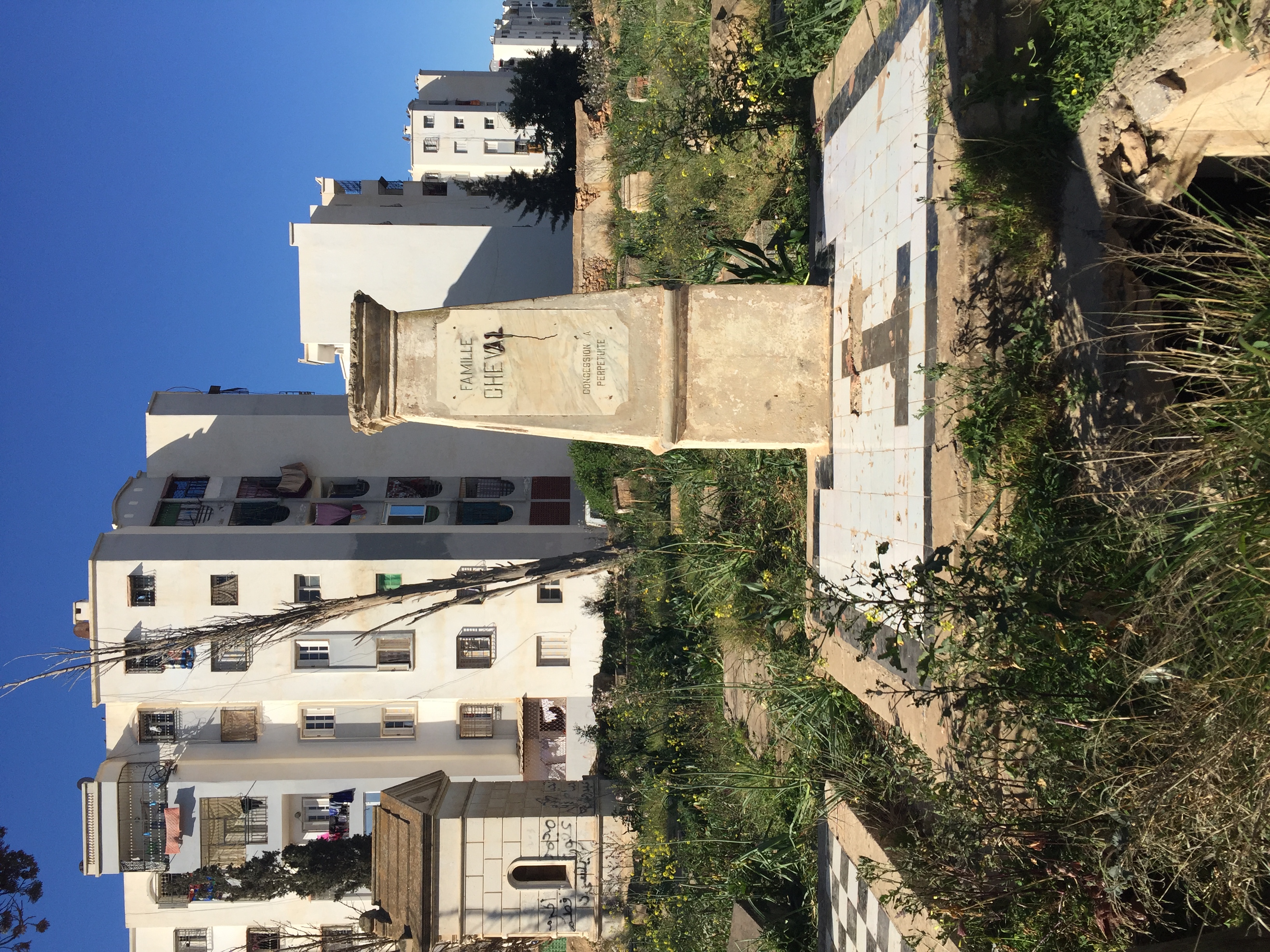
Figure 1. The abandoned Christian Cemetery of Oued Tlélat. Photo by author
Standing in this ruined landscape, I struggled to classify this place. The dissonance between the written inscription claiming the dead’s right to this land “forever” and the tombs’ crumbling physical condition created a disorienting semiotic landscape (Jaworski and Thurlow 2010). Gaping holes at the tombs’ bases suggested that this cemetery had recently been exhumed, and the corpses moved to larger urban cemeteries.2 But the tombs nevertheless remained in place, left to be slowly reabsorbed into the landscape. What was this place? Was it still a cemetery at all if there were no longer human remains in the ground? Why keep this landscape of the absent colonial Other in view—neither preserved nor destroyed? This urban place was defined by uncertainty, where signs of postcolonial urban transformation were confronted by the lingering traces of a long-dead, though never-quite-receding, settler colonial past. During my sixteen months of fieldwork, I encountered several abandoned cemeteries like Oued Tlélat’s. Often, my local urban guides appeared to pass by them without really noticing them, as if they were physically present but absent from the social imaginary. I call these cemeteries semiotic landscapes of ambivalence, spaces characterized by fundamentally contradictory material qualities that do not conform to a single, unified narrative of what this place and time signify for who we are.
Ambivalence here refers to the irreducible complexity and undecidability of meaning-making and identity (Derrida 1998; Irvine 2005), when people are unable or unwilling to classify a thing, event, or place within a culturally recognized, representational, or symbolic category of meaning (Bauman 1991). Ambivalence is distinct from bivalency, which refers to the simultaneous coexistence of a linguistic element or sign in more than one (sociolinguistic) system, facilitating practices that dismantle binary distinctions between bounded languages and cultural systems (Woolard 1999). In contrast, ambivalence highlights the underdeterminacy of indexicality as a context-dependent sign relation of causality, continuity, or co-presence (Nakassis 2018); contradictory meanings can be subtly introduced by the very nature of material objects as bundles of qualities (Keane 2005; Kockelman 2010). Ambivalence amplifies the inherent tension of presence-absence in sign relations, creating the ground for interpretations that fall between knowable categories or cannot be understood within the framework of a single system of value and personhood.
Semiotic landscapes of ambivalence foreground the margins of meaning-making—the people, things, and events discarded from social imaginaries that can nevertheless subvert hegemonic narratives of national identity (de Certeau 1984). These semiotic landscapes often embody the unstable boundaries between self and other (Bhabha 1990), potentially allowing for alternative interpretations or even creating a space for the outright rejection of interpretation, along with the complex sentiments such contradictions evoke (Jovanović 2016). For a person to be “placed” or “to know one’s place” in the social order, they often read the physical environment like a map of social meaning (Jawroski and Thurlow 2010; Duncan 1990). Therefore, attention to the people (living and dead) who are pushed to the margins of the physical landscape or otherwise made to be “out of place” can reveal the inner workings of urban social inequality and even challenge neat narratives of rupture between the colonial past and postcolonial present.
For example, it was not just the dead who were marginalized in the abandoned cemetery in Oued Tlélat; the living were subject to similar urban processes. Oran’s rapid twenty-first-century urban growth consumed nearly everything in its path, including some abandoned cemeteries. Rows and rows of uniform six-story housing complexes had been built surrounding the abandoned cemetery’s walls. A small blue street plaque facing the cemetery was the only trace of the mass urban displacement that shaped this corner of Oran’s periphery. The people here were former residents of Oran’s informal settlements and shantytowns (bidonvilles), some of Oran’s most marginalized communities. This street sign subtly mapped their marginalization into the semiotic landscape—reading, in French and Arabic, Hai Bab el-Hamra (“Bab el-Hamra Neighborhood”). The original Bab el-Hamra was a century-old shantytown that boasted one of Oran’s most spectacular views of the city and Mediterranean Sea. This new Hai Bab el-Hamra—located dozens of kilometers from Oran with a view of Oued Tlélat’s abandoned Christian cemetery—housed displaced people from the original neighborhood. I spoke to an elderly resident who told me that in 2015, city authorities had relocated them when the old Bab el-Hamra was razed to the ground and wiped from the cityscape. This new Hai Bab el-Hamra had no markets or stores, so people brought supplies to sell from their truck beds. The man lamented that they had been abandoned here as if they had no value, moved to a peripheral neighborhood that was neither preserved nor destroyed. They—like their neighbors, the abandoned dead—were a presence-absence at the margins of the city and the social imaginary. All that remained of their former life was an uprooted and relocated placename—Bab el-Hamra—a residual inscription of another gone-and-forgotten society, consumed by the fickleness of unfettered urbanism.
At the fringes of the city, I found an uncircumscribed space where the most marginalized people (both the dead and the living) gathered together, existing at the crossroads of several unstable existential divides: colonial/postcolonial, absence/presence, periphery/center, rural/urban, and dead/living. For this reason, this urban space was exceedingly difficult to categorize; residential areas and cemeteries intertwined, carrying across complex semiotic residues due to their close physical proximity and their marginal position in the social imaginary (see Lakjâa 2009). Such semiotic landscapes of ambivalence are particularly potent in postcolonial, postwar contexts like urban Algeria, where the dead play a vital, albeit contradictory, role in society. Over a century of French settler colonialism left an enduring presence in the landscape, including generations of settler dead left behind when nearly a million French Algerians (known as pieds noirs) fled at independence in 1962. In addition, Algerians endured unimaginable losses to achieve their freedom during the War of Independence (1954-1962); the presence of their independent nation was made possible only by the deaths of “a million and a half martyrs” (maliun wa niṣf shahīd). Finally, a decade of civil war (known as the Black Decade)3 in the 1990s inflicted irreparable wounds on the social body and landscape, creating a certain unspeakablity around the ongoing injustices that initially caused the social rupture. The Algerian psychoanalyst and postcolonial theorist Karima Lazali (2021:12) articulated the sentimental and political contradictions of this historical inheritance:
on the one hand, the social fabric is being torn to pieces from all directions and continues to grapple with the long history of its fight to become a ‘nation,’ the impacts of which are hard to measure; and, on the other hand, there is also an attempt to patch up these tears, a necessary step for moving on with one’s life, but also the source of new forms of violence. The social sphere both stages and witnesses these catastrophes, but it also strives at all times to cover them up, dismissing their very existence.
These foundational, even irreducible, contradictions manifest in Oran’s semiotic landscapes of ambivalence. The complex and layered presence-absence of the living and the dead in this peripheral corner of Oran became intertwined with broader scales of experience, challenging any unified meaning of what this place means for our identity.
This congregation of marginalized people (living and dead) in the urban margins is not a new phenomenon in Orani history; in fact, it is a practice that bridges the colonial and postcolonial divide. Oran’s two oldest Muslim neighborhoods—Mdina Jdida and El Hamri—both grew from the walls of cemeteries in the mid- to late-nineteenth century. Mdina Jdida—the prestigious center of Muslim life in the colonial and postcolonial eras—was built next to the Muslim cemetery, Sidi el-Bachir, a cemetery that was exhumed and displaced in 1868 to make room for a bourgeois European neighborhood. Another iconic Muslim neighborhood during the colonial-era, El Hamri, grew from the walls of the Tamashouet Christian Cemetery. Over the last hundred years, other shantytowns (bidonvilles) were built at the walls of the Jewish Cemetery (Cimetière israélite) and the so-called “American Cemetery” (Le cimetière militaire Français du Petit Lac) (Salah 2015). This aggregation of marginalized people around cemeteries was no coincidence. Instead, it was rooted in a political economy of capitalist urban land value, which voraciously consumes available lands for development, displacing people—both living and dead—to the ever-expanding margins of urban life.
For this reason, the traces of the dead Other—those banished, exiled, missing, displaced, or massacred in this land—carry a particularly unsettling presence in social life. Their deaths can shape the landscape in material and sentimental ways, such as new neighborhoods built around the footprint of abandoned cemeteries like Oued Tlélat’s. Though they subtly shape social life, these dead often remain unrecognized, uncommemorated, forgotten, or ignored. This is further complicated in post-conflict, postcolonial contexts, where people live among the material traces, ghosts, or stories of the enemy Other who lived and died here. The presence-absence of the Other can take on ambivalent forms. In Vietnam, for example, people felt compelled to care for the ghosts of dead American, French, North African, and Sub-Saharan African soldiers who died in Vietnamese wars, whose presence was the ontological opposite of the ancestors (Kwon 2008). These ghosts, nonetheless, were seen as having material effects on the world and even the right to exist among the living. The landscape was thus an “enmeshment of human remains unrelated to kinship” (ibid.:5), where ghosts introduced contradictory indexicality as “physically close but distant in relationship” (ibid.:19). This simultaneous closeness and distance have similarly influenced Oran’s cityscape. The settler dead, for some of my interlocutors, were seen as having a certain right to exist in the soil; however, the question of how to care for these dead was often answered with ambivalence.
In the following sections, I first examine how ambivalence relates to the unruly materiality of cemeteries—specifically, how cemeteries’ indexical relations of causality, continuity, or co-presence can give rise to contradictory and often ambivalent ideas about political-economic value and personhood. Next, I show that the clustering of marginalized people (both dead and living) in and around cemeteries goes beyond abandoned Christian cemeteries to include urban Muslim cemeteries as well. Drawing my attention to specific structures of likeness between various marginalized spaces (Love 2024), my interlocutors engaged with cemeteries as spacetimes situated at the fragile colonial-postcolonial divide. Finally, I analyze cemeteries as bundles of contradictory material qualities that can subvert notions of nationalist value even in places designated for Algeria’s heroic dead. In other words, French settler colonialism didn’t just leave behind its own ancestors in the soil; it also left hundreds of thousands of dead Algerians in its wake. These dead, I argue, are also colonialism’s mortal remains. Even the most honored of the dead—the anticolonial martyrs—could be woven into the politics and poetics of ambivalence, serving as signs of the postcolonial state’s victory and its excesses and falsehoods.
Ambivalent Margins at the End of a World
Early in my fieldwork, my husband and research partner Amara and I visited the large and spacious Tamashouet Christian Cemetery in Oran. Surrounded by a high wall that separated it from the city, the Tamashouet Christian Cemetery reflected and refracted the long-gone French colonial society; hundreds of spacious and intricately designed family crypts stood on tree-lined pathways, showcasing the names of French colonial Oran’s most important families (Figure 2). For up to five generations, these settlers from all over southern Europe referred to Oran as “the most European of Algerian cities,” highlighting its architectural and cultural forms, as well as one of the highest ratios of European-to-Muslim population in Algeria (Lakjaâ 2009; Clancy-Smith 2010). Then, at independence, hundreds of thousands of French Oranis fled the country (Rahal 2022; Soufi 2007), most of whom would never again return to visit their ancestors buried in Algerian soil.
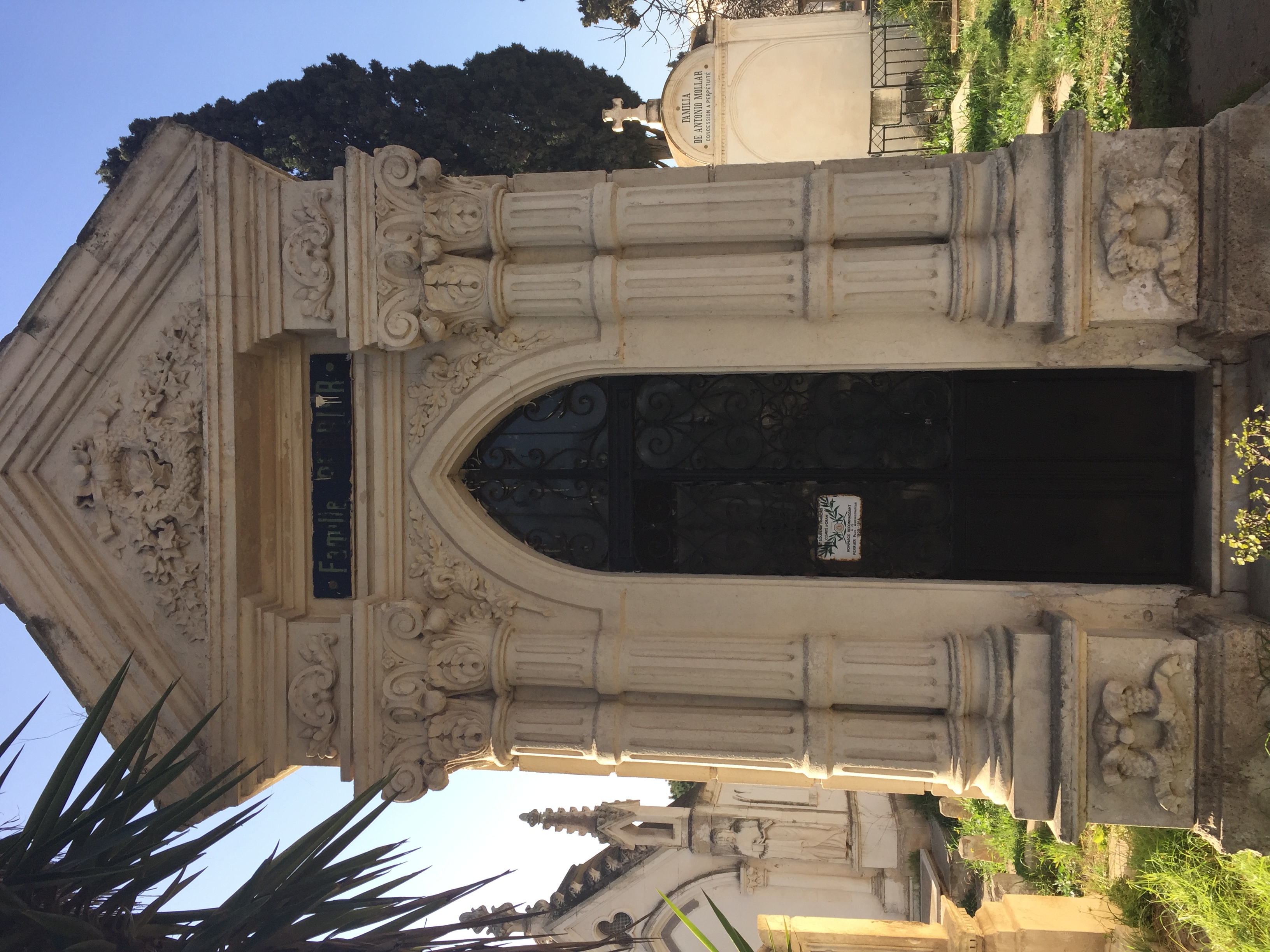
Figure 2. The family crypt of the Perrier family, the editors and publishers of Oran’s colonial-era newspaper, L'Écho d’Oran, nationalized after independence (see Love 2024). Photo by author.
Unlike the abandoned cemetery I found at Oued Tlélat, the Tamashouet Christian Cemetery was very much maintained. A flower shop outside the walls catered to occasional visitors arriving from abroad to visit their dead. Several areas of the cemetery had been recently renovated by the Marseille-based Collective for the Safeguarding of Cemeteries in the Oranie Region (Collectif de Sauvegarde des Cimetières de l’Oranie, or CSCO). For French Algerians—both those who fled Algeria and the relatively few who remained—this cemetery served as a significant memory-place (Nora 1989; Till 2003); it connected them to an ancestral past that had been purged from both Algerian and French nationalist memory (Hubbell 2007). For postcolonial France, forgetting that Algeria was once an integral part of France became essential for the new ‘mythology’ of French national identity (Barthes 2013[1957]), erasing the rupture of their failed effort in Algeria and downplaying the significance of Algeria to French history (Shepard 2006). For postcolonial Algeria, nationalist narratives depicted all Algerians as Muslims united unanimously against the colonizers while overlooking or erasing evidence that complicated that narrative, including non-Muslims who fought for independence or the internal power struggles that left many Algerians dead (McDougall 2006).4 In this context, the mere presence of abandoned Christian and Jewish cemeteries in the landscape—indexing generations of Others who lived and died here—unsettled attempts to “unmix people” (Watson and Wilder 2018) inherent to both colonial and postcolonial nationalist mythologies.
Cross-culturally, anthropologists have described cemeteries as “places where society remembers itself” (Scheele 2006a:860) within an imagined community of the living and the dead (Mittermaier 2015). Graveyards symbolically map social relations and spatiotemporal continuities onto the material environment—where people become landscapes (Bloch 1971). Commemorating ancestors, for instance, is an essential semiotic tool people use to root themselves ideologically and materially in a specific soil (Ho 2006). For this reason, nation-states often “obsessively return to the dead, especially the anonymous dead, for the construction of its sacral continuity and encompassing logic” (Klima 2009:14; Anderson 1983). People utilize the dead to reorder space and compress time (Verdery 1999), making specific dead—but excluding certain others—into the connective tissue and physical evidence for nationalist and communitarian narratives of ownership and belonging (Gal 1991). Especially in post-conflict, postcolonial contexts, “arousing the dead and obliging them to speak is an effective means to articulate political demands” (Wanner et al. 2023:191).
This scholarship, however, often focuses on the successful (though contested) meaning-making in commemorative landscapes, sometimes overlooking the central importance of the ambivalent forms and experiences that these same spaces can produce. For example, the Tamashouet Christian Cemetery in Oran also contained remnants of other graveyard stories told from the margins of urban memory-making. At the center of the cemetery, I found four whitewashed ossuaries labeled with a small plaque, already fading in the intense North African sun, marking the place names of abandoned and exhumed cemeteries whose remains had been relocated in central Oran (Figure 3). These receptacles contained the bones of thousands of settler dead, uprooted from the earth and gathered in an anonymous collectivity, labeled only by their town of origin. As such, these ossuaries embodied the “ambivalent temporalities of the nation-space” (Bhabha 1990:294), illustrating the semiotic dissidence and dissonance that arise when hegemonic political narratives of historical continuity in this land confront the unruly materiality of cemeteries and the various Others they contain. Cemeteries are complex material-semiotic bundles that can crumble, decay, be vandalized, moved, restored, valued, devalued, and ultimately reabsorbed back into the earth. Rather than being the dead’s final resting place, cemeteries are subject to the same political and urban forces that shape the city as a site of permanent-impermanence and present-absence.
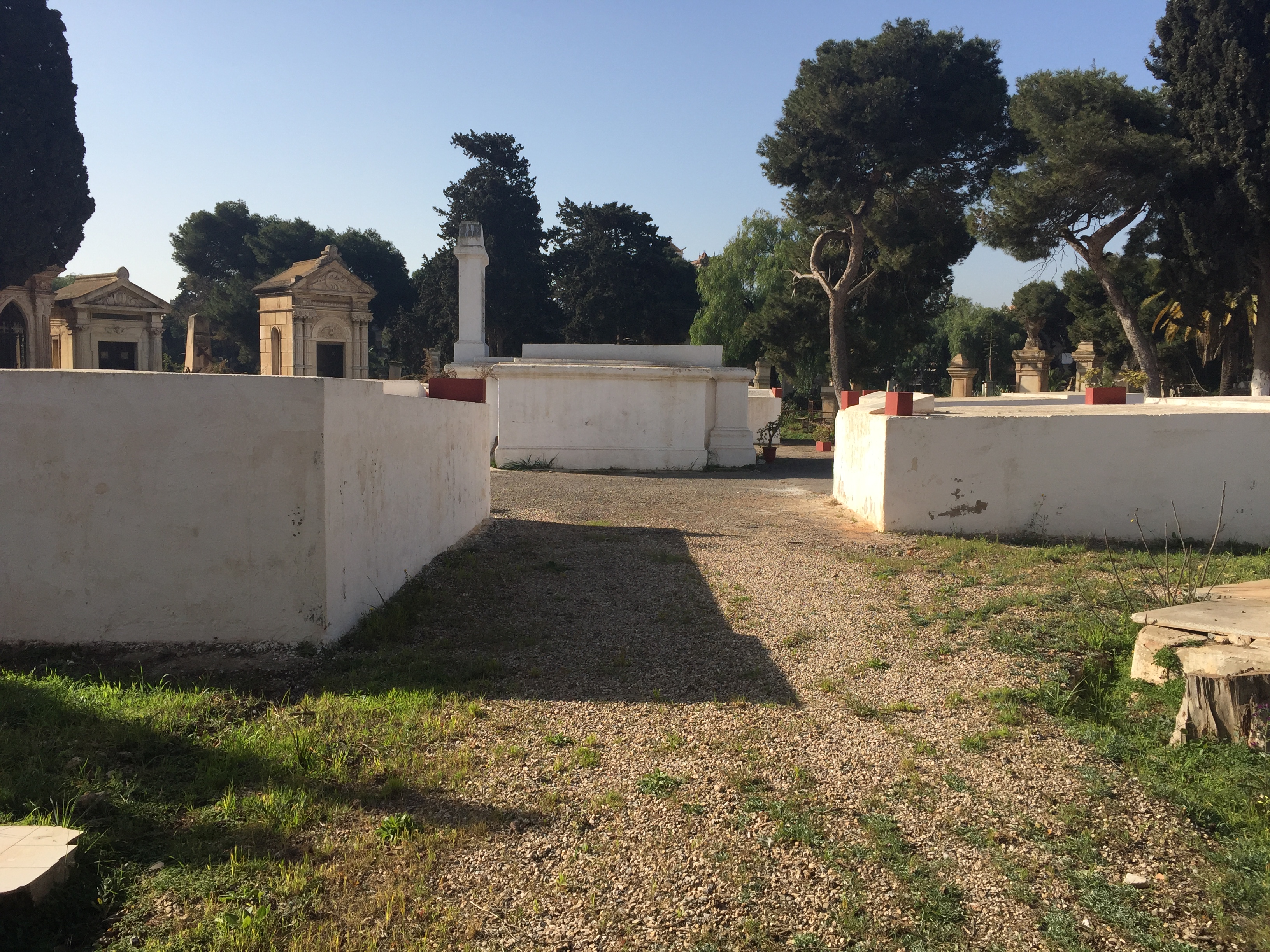
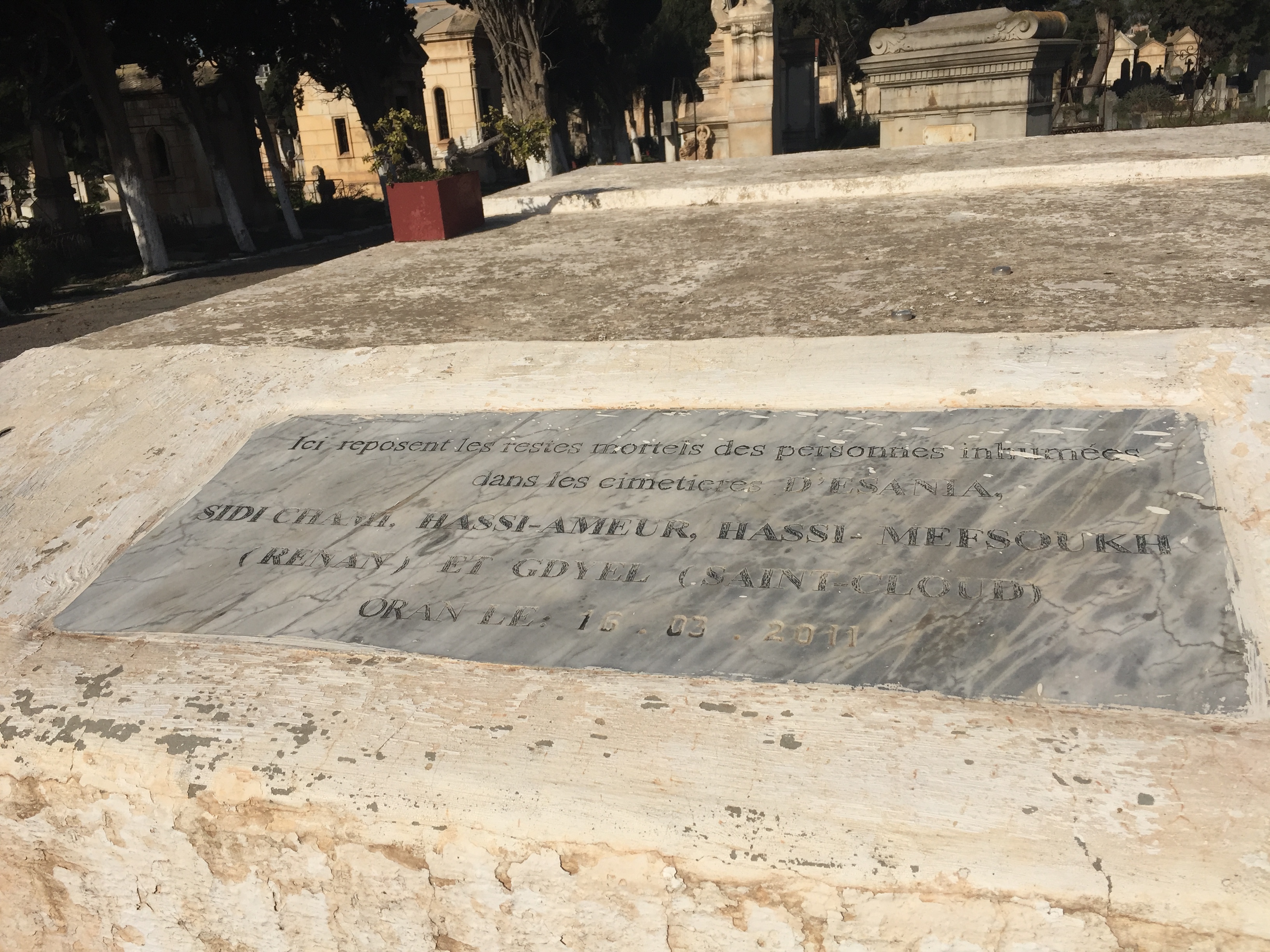
Figure 3. Ossuaries containing exhumed bones from Gdyel (Saint-Cloud). Photos by author.
To learn more about why hundreds of Algerian cemeteries—like those listed on the plaque I found in the Tamashouet Cemetery—had been exhumed, I visited Oran’s central, state-owned funeral agency. The funeral agency was in a sprawling complex hidden behind an inconspicuous gate leading into a colonial-era space with an archive, warehouse, and offices. I was accompanied by Amara and our friend Saddek, a local historian with expertise in Orani cemeteries. He had taken us here to speak to the city’s director of funeral services, who had overseen exhuming Christian cemeteries in the Oranie region in a project called regroupment (regrouping).5 In a collaboration between the French consulate and Algerian government, hundreds of Algerian cemeteries were exhumed in the 2010s, the bones relocated to ossuaries in larger urban cemeteries. Stretching over several years, authorities exhumed 523 cemeteries throughout Algeria, 453 of which were Christian, 59 Jewish, and 11 mixed cemeteries.6
After a brief wait, we were led into the funeral director’s office, a dark room clouded with cigarette smoke. We sat around a long seminar table surrounded by oversized, plush leather chairs. After exchanging pleasantries with Saddek, Amara, and me, the director asked his assistant to dim the lights and turn on the projector for a slideshow of photos taken during the exhumations. The pictures highlighted the events’ ceremonious nature; Catholic priests conducted rites during reburials in front of a small multi-confessional audience, including some French Algerians who remained after independence. As the presentation went on, it became clear that the funeral director took pride in their care for the dead. He drew our attention to the careful ways the exhumers handled the corpses—how they vigilantly positioned the bones in boxes for transport, cautiously placed them into ossuaries in a large, well-kept Christian cemetery in Oran, and the intricacies of Catholic funeral rites that accompanied these acts. I interpreted the funeral director’s presentation as a performance of what postcolonial authorities desired this project to convey: evidence of their overcoming colonial-era animosities to honor all the dead buried in its soil, a claim that seemed to contradict the concerns that initially led to regroupment. As a token of respect for the dead, the director stated that Algerian authorities had promised to maintain the land of former Christian cemeteries as “green spaces” for the community to enjoy, protected from the real estate speculation consuming the city. While these areas were no longer technically cemeteries, the director appeared to acknowledge them as places set apart, signaling that their pastness carried forward some quality or essence into the future, making them still semi-sacred, or at least off-limits for real estate speculation.
But our friend Aziz—a 28-year-old tour guide and urban activist—was deeply suspicious of the funeral director’s promise to maintain these cemeteries as green spaces. He told me that the authorities had made similar claims before, only to sell the land soon after to developers (c.f. Jonker and Till 2009). Aziz insisted this was a characteristic act of the twenty-first-century state, which builds on top of the dead without remorse. He explained that abandoned cemeteries were valuable only for the land itself, as real estate speculation had displaced thousands of Oranis from the city center, gutting the city of its historical meaning. This parallels the challenges urban preservationists face elsewhere, especially in postsocialist and postcolonial cities where “urban growth…necessitates the identification of ‘ruins’ that are lacking in worth so as to facilitate their removal from the landscape and clear the way for land privatization and real estate speculation” (Schwenkel 2013:257). For Aziz, the exhumations were yet another vivid example that concretized his grievance, serving as a material anchor for his anger toward a state he saw as devaluing both the living and the dead in its chaotic scramble to grab land for development.
To see for myself what happened to these exhumed cemeteries, Aziz agreed to take Amara and me to Gdyel, a once-small provincial town about 20 kilometers from Oran, which was known during the colonial era as St. Cloud. I discovered the name Gdyel on an ossuary at the Tamashouet Christian Cemetery in Oran, confirming that the cemetery has indeed been exhumed. As a colonial-era Christian cemetery in a small provincial town, it originally contained 453 tombs and 856 corpses. While driving through Gdyel, I noticed that the town was also rapidly expanding to accommodate tens of thousands of Oranis relocated from decaying urban neighborhoods (ḥomāt) and informal housing in shantytowns closer to the historic center of Oran. This was part of a nationwide initiative to construct two million public houses to alleviate the acute housing crisis and “buy the peace” after the brutal Black Decade.7 Part of this process of urban transformation was moving living people into Gdyel while moving dead people out.
When we arrived in Gdyel, we stopped to ask a man for directions to the “Christian cemetery.” He directed us to it without any hesitation, demonstrating that, at least for this man, even though the space no longer contains corpses, it was still socially acknowledged as a Christian cemetery, at least for the time being. We parked the van next to the public housing at the former cemetery’s edge. In many ways, this was a beautiful space, with the green of the spring grasses complementing the crystal blue sky. However, this former cemetery could not have been what the funeral director meant by a “green space.” Dozens of crumbling family crypts and smaller tombs scattered the terrain, with holes in the ground where bones had been extracted a decade earlier (Figure 4). While the corpses had been removed, the tombs themselves were left in place to slowly crumble, just like in Oued Tlélat. A few tombs bore graffiti, but many still contained intricate carved and painted Christian imagery, family names, and birth and death dates—semiotic fragments of French Algerians’ past claims to this land.
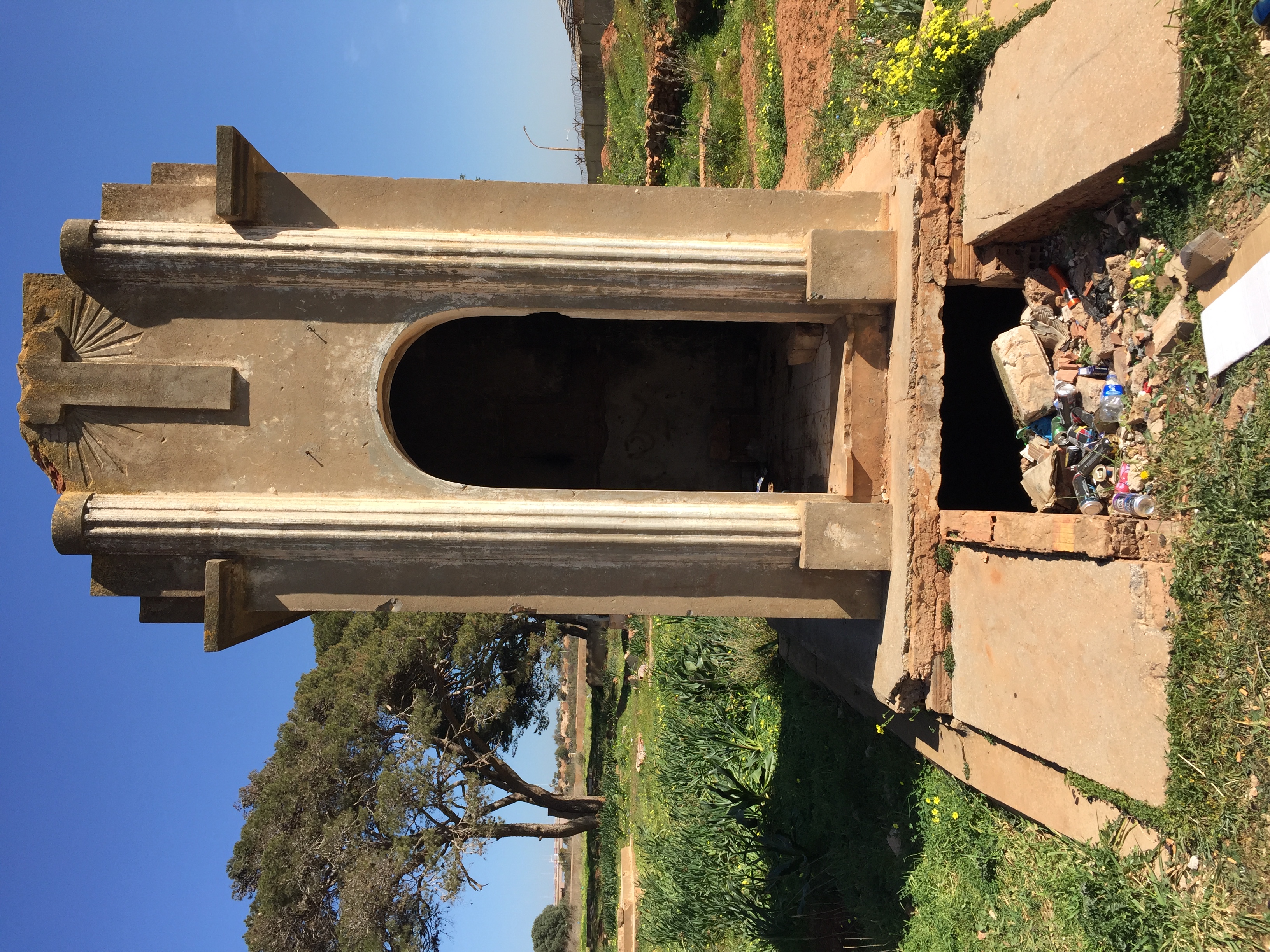
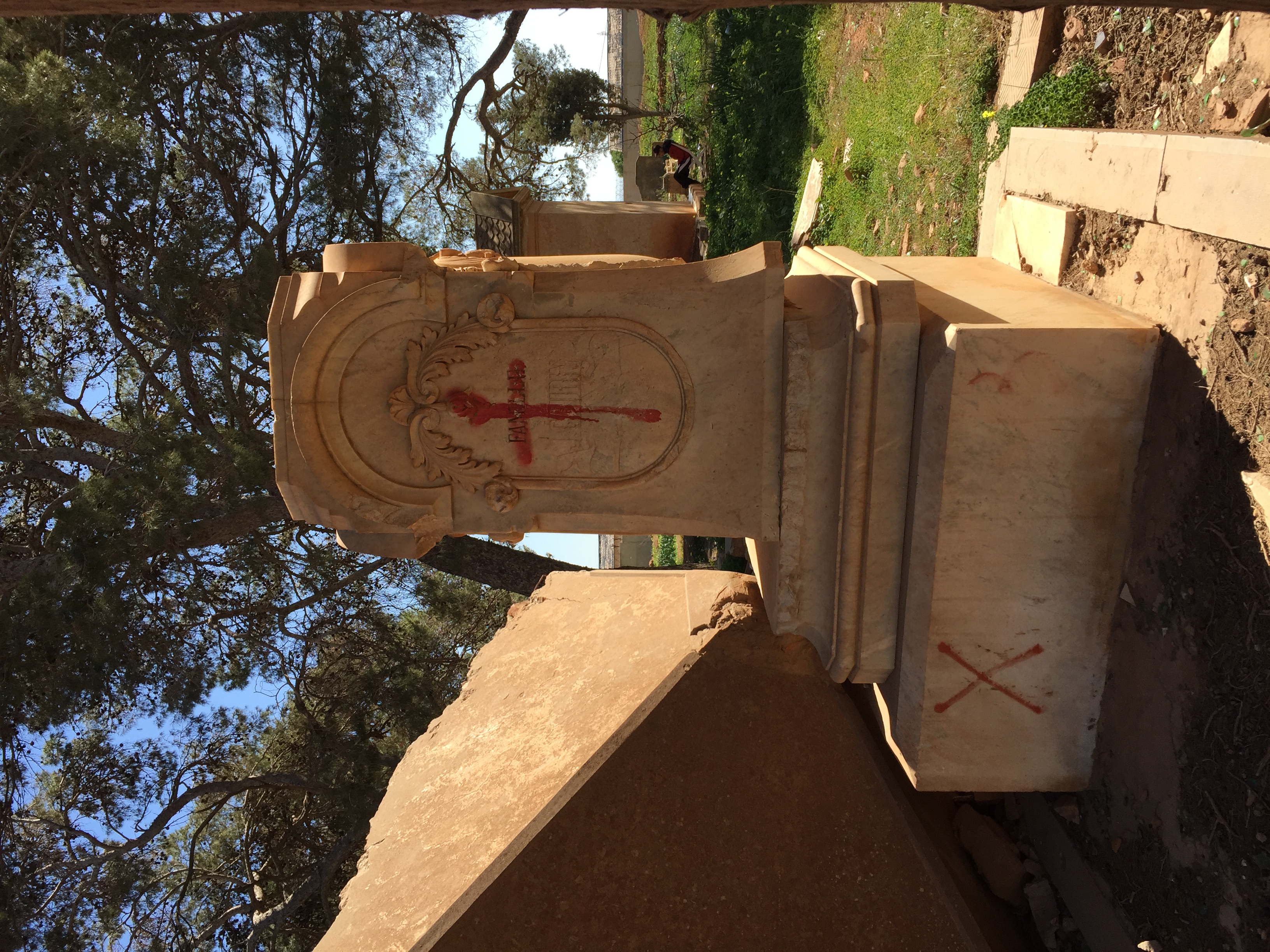
Figure 4. Family tombs at the exhumed Christian Cemetery of Gdyel. Photo by author.
Several of my interlocutors explained that abandoned cemeteries had become particularly problematic sites for late twentieth and early twenty-first century postcolonial authorities, perceived as unruly places outside of social control and value. They had a reputation for being locations where the most socially marginalized people would gather to drink or engage in other stigmatized behaviors. During the Black Decade, these sites were also believed to be hideouts for anti-government militants. Due to their disorderly nature as physical spaces resisting social control, abandoned Christian and Jewish cemeteries became a problematic optic for the postcolonial state; occasional pictures and stories would circulate online on French Algerian websites or in the French press about desecrated or profaned Christian and Jewish cemeteries. While some had likely been tampered with by humans, from my observations in the Oranie region, most cemeteries were treated with ambivalence. They remained undefined spaces, neither preserved nor completely destroyed. They were dying landscapes, victims of neglect—no longer cemeteries in some respects, yet not quite not cemeteries in others. And they were spaces that fell between recognized social categories of urban meaning.
Indeed, in the Gdyel cemetery, small groups of men lounged around the remaining tombs, surreptitiously gazing at us as if we were intruding on their private space. There were piles of beer cans filling the holes from which the human remains had been extracted. Instead of a public park, this was a graveyard of another sort, a resting place for socially marginalized things, both inanimate and human. The material presence of discarded things seemed to index a different, more confused, narrative than that told by the funeral director and Aziz. The cemetery’s materiality showed both great care in removing the dead and an utter disregard for what the space would become afterward. It was a space between a never-entirely-receding colonial past and a postcolonial future that struggled to be born, embodying a postcolonial experience where “past, present, and future are almost indistinguishable” (Lazali 2021:10). These contradictory temporalities made this space a semiotic landscape of ambivalence, defined not by stable social value and categories but instead by the uncanny experience of vanishing (Ivy 1995), that is, of “something passing away, gone but not quite, suspended between presence and absence, located at a point that both is and is not here in the repetitive process of absenting” (Ivy 1995:20). Like the colonial past, this cemetery was almost gone, but not quite. Perhaps this was not a cemetery at all but something in-between, falling between knowable categories of urban space, suspended in a complex temporality.
Extrapolating from this case, one can see that all cemeteries—albeit in different ways— straddle the disjuncture between the social symbolism attributed to them as valued sites of cultural continuity—indicators that “we” have been here for a long time—and what can happen to cemeteries as material places in an ever-changing world. In other words, while people may claim that a grave is a person’s final resting place, in reality, graves have definite lifespans. This is because graves are material: they simultaneously have a tangible, tactile presence in the world and are embedded in political economies (Cavanaugh and Shankar 2017). Individuals can remove, destroy, refurbish, restore, copy, or assign monetary and social value to graves (and the land they occupy); they can place graves next to other physical objects and people that influence their meaning or allow them to decay until they have an utterly morphed presence-absence. These actions can have profound impacts on peoples’ lives as well as their deaths, a point to which I now turn.
Matters of Life and Death
During my fieldwork, some of my interlocutors suggested to me that the discarded people and things around cemeteries revealed something fundamental about their postcolonial lives. For them, these cemeteries and the marginalized people who congregate around them were tangible evidence that independence did not mark a complete rupture with colonialism but rather the start of its complex afterlife (Derrida 1994; Stoler 2013; Çelik 1997; Ross 2016). In Algeria, a defining characteristic of French settler colonial urbanism was the simultaneous appropriation of land into a capitalist value system while devaluing the colonized people who lived on those lands. Settler colonialism reshaped the urban semiotic landscape to reflect the settler’s “own image…[and] in a natural reversal, the colonized end up appearing as foreigners” (Bourdieu 1958:114). Throughout France’s 132 years in Algeria, the colonial state and its policies uprooted Algerians from their ancestral lands—including the cemeteries in which their dead were buried—and eventually remarketed that land as real estate. According to the Algerian psychoanalyst Karima Lazali (2021:41), this colonial violence led to a “deep-seated feeling that human life has no value. This last point endured more than any other, even long after Independence.” In other words, the creation of land value and the devaluation of human life (and death) often go hand in hand with urbanism. No landscape encapsulates this dynamic more aptly than urban cemeteries and the marginalized (living) people that congregated around them, a form of colonial urbanism that has endured—even accelerated—in the twenty-first century. This is true not only in abandoned Christian cemeteries—the relics of a dead colonial past—but also in the similar processes that shape Muslim cemeteries and postcolonial lives.
For example, one day, I was riding in the back of a taxicab with Omar, a soft-spoken taxi driver in his early 40s who occasionally let Amara and me ride with him during his workday. After picking up and dropping off a few clients, I asked him, “Are there any places in the city where you would refuse to take a client?” Omar responded without hesitation, “Sidi el-Bachir.” Code-switching between Arabic and French, he explained that Sidi el-Bachir is a place of fawda (chaos) made up of paysans (peasants). I was intrigued and a bit puzzled by his response. I could see Sidi el-Bachir from my kitchen window, just one exit from my neighborhood on the 4th Periphery Highway. To an outsider like me, there wasn’t much about Sidi el-Bachir’s external appearance that made it seem different from its surrounding neighborhoods and towns. The buildings appeared to be constructed of the same materials—primarily exposed cinder blocks with unfinished façades—resembling the ubiquitous do-it-yourself additions to houses and buildings throughout the city. Once peripheral, Sidi el-Bachir was steadily becoming absorbed into the dense urban sprawl that had exploded in the late 2010s (Lakjaâ 2009). Numerous construction cranes bearing Chinese characters, tall real-estate towers, advertisements for logements de promotion (private housing), and a massive new stadium for the Mediterranean Games folded Sidi el-Bachir into this new urbanism. For many Oranis like Omar, however, Sidi el-Bachir remained a bidonville (shantytown)—informal housing, sometimes built over generations, not officially sanctioned by local urban planning. Numerous shantytowns—big and small—were integral to the Orani cityscape, housing hundreds of thousands of Oranis. For over a century, shantytowns provided shelter for rural-to-urban migrants fleeing various environmental and manufactured disasters, as well as violence (both colonial and postcolonial) that afflicted rural communities in particularly brutal ways. Both colonial and postcolonial governments tried to relocate residents from shantytowns, sometimes successfully but more often not (Crane 2018; Henni 2017). For many Oranis I spoke to, the very name Sidi el-Bachir carried stigma, rooted in its residents’ marginalized position—both physically and socially.
Later, while I was in the cab of Miloud—a different taxi driver and friend in his early 50s—I asked him where people from his neighborhood, Gambetta, buried their dead. He told me, “Sidi el-Bachir,” adding that his parents were buried there. I was momentarily taken aback; the same place where one taxi driver told me he wouldn’t take clients was also the site of one of Oran’s largest Muslim cemeteries. The shantytown Sidi el-Bachir—like so many others—had been constructed around the walls of the cemetery. As I have already mentioned, the vacant land surrounding Oran’s cemeteries has long attracted informal settlements and marginalized people. In Oran, colonial authorities moved cemeteries away from the city center as part of an eighteenth- and nineteenth-century urban movement in France and its overseas territories to relocate cemeteries outside the city walls to combat overcrowding and promote hygiene, urban aesthetics, and air quality (Kolnberger 2018). At the same time, population growth in Oran brought urban housing (both formal and informal) closer to peripheral cemeteries (Benkada 2019). The constant urban struggle over land use for the dead (in cemeteries) and land use for the living (in housing) continued well after independence and into the twenty-first century.
As a placename, Sidi el-Bachir signified not only an urban place but also a bundle of complex historical, social, and political-economic dynamics that added value to the land and devalued the people who inhabited it. Indeed, the name served as an archetypical example of how language straddles the colonial and postcolonial divide. This is because in the twenty-first century there are two urban zones named Sidi el-Bachir in Oran: one in the periphery and one in the city center, tied together by a history of displacement, both of the living and the dead. In 1963, a year after independence, urban authorities decided to rename the entire city, removing French-era placenames and replacing them with the names of martyrs and, in some cases, returning a place to its precolonial name. This was true for the bourgeois colonial-era neighborhood Plateau St. Michel, which was officially renamed Sidi el-Bachir after independence. This choice was perplexing, given that there was already an informal village named Sidi el-Bachir on the outskirts of Oran. The rationale behind this decision was to redress a colonial-era wrong, but the result was a semiotic landscape of ambivalence, serving as a trace of an unclassifiable social category—a remnant of a past that was gone yet still present.
When the French arrived in Oran in 1831, the Sidi el-Bachir cemetery was already one of the most prominent Muslim cemeteries in the city. Established in 1792 by the Ottoman Bey Mohamed-el-Kabir, it occupied nearly 10 hectares (about the size of four football fields) not far from the city walls at that time (Benkada 2019). After the French burned large Muslim settlements, displacing their inhabitants, the colonial city began to expand beyond the old walls. Local officials selected the land adjacent to the Sidi el-Bachir cemetery to “regroup” various Muslim tribes they wanted to closely surveil. The planned neighborhood was derogatorily named Village nègre by the French and Mdina Jdida (“the new city”) in Algerian Arabic. Shortly after its construction in 1845, Mdina Jdida became the hub of Orani Muslim life, which was further reinforced by its proximity to the community’s sacred necropolis, martyrs’ cemetery, and the saint’s sanctuary of Sidi el-Bashir. However, in 1868, two decades after Mdina Jdida was established, French urban planners and authorities determined that this Muslim cemetery needed to be relocated to clear space for European housing (Benkada 2019). In 1868, French colonial authorities exhumed and transferred the cemetery to its current peripheral location. All that remains of its former presence in the city center was the mausoleum of Sidi el-Bachir, a Muslim saint believed to be buried in Oran and its postcolonial name.
In 1963, postcolonial local authorities renamed the neighborhood built atop the old Muslim cemetery as a symbolic reparation for settler colonial displacement. However, by using the name Sidi el-Bachir for this neighborhood, authorities evoked various associations and meanings tied to another part of the city, Sidi el-Bachir, the shantytown built next to the displaced cemetery in Oran’s far periphery. During the Black Decade of the 1990s, Sidi el-Bachir the shantytown grew as rural inhabitants fled to the city for its relative safety. This was likely one reason why residents of Sidi el-Bachir in the city center avoided that name for their neighborhood, instead opting to call it by its colonial-era name, Plateau St. Michel, or simply Plateau (Boumedini and Hadria 2012; Kettaf 2017).
Intrigued by this history, I asked Miloud if he would take us to the cemetery. Agreeing, we drove through Sidi el-Bachir, the shantytown. The relatively well-maintained blocks lining the 4th Peripheral Highway began to be littered with more and more trash and increasingly makeshift buildings. Miloud explained that Oranis refer to the residents of Sidi el-Bachir as nouveaux débarqués, a French nautical metaphor for people who have recently arrived in Oran from rural areas. When I asked how he knew they were newcomers, Miloud pointed to the garbage strewn across the streets, saying, “These people can’t live without trash. They wouldn’t know what to do without it.” Like at the Gdyel cemetery, trash seemed to signal people’s ambivalence toward the space—as neither preserved nor destroyed—existing between the categories of residential space and garbage dump. Most unsettling, he added that these people were qash bakhta, using an Algerian proverb to denote “people without value.” Garbage served as a central symbol in Oran’s depiction of rural-urban differences. For many Oranis I spoke with, it served as a sign that “outsiders” (barrani) were destroying the city. Drawing attention to someone else’s trash seemed to reflect the category of personhood to which Miloud saw himself as belonging: a valued “son of the city” (wild waḥrān). Miloud’s dismissive comment about these people being “without value” indirectly indexed his own value in the urban hierarchy of personhood.
In addition, the label “son of the city” assembled together various signs of urbanity, including talk about where one’s parents and grandparents were buried. For Miloud, his parents’ burial plot in Sidi el-Bachir represented more than just the resting place of his ancestors and possibly his future self; it signified his connection to this land and to the city in particular, conferring a certain status by indexical relation. Arriving at the cemetery, Miloud parked the car inside the cemetery gates and guided us through low shrubs along an unmarked path toward his parents’ graves. In this section of the cemetery, there were fewer tombstones. Instead, ordinary rocks delineated the gravesites (Figure 5).
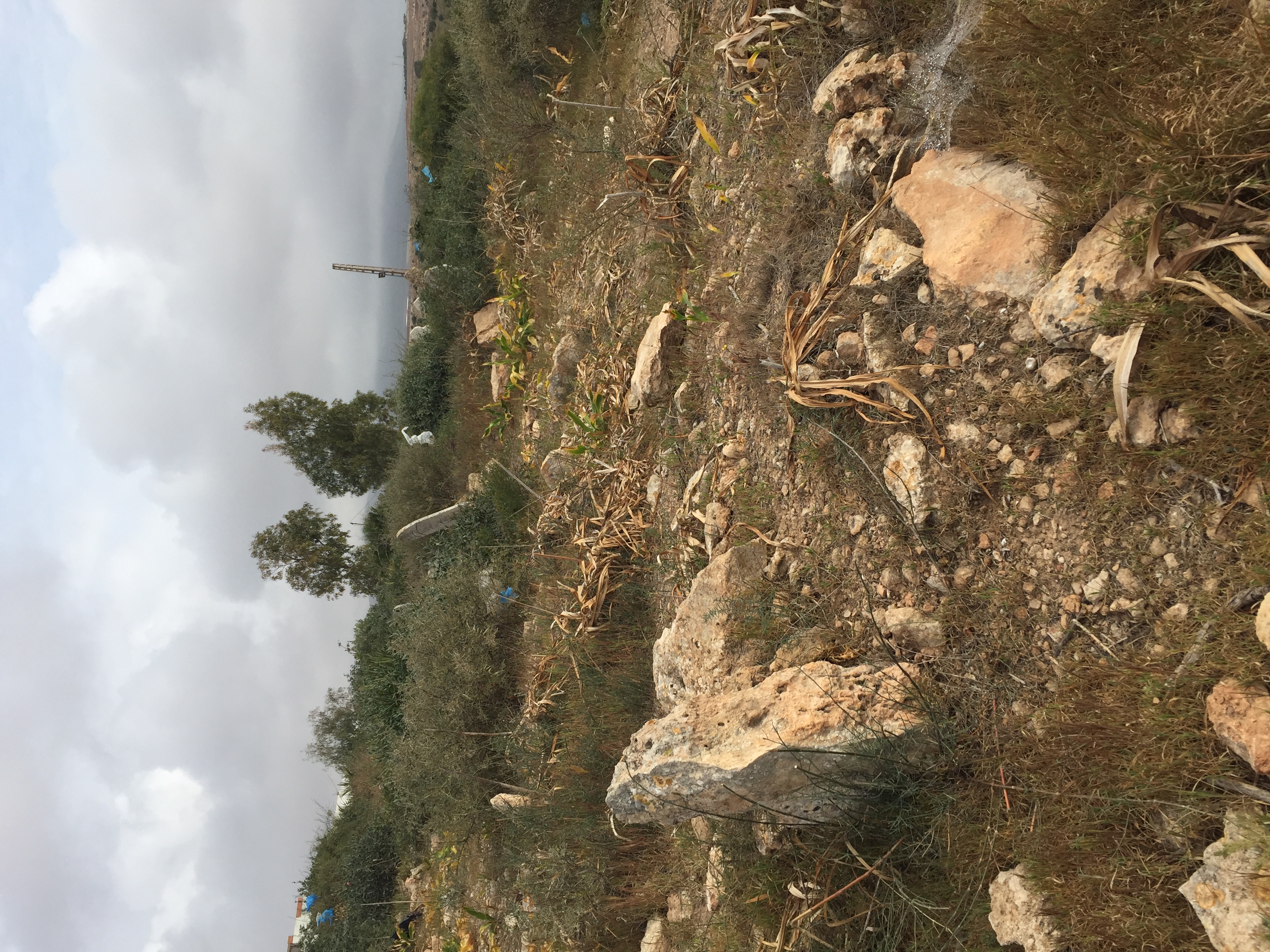
Figure 5. The site of Miloud’s parents’ graves. Photo by author.
In this semiotic landscape, only the memories of the living marked the dead, whose gravestones were rapidly being absorbed back into the earth. We stood for a few moments paying our respect to his parents and then wandered among the graves of Oran’s poor, who couldn’t afford or decided against more enduring tombstones for their dead. He also showed us the saint’s tomb at the center of the cemetery, where a bomb was left during the Black Decade; such tombs were traditional (mostly female) spaces for North African religious practice, increasingly at odds with the ultra-orthodox worldview of Islamist militants.
We then returned to Miloud’s car. When we left the cemetery gates, I saw that high piles of rubble blanketed a vast area immediately outside the cemetery walls: concrete slabs, bricks, metal posts, tiles, and a few remaining partial walls, alongside a shoe, toothbrush, and plastic bottles. These were the remains of shanties that Miloud said housed thousands of people before it was recently bulldozed to the ground. Next to the rubble were several brand-new public housing complexes built for the former inhabitants, the marginalized people of the shanties at the cemetery’s walls (Figure 6). At this sight, Miloud scoffed. This was an example, he said, of the corruption of Algerian society. Implicit in Miloud’s reaction were questions about favoring one group over another. For him, this semiotic landscape seemed to capture the social ambivalence attached to cemeteries, where the value of people and land were muddled. This spot was one of the most important sites of his life—not only where his parents and grandparents were buried but also where he will likely be buried. It is a place he visited regularly. As a semiotic landscape, it rooted him deep into the earth as a true “son of the city.” However, due to its indexical relation to the shantytown now in rubble, the very same landscape served as a reminder of how “newly embarked” residents already have public housing while he does not.
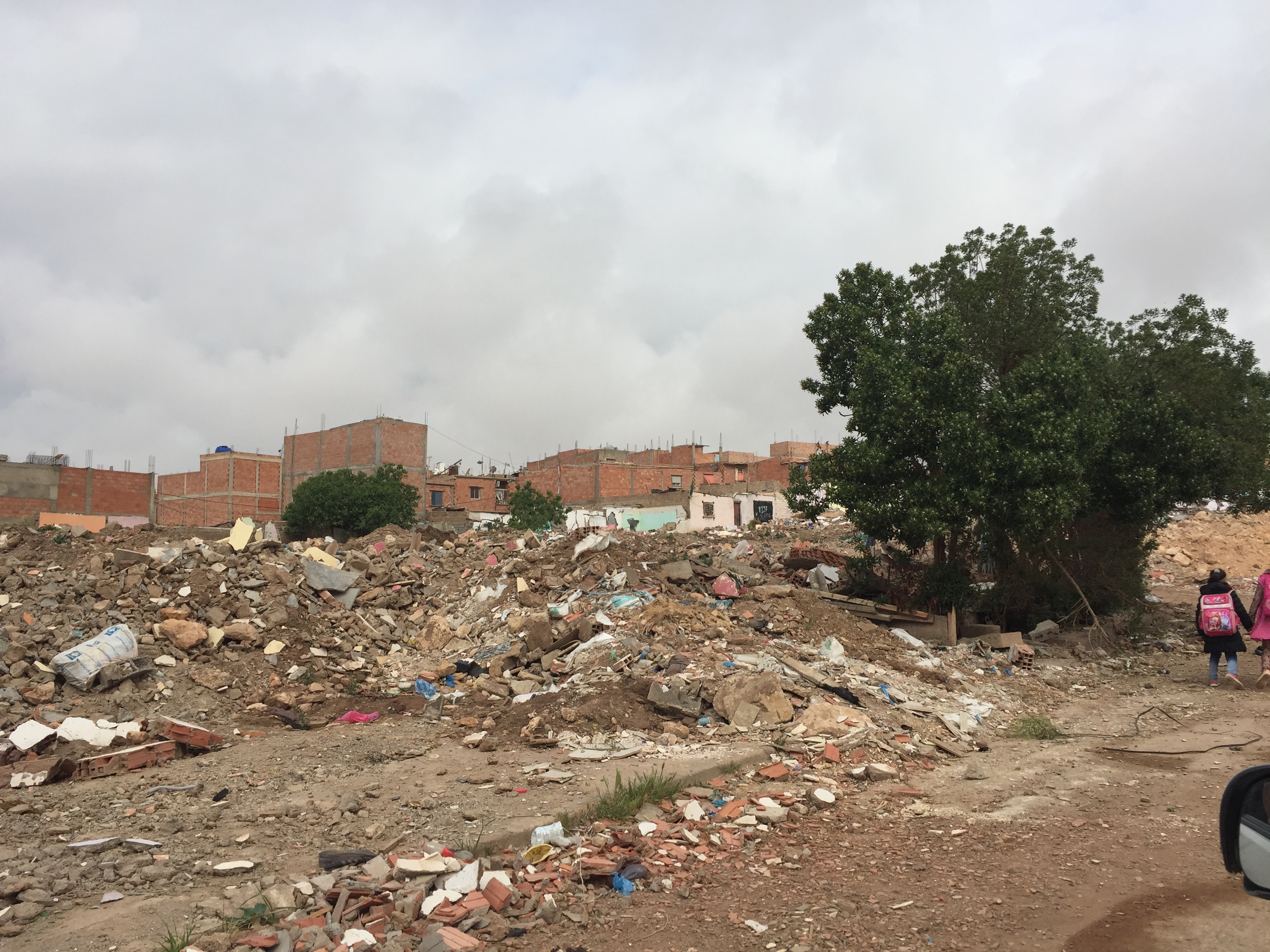
Figure 6. The remains of the shantytown—demolished, but with the debris left in place—outside the gates of the Sidi el-Bachir Cemetery. Photo by author.
This semiotic landscape of ambivalence was not merely a matter of urban chauvinism for Miloud; it was a question of life and death. Miloud’s family of four lived in a damp, dark three-room house that shared a courtyard with several other households. His twenty-year-old son had recently undergone surgery for a brain tumor, his wife in her 40s had a mastectomy for breast cancer, and his 5-year-old daughter developed asthma. He believed that their dilapidated housing near the city center endangered his family. Thus, the imagery of these so-called “outsiders” (barrani) receiving public housing built explicitly for them due to their residence in the shantytown adjoining the cemetery’s wall seemed particularly unjust to him. He was the one with five generations of family buried in the ground, a tangible testament to his long line of continuity and, therefore, his claims to the city. These Others used their physical proximity to the dead to manipulate the system—exploiting their visibility to the many visitors to this main Muslim cemetery—to be moved up the waiting list for public housing and, indeed, have housing built specifically for them. As this anecdote illustrates, people’s experiences of urban space become muddled when otherwise disparate signs intermingle, and urban spaces bleed into one another, carrying their complex semiotic residues in a city where the colonial past remains present, even in the form of the postcolonial state itself.
The contiguity of these two semiotic chains—his dead ancestors and the outsider Others—combined within a single semiotic landscape made Miloud feel like a native son and a foreigner in his land. Indeed, this dual identity was central to the experience of coloniality and its prolongation. Under French rule, Algerians were both indigènes (the natives) and treated as outsiders in their own country; they were compelled to learn French, while Arabic was taught as a “foreign language” in schools (Mokhtefi 2021). Settlers endeavored to create a semiotic landscape where they positioned themselves as the “natives” by burying their dead in the soil and removing Muslim cemeteries to build the city (Djerbal 2016; Barclay, Chopin, and Evans 2018). However, for Miloud, independence did not resolve (nor dissolve) that colonial double bind. Instead, he continued to live in a landscape filled with deep ambivalence, resting on the unstable colonial/postcolonial divide. And Miloud’s struggle was not unique: during my fieldwork, I found a similar ambivalence scaled up onto the national level, where cemeteries come to embody a complex spatiotemporal disjuncture, even in sites of official nationalist commemoration, a point to which I now turn.
An Ambivalent Community of the Living and Dead
Even in the most centralized and hegemonic narratives and semiotic landscapes, one can find traces of the marginalized—people, stories, and events purged from the nationalist worldviews but which have nevertheless left an imprint. These remnants can take specific material forms, which, in turn, were seen as evidence of colonialism’s prolongation for some people I met. Globally, cemeteries often serve as material sites where nation-states seek to control nationalist narratives, instilling a heroic story of a liberated, independent society rooted in a particular land (Branche 2011; Scheele 2006a). Especially in polities that solidify around violent events, “bodies of martyrs substantiate allegiance by providing concrete, specific examples of national dedication, echoed in the contracts signed in blood” (Wedeen 1999:64). Martyrs, however, are not just claimed by nation-states. Due to their transcendent legitimacy, martyrs have become central figures in recent anti-state revolutions throughout the Middle East and North Africa (Mittermaier 2015; Buckner and Khatib 2014). The semiotic flexibility of martyrs is based not only on the sacredness of martyrs’ actions and bodies but also on their complex material afterlives. Whether through burial sites, images, statues, or utterances that echo the martyrs’ famous words, the heroic dead become semiotically bundled with other things, qualities, and ideologies. While martyrdom developed into a nationalist genre of personhood (Boyarin 1999; Mittermaier 2015), it also became indexically entangled with the materiality of other kinds of dead—like the collaborators and traitors I discuss below—in the same landscape.
In other words, cemeteries are not just physical places where people bury their dead; they are also sites where stories get constructed around particular regimes of commemoration—i.e., “places where society remembers itself” (Scheele 2006a:860). Like the complex materiality of graves that I explored in the last two sections, commemorative projects also must reckon with a certain irreducible presence-absence of social life. Commemoration is not only about presencing (and remembering) the absent dead through material forms, like monuments, statues, or tombstones; it is also about absencing (and forgetting) other stories, events, and dead people that do not fit into specific commemorative narratives. This absence, however, can create its own force field, embodying a specific type of material presence around what has been left out, excluded, or marginalized in the commemorative regime. The physical presence of the absenced Other in hegemonic commemorative spaces can create another type of semiotic landscape of ambivalence.
In postcolonial Algeria, the heroic dead of independence—the martyrs (al-shuhada')—are the core of the Algerian commemorative regime. Algerians frequently refer to themselves and their fellow countrymen as the “people of a million and a half martyrs” (sha‘b al-maliun wa niṣf shahīd). Commemorative semiotic landscapes honoring the martyrs’ sacrifices are everywhere: nearly every street, plaza, and building was renamed in honor of the nation’s heroic dead; statues and monuments can be found in nearly every town; and photos of the martyrs adorn most public and many private buildings. I discovered during my fieldwork that the martyrs were almost universally venerated as the moral center of postcolonial society, with the war as its moral benchmark (Vince 2016).
But just who the martyrs were—and the persistent presence of what people referred to as the “fake martyrs” (Love 2021)—was also a point of bitter contention and even confusion. People sometimes accused the martyrs’ families of exploiting the dead for financial benefit and even making false claims of martyrdom. As both the heart of national identity and a site of dispute, the martyrs’ physical presence in the form of placenames, images, statues, or other representations (Love 2024) in the landscape could sometimes provoke ambivalence. Significant gaps in the hegemonic nationalist narrative of heroic liberation—such as untold stories of fratricide, power struggles, and betrayals—became points to which my interlocutors consistently directed my attention. The physical landscape was drawn in as evidence of these gaps in the historical narrative, emerging as a focal point of ambivalence that highlighted the contradictions inherent to postcolonial commemoration.
For example, Amara and I once visited the Aïn Beida cemetery, the largest currently operating Muslim cemetery in Oran, located on the city’s southern edge, with Rachid, a local expert on Orani history and heritage. The French opened Aïn Beida in 1957, during the War of Independence (Hirreche Baghdad 2013). As a result, the first bodies buried there were Algerians who were killed in the conflict, including those who fought both for and against the French. Since then, the cemetery has steadily expanded and is one of the two main cemeteries for Oranis (the other being Sidi el-Bachir). As we stood near the entrance by the towering Martyr’s Memorial (maqam al-shahīd), Rachid pointed to the whitewashed walls that created a boundary between where we stood and the sea of other graves just beyond them. He told me that, in 1973, local urban authorities built this wall to create a martyrs’ corner (carré des martyrs), carved out of the increasingly sprawling cemetery. Slowly, we walked through this enclosed section, commenting on specific tombstones as we passed. Many of the tombstones here were made of well-kept and clearly marked marble with names and birth/death dates legible in both French and Arabic. These tombstones often featured official Algerian nationalist iconography, such as the Algerian flag. Many of these were new tombstones, which gave these dead the label of “martyr,” aiming to raise awareness and preserve the graves of the heroic dead of the War of Independence.
However, I also noticed other graves, often side by side with these well-maintained burial sites, that had long ago lost any visible inscription. All that remained of these plots were chunks of rocks covered by weeds, decomposed and reabsorbed into the earth (Figure 7).
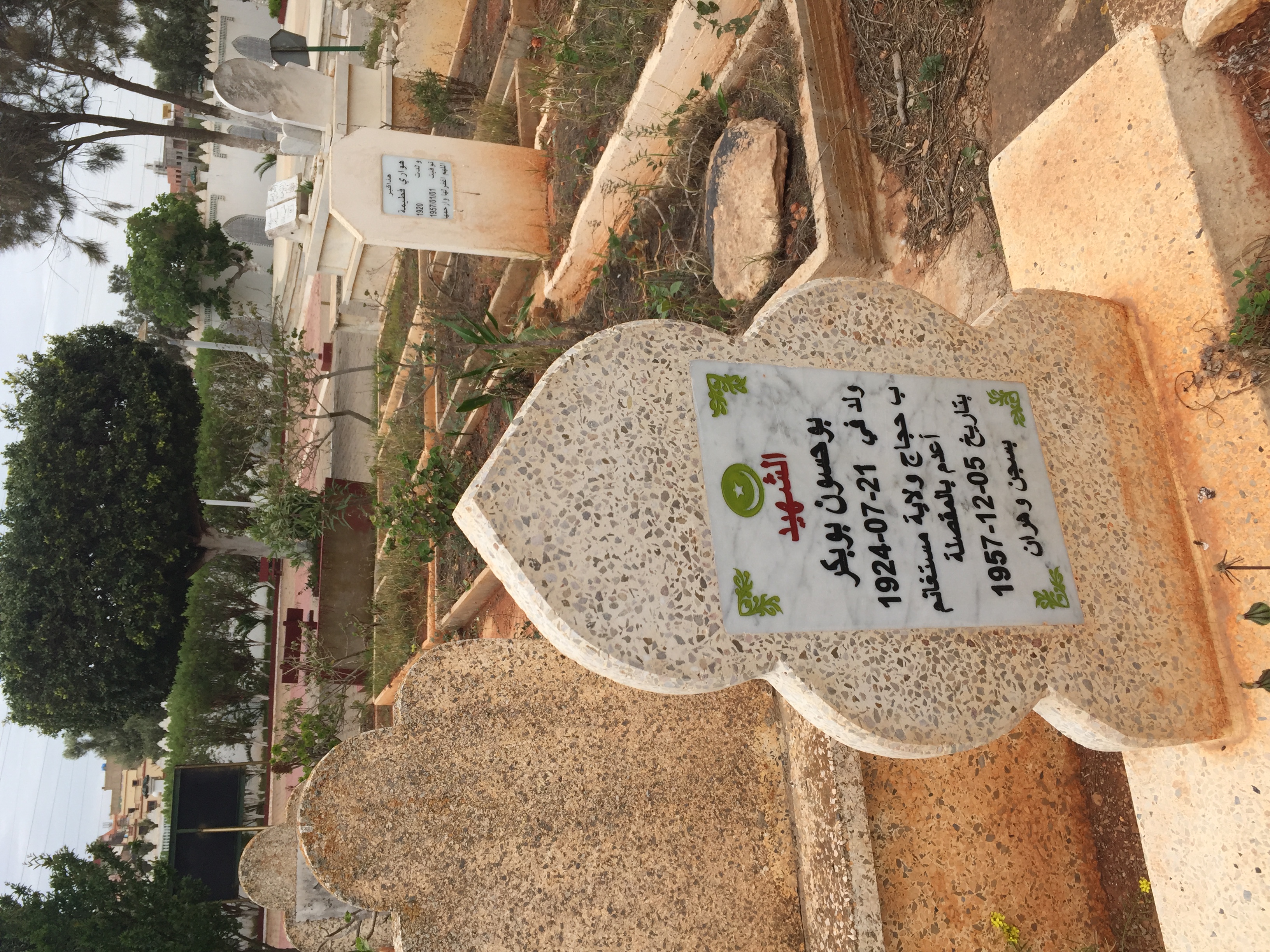
Figure 7. The grave of an Algerian martyr guillotined during the war next to unmarked burial plots. Photo by author.
I asked Rachid why certain graves were carefully maintained while others were neglected and left to decay, all within the walls of the martyrs’ corner. Rachid explained, “Oran doesn’t have a martyrs’ cemetery. There is only this martyrs’ corner (carré des chouhada) with the first martyrs of the Revolution. Still, they are buried alongside collaborators (les collabos) who were killed at the same time… who should be exhumed and relocated elsewhere, but…” Rachid trailed off. The first part of his utterance evoked a specific sense of ambivalence I had encountered before. The fact that Oran didn’t have a dedicated martyr’s cemetery was striking in its absence, especially considering the ubiquity of martyr’s cemeteries as fundamental social institutions in nearly every city, town, and village across the country (Scheele 2006b). In some ways, this aligned with a national stereotype; many people across the country believe that Oranis didn’t participate in the War of Independence. Some of my Orani interlocutors dedicated themselves to dispelling that myth. However, the absence of a martyr’s cemetery in the semiotic landscape manifested this uncertainty and ambiguity toward Oran in the postcolonial imaginary. Oran fell between definable categories in the postcolonial cartography of meaning, rendering the city somewhat unreadable within the nationalist narrative of the past. Second, and even more consequentially, Rachid drew on the unruly materiality of the cemetery—tombs maintained and unmaintained side-by-side—to scaffold his socially meaningful yet ambivalent understanding of the postcolonial state’s commemorative regime, where Algerian martyrs and collaborators could be buried together within the same semiotic landscape.
This juxtaposition of maintained and abandoned tombstones suggested that the state’s commemorative landscape conveyed only part of the story of the War of Independence and may even be an outright deception. For Rachid, the martyrs’ corner of Aïn Beida emerged as a tactile and sensory manifestation of a shared vernacular trope I encountered throughout my fieldwork: the heroes and traitors of Algerian history get confused in the state’s narratives of the Revolution, whether purposefully or accidentally, due to incompetence or ignorance. Perhaps this began as the “strategic essentialism” (Spivak 2006) postcolonial states needed to create unified nations out of unspeakable violence; but for many of my interlocutors, the co-presence of martyrs and traitors in the same semiotic landscape iconically embodied the irreducible contradictions of postcolonial mythmaking. The simultaneous universal reverence and grief for the martyrs’ deaths, coupled with deep suspicion of the state’s naming of the martyrs, defined this as a semiotic landscape of ambivalence. The state’s narrative about the martyrs fueled widespread suspicion that they have been exploited for specific political and economic objectives, such as granting special privileges to martyrs’ children or perpetuating the ruling party’s (the National Liberation Front, or FLN) iron grip over the country. For example, an Orani tour guide once told with me that the state-endorsed martyrs, who became the namesakes of nearly every urban street, square, and building across the country, were, in reality, traitors, while the true martyrs remained unrecognized and overlooked in the landscape. This tension became visible in the abandoned tombs of Algerian collaborators, which became perceived as unmarked traces of a painful truth: not all Algerians fought for independence. It also showed that the legacy of colonial violence and its victims—the Algerian dead that colonialism left behind—continued to influence postcolonial Algerian society long after independence.
Aïn Beida presented a familiar yet contradictory image I encountered in different cemeteries during my fieldwork. For example, on Independence Day (July 5th) in 2020, the Algerian military held a martyrs’ funeral at the Al-Alia National Cemetery in Algiers for dozens of Algerian skulls that had been housed in Paris’ Musée de l’Homme for nearly two hundred years, collections gathered during France’s colonial wars of conquest. Many Algerians lauded the repatriation of these mortal remains as a significant symbolic gesture of colonial redress. However, for others, the ritual reburials served as further evidence of lies, secrecy, and hypocrisy at the core of the Algerian state. Two years later, the New York Times reported that of the 26 skulls returned and given a martyr’s burial, only five were actually Algerian freedom fighters (Méheut 2022). The others were of unknown origin, and some had even fought for the French Army as collaborators. Moreover, even though they were returned to Algeria and offered official martyrs’ burials, all the skulls remain the “property” of France. Questions over who these dead really were and what they meant to us marred this commemorative event and the semiotic landscape it created with profound ambivalence.
I visited Al-Alia National Cemetery, a sprawling cemetery on the outskirts of Algiers, with Amara on the day of Eid. We had come to see the tombs of some of the most famous martyrs of independence and the country’s founding fathers and presidents. Al-Alia was also the main cemetery of French Algeria, and as such, it still contained the mortal remains of that other, long-dead colonial society. After independence, Al-Alia became the property of the new Algerian state, marking the uneasy transition from one (commemorative) regime to the next, like many other institutions in this post-settler colonial society. While most cemeteries in French Algeria were segregated by religion, Al-Alia was and is a mixed cemetery containing the tombs of Christians, Jews, Muslims, and others. It is the final resting place of hundreds of American soldiers who died during Operation Torch, the Allies’ invasion of French North Africa in 1942. Al-Alia also contained the more recent tombs of Chinese migrants who couldn’t afford or decided not to repatriate their remains after death. And it included the repatriated bodies of some Algerians killed in fratricidal violence in France during the War of Independence (André 2019). In other words, Al-Alia contains both the most potent nationalist symbols (the famous dead) and the unruly material residues of different pasts. The contiguity of these contradicting signs brings into focus the enduring effects of colonialism’s mortal remains.
Eid is traditionally when the living visit the dead and tend to their graves. However, when we arrived at the section called the “martyrs’ corner” (carré des martyrs) in Al-Alia, where Algeria’s most famous heroes and former presidents are buried, the gates were locked to the public. As we gazed through the locked gates at the nation’s presidents and heroes, my husband pointed at two large tombstones. They were the graves of two nationalist leaders, Abane Ramadane and Krim Belkacem, buried side-by-side. For decades, people have known that in 1957, Krim Belkacem ordered the strangulation of Abane Ramadane in a fratricidal power play that was covered up by FLN leaders.8 Then, after independence in 1970, Krim Belkacem was himself strangled to death in Frankfurt; though his murderer was never discovered, some people have accused President Houari Boumédiène of ordering the assassination.9 Abane Ramdane and Krim Belkacem—the victim and his murderer—were buried side by side in Al-Alia’s martyrs’ corner, with Boumédiène buried only meters away from his (suspected) victim. What could be made of this “open secret” that had shaped the space but was unmarked and unremarked upon? For my husband, the physical vicinity of these remains—their indexical contiguity—carried complex meanings. It engendered anger, grief, and resignation but also perhaps a certain sense of relief that the contradictions of the postcolonial state were made materially visible even if unacknowledged in the semiotic landscape. It was part of a semiotic landscape of things that are not what they seem—which is itself a widespread way of seeing the postcolonial state (c.f. Goodman 2013). For Amara, this was an archetypical semiotic landscape of ambivalence that held the power to subvert nationalist narratives through its unruly materiality.
Amara was drawing on an emergent Algerian practice of paying attention to the contradictions embedded in the materiality of everyday landscapes and social life. For example, the novelist and intellectual Assia Djebar once wrote that the physical, embodied form of the country’s leaders became a sign of their ambivalence toward the martyrs despite their rhetoric. She wrote:
In their speeches [the country’s leaders] were to invoke the dead on every occasion—by dint of repeating ‘a million dead,’ they paid attention only to the quantity, they, the survivors, in the pink of health, becoming more and more at ease year by year, gaining weight, complacency, space, nourishing their bank accounts…And thus would develop the caricature of a past in which sublimated heroes and fratricidal murderers were to be mingled in a hazy blur. (Djebar 1995:127–28)
For Djebar, the physical bodies of the martyrs’ surviving brothers-in-arms—those postcolonial political leaders in the FLN—growing plump in “the pink of health” created a powerful though conflicting material contrast to the corpses of those who laid down their lives for the country’s independence and from whom the leaders derived their (perceived) legitimacy. In the official postcolonial commemorative regime, these martyrs’ bodies were reconfigured into mere quantities—their worth measured by their numbers, both anonymous and silent. But they were also dangerous because of people’s capacity to “maneuver, to speculate, to try to profit or derive some benefit . . . to draw from the dead a supplementary force to be turned against the living” (Derrida 2001:51). The commemorative regime that became a “caricature of the past” was another sort of semiotic landscape of ambivalence, where heroes and fratricidal murderers came to inhabit the same space. And this was no coincidence. The French deliberately fostered internecine conflict among Algerians to absolve themselves of blame for the innumerable dead from their colonial project (Lorcin 2014[1995]). In turn, for many Algerians I encountered, the “open secret” of fratricide and its material manifestation in martyrs’ cemeteries like Al-Alia and Aïn Beida cast a dark shadow over official postcolonial semiotics. Within these semiotic landscapes, the coexistence of heroes and traitors, murder victims and their murderers—some being both at once—is an irreducible presence-absence that haunts any unified story of Algerian identity in relation to this place.
Conclusion
During the War of Independence (1954–1962), Frantz Fanon argued that “destroying the colonial world means nothing less than demolishing the colonist’s sector, burying it deep within the earth or banishing it from the territory” (1961:6). In other words, a postcolonial society must dismantle enduring colonial structures for a new society to emerge. However, despite the strength of these sentiments, they did not entirely (or even mostly) define the reality of what happened to the remnants of the French colonizers in Algeria after independence in 1962. Overnight, Algeria transitioned from being French to an independent nation, yet its physical cityscape remained largely untouched, the sediment of the settler colonial “futures past” (Koselleck 2018) left to decay slowly instead of being destroyed. During my fieldwork, I discovered that many Oranis engaged with these colonial remnants with ambivalence, inhabiting an uncanny landscape they were compelled to live in but by which they did not fully define themselves.
Colonial-era cemeteries and their complex afterlives in Oran shed light onto the undecidability of what constitutes an urban space, who/what belongs to the real and imaginary landscape of commemoration, and how this relates to broader struggles over postcolonial memory and urbanism. Abandoned cemeteries as semiotic landscapes of ambivalence raise the question: What kind of right to the city do the dead have—especially the colonial dead in a postcolonial society (Huss and Margalit 2024)? What do people owe, if anything, to those who once lived here and found this soil their final resting place, even if they are not our dead? How do these perhaps unresolvable questions relate to contemporary claims to the city? These questions suggest that “relations with the dead...illuminate how the co-presence of living persons is not self-evident and seamless but is composed of concrete semiotic media of contact” (Stasch 2009:210). In this paper, these sensual and tactical “media of contact” were the urban spaces where the living and dead met. Not unlike the dead, the marginalized living also can exist in the metaphysical and political limbo of presence-absence, pushed to the margins of physical and social life but also not fully removed. In a landscape suffused with both colonial and postcolonial materiality, people ambivalently grieve the loss of things stemming from a time that Algerians I knew would never wish to recover: the colonial past.
Acknowledgements. This research was supported by the Wenner Gren Foundation, the American Institute for Maghreb Studies (AIMS), and the CUNY Graduate Center. Special thanks to Amara Lakhous, Jillian Cavanaugh, China Sajadian, Caity Bolton, Yasemin Ozer, Jeffrey Tolbert, Bryan Rupert, the two anonymous reviewers for Semiotic Review, and my generous Orani interlocutors who shared with me their stories and landscapes.
Endnotes
1. Regularly, Algerian placenames in French are written with the postcolonial name appended by “ex:” followed by the colonial name. I replicate this here because it is another example of the residual traces of colonialism in everyday postcolonial life in this form of place-naming that keeps the absent Other in view, even sixty years after independence.↩
2. Even the question—where are the bones? Are there any bones here?—imbues this landscape with uncertainty and ambivalence. This is because I couldn’t independently verify whether Oued Tlélat was actually exhumed on government lists of exhumed Christian cemeteries. Two of my local contacts knowledgeable about the project to exhume abandoned Christian cemeteries (called regroupment) believe that it was indeed a part of that project, but I cannot be entirely sure because I did not find the name Oued Tlélat on the ossuaries I discuss later in this article. However, the most important sign that it was exhumed were the gaping holes in the ground at the base of tombs, which I had seen in other exhumed cemeteries.↩
3. The conflict (1991–1999) erupted when the military annulled the country’s first multiparty elections in 1990 and 1991 after the political party FIS (the Islamic Salvation Front) won a majority in the first round; after the elections were canceled and military rule was established, numerous Islamist paramilitary groups fought against the Algerian military and terrorized civilians, leading to between 150,000 and 200,000 deaths (Rahal 2017; Moussaoui 2003). ↩
4. See Love 2021 for the story of rue chahid Fernand Iveton, a street in the derb l-yihūd (the old Jewish quarter) of Oran. Iveton was a French Algerian communist and pro-independence activist who, having placed a bomb in his workplace that never exploded during the War of Independence, was guillotined by the French colonial authorities. After independence, city authorities renamed a street after him, giving him the Arabic honorific “shahīd” (martyr). However, in my conversation with local business owners, they told me that they regularly heard complaints from people who thought that Iveton’s French name meant that it was a colonial-era name. For some people, this mistaken temporality of the placename corresponded with the ideology that re-imagined the War of Independence as a conflict of all Muslim Algerian against all French and French Algerian Christians and Jews.↩ 5. The name of this program (regroupment) itself reflected a certain ambivalence of cultural memory. The word regroupment was also used to name the French military’s concentration camps that displaced and contained nearly a third of the Algerian population during the War of Independence from 1954 to 1962 (Brower 2019). The fact that the French would use the same name to describe the relocating of settler remains contains the paradox of the colonial-postcolonial divide, indeed creating new margins of meaning-making in the landscape.↩ 6. See the website of the French Minister of European and Foreign Affairs for more details on the project: https://www.diplomatie.gouv.fr/fr/dossiers-pays/algerie/relations-bilaterales/rapport-bilan-et-perspectives-sur-les-sepultures-civiles-francaises-en-algerie/. ↩ 7. In 1999, the civil war came to a close with the rise to power of Abdelaziz Bouteflika. Over a decade later in 2011, amid the Arab Spring uprisings that engulfed the Middle East and North Africa, President Bouteflika gave an address (published by the official news agency, Algérie presse service), saying that building housing was a central priority of the state to placate potential protests. He announced a five-year plan to build two million housing units, reaching one million by 2014. Urban politics has since revolved around struggles to access thousands of new social housing units and “broader tension over collective versus individual rights to colonial-era properties abandoned by the French, occupied by citizens, nationalized by the state and now subject to varying strategies of individual appropriation” (Parks 2018). ↩ 8. In 1980, the Algerian nationalist Ferhat Abbas published in France an account of Abane Ramadan’s murder, bringing this “open secret” out into the light. This murder, however, has never been officially recognized by the Algerian state.↩ 9. This murder has also never been officially recognized by the state and the murderer never discovered, and some people deny that Boumédiène had any role in this murder. During fieldwork, I heard people speculate that since Belkacem had tried to organize a coup against Boumédiène, he must have taken revenge. What is important here is that these “secrets” are hotly debated out in the open.↩References
André, Marc. 2019 From the “Quarter of the Executed” to the “Martyrs’ Quarter”: Political Stakes and Memorial Implications of Repatriating the Bodies Of Mujahidin from France to Algeria.” Journal of North African Studies 25(5):810–26.
Anderson, Benedict. 1983. Imagined Communities. New York: Verso.
Barclay, Fiona, Charlotte Ann Chopin, and Martin Evans. 2018. Introduction: Settler Colonialism and French Algeria. Settler Colonial Studies 8(2):115–30.
Bauman, Zygmunt. 1991. Modernity and Ambivalence: Ithaca, NY: Cornell University Press.
Barker, Adam J. 2018. Deathscapes of Settler Colonialism: The Necro-settlement of Stoney Creek, Ontario, Canada. Annals of the American Association of Geographers 108(4):1134–49.
Barthes, Roland. 2013[1957]. Mythologies: The Complete Edition. Translated by Richard Howard and Annette Lavers. Hill and Wang.
Benkada, Saddek. 2019. Oran 1732–1912: Essai d’analyse de La Transition Historique d’une Ville Algérienne Vers La Modernité Urbaine. Oran, Algeria: Edition CRASC.
Bhabha, Homi, ed. 1990. Nation and Narration. Routledge.
Bloch, Maurice. 1971. Placing the Dead: Tombs, Ancestral Villages, and Kinship Organization in Madagascar. London: Seminar Press.
Boumedini, Belkacem, and Nebia Dadoua Hadria. 2012. Les noms des quartiers dans la ville d’Oran. Entre changement officiel et nostalgie populaire. Droit et cultures. Revue internationale interdisciplinaire 64:149–60.
Bourdieu, Pierre. 1958. Sociologie de L’Algérie. Paris : Presses Universitaires de France.
Boyarin, Daniel. 1999. Dying for God: Martyrdom and the Making of Christianity and Judaism. Stanford, CA: Stanford University Press.
Branche, Raphaelle. 2011. The Martyr’s Torch: Memory and Power in Algeria.”Journal of North African Studies 16(3):431–43.
Brower, Benjamin Claude. 2019. Regroupment Camps and Shantytowns in Late-Colonial Algeria. L’Année Du Maghreb 20:93–106.
Buckner, Elizabeth, and Lina Khatib. 2014. The Martyrs’ Revolutions: The Role of Martyrs in the Arab Spring. British Journal of Middle Eastern Studies 41(4):368–84.Cavanaugh, Jillian. R. and Shalini Shankar, eds. 2017. Language and Materiality: Ethnographic and Theoretical Explorations. Cambridge: Cambridge University Press.
Çelik, Zeynep. 1997. Urban Forms and Colonial Confrontations: Algiers under French Rule. Berkeley: University of California Press.
Clancy-Smith, Julia. 2010. Mediterraneans: North Africa and Europe in an Age of Migration. Berkeley: University of California Press.
Crane, Sheila. 2017. Housing as Battleground: Targeting the City in the Battles of Algiers. City and Society 29(1):187–212.
De Certeau, Michel. 1984. The Practice of Everyday Life. 1. Berkeley: University of California Press.
Derrida, Jacques. 1994. Specters of Marx: The State of the Debt, the Work of Mourning and the New International. New York: Routledge.
Derrida, Jacques. 1998. Monolingualism of the Other or The Prosthesis of Origin. Stanford, CA: Stanford University Press.
Derrida, Jacques. 2001. The Work of Mourning. Chicago: University of Chicago Press.
Djebar, Assia. 1995. Algerian White: A Narrative. Seven Stories Press.
Djerbal, Daho. 2016. San Nom Patronymique (SNP): De La Dépossession Du Nom à l’expropriation de La Terre Par La Carte. In Zahia Rahmani and Jean-Yves Sarazin, eds. Made in Algeria: Généalogie d’un Territoire. Vanves, France: Hazan.
Duhau, Isabelle and Guénola Groud. 2020. Cimetières et patrimoine funéraire: Étude, protection, valorisation. Paris: L’Inventaire.
Duncan, James S. 1990. The City as Text: The Politics of Landscape Interpretation in the Kandyan Kingdom. Cambridge: Cambridge University Press.
Fanon, Frantz. 1961. The Wretched of the Earth. Grove/Atlantic, Inc.
Gal, Susan. 1991. Bartok’s Funeral: Representations of Europe in Hungarian Political Rhetoric. American Ethnologist 18(3):440–58.
Goodman, Jane E. 2013. The Man behind the Curtain: Theatrics of the State in Algeria. The Journal of North African Studies 18(5):779–95.
Henni, Samia. 2017. Architecture of Counterrevolution: The French Army in Northern Algeria. Zurich: gta Verlad.
Hirreche Baghdad, Mohamed. 2013. Les inscriptions funéraires au cimetière d’Aïn El-Beida (Oran) : état des lieux. Insaniyat 62:167–97.
Ho, Engseng. 2006. The Graves of Tarim: Genealogy and Mobility across the Indian Ocean. Berkeley: University of California Press.
Huss, Michal, and Talia Margalit. 2024. “You Cannot Really Live (or Die) Here”–Ongoing Struggles over Muslim Cemeteries in Tel Aviv-Jaffa, 1957–2020. Environment and Planning D: Society and Space 42(5–6):604–24.
Irvine, Judith I. 2005. Commentary: Knots and Tears in the Interdiscursive Fabric. Journal of Linguistic Anthropology 15(1):72–80.
Ivy, Marilyn. 1995. Discourse of the Vanishing: Modernity, Phantasm, Japan. Chicago: University of Chicago Press.
Jaworski, Adam, and Crispin Thurlow. 2010. Introducing Semiotic Landscapes. In Semiotic Landscapes: Language, Image, Space, pp. 1–40. New York: Continuum.
Jovanović, Deana. 2016. Ambivalence and the Study of Contradictions. HAU: Journal of Ethnographic Theory 6(3):1–6.
Keane, Webb. 2005. Signs Are Not the Garb of Meaning: On the Social Analysis of Material Things. In D. Miller, ed. Materiality, pp. 182–206. Durham, NC: Duke University Press.
Kettaf, Fadila. 2017. Pour Une “Aventure” Des Noms Des Places d’Oran (Algérie). European Journal of Geography. http://journals.openedition.org/cybergeo/28835.
Klima, Alan. 2009. The Funeral Casino: Meditation, Massacre, and Exchange with the Dead in Thailand. Princeton, NJ: Princeton University Press.
Kockelman, Paul. 2010. Enemies, Parasites, and Noise: How to Take Up Residence in a System without Becoming a Term in It. Journal of Linguistic Anthropology 20(2):406–21.
Kolnberger, Thomas. 2018. Cemeteries and Urban Form: A Historico-geographcial Approach. Urban Morphology 22(2):119–39.
Koselleck, Reinhart. 2018. Sediments of Time: On Possible Histories, translated by Sean Franzel and Stefan-Ludwig Hoffmann. Palo Alto, CA: Stanford University Press.
Kwon, Heonik. 2008. Ghosts of War in Vietnam. Cambridge: Cambridge University Press.
Lakjâa, Abdelkader. 2009. Les Périphéries Oranaises : Urbanité En Émergence et Refondation Du Lien Social. Les Cahiers d’EMAM: Études Sur Le Monde Arabe at La Méditerranée 18:29–44.
Lazali, Karima. 2021. Colonial Trauma: A Study of the Psychic and Political Consequences of Colonial Oppression in Algeria. Translated by Matthew B. Smith. Medford, MA: Polity Press.
Lorcin, Patricia M. E. 2014[1995]. Imperial Identities: Stereotyping, Prejudice and Race in Colonial Algeria. Lincoln: University of Nebraska Press.
Love, Stephanie V. 2021. The Poetics of Grievance: Taxi Drivers, Vernacular Placenames, and the Paradoxes of Post‐Coloniality in Oran, Algeria. City and Society 33(3):422–43.
Love, Stephanie V. 2024. The King of Martyrs: Poetic Parallelism and Postcolonial Publics in Oran, Algeria. American Ethnologist 51(4):592–604.
McDougall, James. 2006. History and the Culture of Nationalism in Algeria. Cambridge: Cambridge University Press.
Méheut, Constant. 2022. France Returned 24 Skills to Algeria. They Weren’t What They Seemed. The New York Times. October 17, 2022.
Mittermaier, Amira. 2015. Death and Martyrdom in the Arab Uprisings: An Introduction. Ethnos 80(5):583–604.
Mokhtefi, Moktar. 2021. I Was a French Muslim: Memories of an Algerian Freedom Fighter. New York: Other Press.
Moussaoui, Abderrahmane. 2003. Pertes et fracas. Une décennie algérienne meurtrière. NAQD 2:133–50.
Nakassis, Constantine V. 2018. Indexicality’s Ambivalent Ground. Signs and Society 6(1):281–304.
Parks, Robert P. 2018. From the War of National Liberation to Gentrification. Middle East Report Online, August 10, 2018.
Rahal, Malika. 2017. 1988–1992: Multipartism, Islamism and the Descent into Civil War. In Patrick Crowley, ed. Algeria: Nation, Culture, and Transnationalism, pp. 81–100. Liverpool: Liverpool University Press.
Rahal, Malika. 2022. Algérie 1962: Une histoire populaire. Paris: La Découverte.
Ross, Kristin. 2016. Communal Luxury: The Political Imaginary of the Paris Commune. Verso Books.
Salah, Ziad. Enième éradication du bidonville de Chaklaoua (Oran). Le Temps. October 11, 2015. https://www.vitaminedz.com/fr/Algerie/enieme-eradication-du-bidonville-de-chaklaoua-3155148-Articles-0-0-1.html
Scheele, Judith. 2006a. Algerian Graveyard Stories. Journal of the Royal Anthropological Institute 1:859–79.
Scheele, Judith. 2006b. Generating Martyrdom: Forgetting the War in Contemporary Algeria. Studies in Ethnicity and Nationalism 6(2):180–94.
Schwenkel, Christina. 2013. Post/Socialist Affect: Ruination and Reconstruction of the Nation in Urban Vietnam. Cultural Anthropology 28(2):252–77.
Shepard, Todd. 2006. The Invention of Decolonization: The Algerian War and the Remaking of France. Ithaca, NY: Cornell University Press.
Soufi, Fouad. 2007. L’histoire entre mémoire et oubli - Géographie inhumaine. Histoire Coloniale et Postcoloniale, février. https://histoirecoloniale.net/Oran-1962-par-Fouad-Soufi-1-l.html.
Spivak, Gayatri Chakravorty. 2006. In Other Worlds: Essays in Cultural Politics. New York: Routledge.
Stasch, Rupert. 2009. Society of Others: Kinship and Mourning in a West Papuan Place. Berkeley: University of California Press.
Stimeling, Travis, and Mary L. Linscheid. 2023. The Deathscape of Settler Colonialism: Remembrance and Erasure through Cemeteries and Graveyards in the Upper Monongahela Valley. Journal of Appalachian Studies 29(1):23–46.
Stoler, Ann L. 2013. Introduction: The Rot Remains: From Ruins to Ruination. In Imperial Debris: On Ruins and Ruination, pp. 1–38. Durham, NC: Duke University Press.
Till, Karen. 2003. Places of Memory. In J. Agnew, K. Mitchell, and G. Toal, eds. A Companion to Political Geography, pp. 289–301. Malden, MA: Blackwell Publishing.
Straus, Kirsten M. 2018. “Beneath this Sod:” Intersections of Colonialism, Urbanization, and Memory in the Cemeteries of Salem and Portland, Oregon. PhD thesis, Portland State University.
Verdery, Katherine. 1999. The Political Lives of Dead Bodies: Reburial and Postsocialist Change. New York: Columbia University Press.
Vince, Natalya. 2016. Our Fighting Sisters: Nation, Memory and Gender in Algeria, 1954–2012. Manchester: Manchester University Press.
Wanner, Catherine, Zuzanna Bogumił, Sergei Shtyrkov, and Ketevan Gurchiani. 2023. A Gallery of Ghosts: Death and Burial in Lands Marked by Trauma. Material Religion 19(2):191–99. https://doi.org/10.1080/17432200.2023.2224161
Watson, Jini Kim, and Gary Wilder. 2018. Introduction: Thinking the Postcolonial Contemporary. In Jini Kim Watson and Gary Wilder, eds. The Postcolonial Contemporary: Political Imaginaries for the Global Present, pp. 1–29. New York: Fordham University Press.
Wedeen, Lisa. 1999. Ambiguities of Domination: Politics, Rhetoric, and Symbols in Contemporary Syria. Chicago: University of Chicago Press.
Woolard, Kathryn. A. 1999. Simultaneity and Bivalency as Strategies of Bilingualism. Journal of Linguistic Anthropology 8(1):3–29.