Semiotic Review 7: Blank Faces | article published September 2019 |
DOI: https://doi.org/10.71743/56556s90 | Copyright © 2019 Erika R. Alpert CC BY-NC-SA 4.0
Miraculous Photos and Beautiful Skin: Conativity, Indexicality, and the Art of the Profile Picture
Erika R. Alpert
erika.alpert@nu.edu.kz
Abstract: This paper explores the social and semiotic tensions created by editing digital photographs of faces for the purpose of helping matchmakers and clients find marriage partners. The data comes from the particular ethnographic case of profile pictures used by professional Japanese matchmakers and their clients. I argue that matchmakers and their clients must choose which functions of the profile picture to prioritize. In this context, the referential or representational veracity of the picture, which is based on the indexical (and therefore, presumably, iconic) nature of a photograph, early identified by semiotician Charles S. Peirce—the fact that a photograph is a faithful depiction, for a viewer, of the semblance of a real person who exists in the world—is at odds with the conative function of the picture. As Peirce pointed out, photographs are faithful likenesses (iconic) because of the way they are produced by the indexical relation of object to image: “they are in certain respects exactly like the objects they represent. But this resemblance is due to the photographs having been produced under such circumstances that they were physically forced to correspond point by point to nature” (Peirce 1998: §4.). The representational function of the photograph thus emphasizes the indexical (and secondarily, iconic) relation of faithfulness between photographic image and object, while the conative function, as described by Roman Jakobson, is the indexical function of any sign (here, a photographic image) that focuses on and affects the addressee. Here, I use conativity to speak to the ability of a profile picture to appeal to and provoke a reaction in the viewer, specifically, wanting to meet the person represented by the picture. I find that matchmakers’ discourse and practices consistently emphasize the conative function of pictures, even though profile pictures that “misrepresent” the client iconically have known disadvantages. Ultimately, however, the social power of conatively appealing pictures seems to outweigh faithful indexical-iconic representational linkages to faces. Consequently, “bad” or “deceptive” photographs still have meaning and value for matchmakers and clients because of what they can accomplish: helping singles meet each other.
Keywords: photography, indexicality, matchmaking, Japan
Introduction: The Semiotics and Ethics of the Profile Picture
Matchmakers in present-day Japan work in a field that uses the language of “traditional” Japanese arranged marriages. However, in practice, matchmaking functions much like online dating. Clients typically browse an online database of profiles and then apply to meet people that interest them in person. However, there are some key differences. First, the database contains only pre-approved marriage seekers, each vetted in-person by a matchmaker before being allowed to sign up. Second, the matchmaker is on call to provide all kinds of advice: how to create profiles, search the database, interpret others’ profiles, decide whom to apply to meet, and manage dates following a formal introduction.1 Matchmakers even handle awkward breakups on their clients’ behalf, and then cheer them on to find someone new. Despite these benefits, matchmaking is a minority practice in Japan, with only about 5% of marriages “arranged,” according to figures from the National Institute of Population and Social Security Research (2016). However, Japan has long faced a shrinking and aging population, a trend that shows no sign of abating (Fukuda 2016). Hertog’s (2009) study of unmarried mothers detailed the profound stigma they face in Japan, unlike in other developed countries, which means that addressing low marriage rates is viewed as a critical first step in addressing low birth rates in Japan. This is implicit in the call to konkatsu, a word coined in 2008 by pre-eminent sociologist Yamada Masahiro and journalist Shirakawa Tōko. It describes the activity of deliberately pursuing marriage the same way one might pursue employment. Matchmakers, perceiving an obvious business opportunity, have taken up the rallying cry enthusiastically.
As in online dating—its closest counterpart in other parts of the developed world—matchmakers create mixed-media text and visual representations of their clients to be searched and viewed and matched. These representations are generally called profiles (purofīru), as in online dating or social media use.2 Originally printed on paper and distributed in person or by post, they now mostly reside online in shared databases, where all member matchmakers and their clients can search and access the whole collective. The profile photograph is a particularly delicate thing. Most of a client’s profile is dry fact. Name. Age. Height. Weight. Occupation. Location. Educational background. Yearly income, if the profile belongs to a man. Family situation (parents, siblings, children from previous marriages if any, and who lives with whom). The one point of color in this parade of black and white is the profile picture. The profile picture not only shows a face, but makes visible that person’s interior nature, everything that cannot be gleaned from the facts that it accompanies. It ought to express something about what kind of person they are. It must also look good, appealing. It is not especially easy for a photograph to do all these things at once. Figure 1 is a sample profile from the Nihon Nakōdo Kyōkai (Japan Matchmaking Association, hereafter NNK).3 It contains at least somewhat fictionalized biographical information for the Vice-President of the organization, Nakanishi Kiyomi, along with a photograph from her youth.4 The text, with its plain gothic font, is unexciting; the facts are unexciting too. But the picture of the young woman in the floral dress catches the eye.
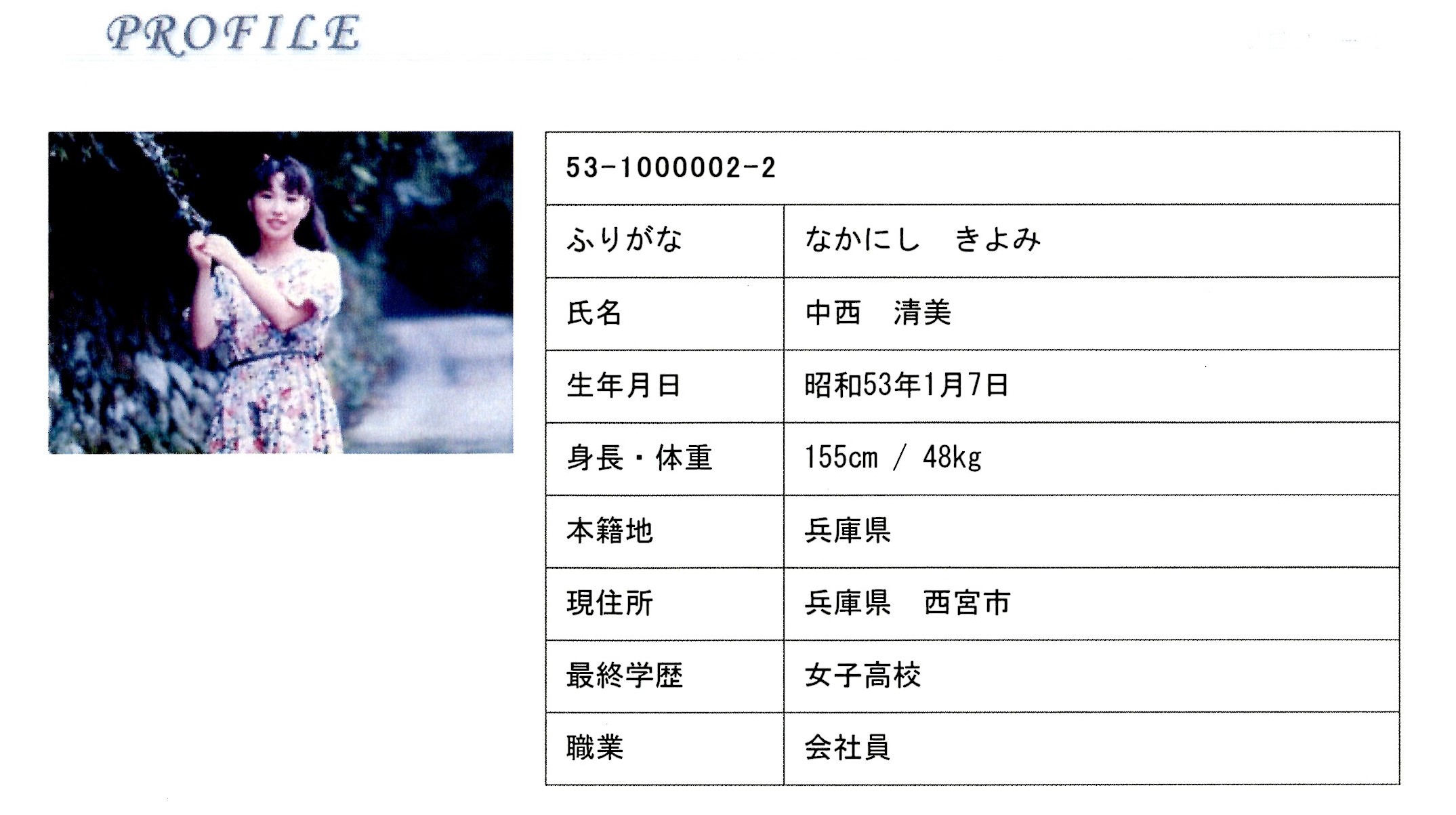
Figure 1. A sample profile from the NNK.
In the rest of this paper, I will discuss the various kinds of work these photos are meant to accomplish for matchmakers and clients, and what kinds of images and image-making processes are thought to be best for accomplishing these goals, within the cultural context of photography in Japan. In so doing, I borrow not only from semiotic theories of the photograph, but also from semiotic theories used to describe the functions of language, specifically the model of linguistic multifunctionality put forward by Roman Jakobson (1980). I borrow from Jakobson not to suggest that photographs are a “text” that can be “read,” but because Jakobson gives us a language for talking the emotional and social functions of signs in general, including photographs. These functions exist apart from, but are necessarily layered together with, the more referential or representational properties of signs. Jakobson's “conative” function focuses on the addressee of a sign, whilst the “phatic” function is aimed at opening and maintaining channels of communication. In this sense, all of Jakobson’s functions possess indexical properties, as they point to and arise out of different aspects of a semiotic situation.5 However, the different functions that profile pictures are meant to perform clearly exist in tension with each other, and photographic techniques that advance one function may hinder the ability of a photograph to accomplish another function. Different parties in the matchmaking process have different semiotic ideologies that lead them to disagree about which aspect of semiosis should be foregrounded. The process of producing a “good” profile picture requires matchmakers, clients, photographers, and potential partners to decide which functions of the picture—representing a person, or causing an emotional response that leads to a new connection—should receive primacy over others. In the case of profile pictures, the true-to-life photographic representation of a person is deprioritized, and primacy is given to creating an attractive picture, within Japanese norms of what constitutes “attractive,” and according to matchmakers’ norms for the genre of “profile picture.” The ultimate goal, from the matchmakers’ perspective, is for the photograph to lead viewers to want to meet the person it depicts. Without the conative and phatic effects produced by the sign, clients would never meet each other, and consequently, never get married. Moreover, the practices of photographers suggest that the relationship between an index and its referent may not be unidirectional. Attempts by clients to mimic their own photos during first dates suggest that the person can index the photograph as much as the photograph can index the person, reversing the indexical causal relationship.
Profile pictures, and who should take them, and how, were a subject of discussion throughout my dissertation research, undertaken primarily between 2009–2011, with follow-up fieldwork continuing through 2019. As I will discuss in greater detail below, many matchmakers advise their clients to have photos professionally taken. At the NNK monthly meetings that I attended as part of my research, several photo studios regularly sent representatives to advertise the services of their studios to the matchmakers each month, handing out leaflets with special discounts for NNK clients.6 However, some of the practical issues surrounding profile pictures were made especially clear to me in June 2017, and my current research on online dating has made some of the client-side issues of the process clearer to me. But in 2017, the first time in some years, I met up with a matchmaker that I call Yasuda-sensei at her new offices.7 Yasuda-sensei has been an incredibly successful matchmaker for as long as I’ve known her, but over the last few years, her business expanded dramatically, with a new website and new offices. Previously, like most matchmakers of my acquaintance, she worked out of her home. During our visit, she showed me around her new facilities, introduced me to her staff, and offered me tea and cake. We chatted about this and that—her business, my recent engagement—and eventually started comparing smartphone apps as the conversation wound its way past heavier subjects and arrived at light small talk. (We both played Pokemon Go, for exercise.) She then showed me a photo app (“Beauty Plus” by Meitu, Inc.), and praised its bihada (“beautiful skin”) function. To demonstrate, she had us take a selfie together to show off how good we looked. Then she added a filter giving us drawn-on bunny ears, whiskers, and noses. Our faces were both obscured and in so doing, perfected. Figure 2 is a sample picture I took shortly after being introduced to Beauty Plus by Yasuda-sensei. In addition to the drawn-on sparkly stars, the photographic software also enhanced and enlarged my eyes, smoothed out my skin, and intensified the color of my lips. In the evening, I sent a picture from the app to my partner to show him some of the results of my day of fieldwork. However, he was horrified by the changes, instead of charmed. He wanted to see my skin rough and “natural,” instead of smoothed out. He preferred me without computer-generated lipstick.

Figure 2. A photo of the author taken with Beauty Plus.
The disjunction that I experienced between pleasure in my own altered image and the reactions of others was mirrored by a story told to me two years later, in June 2019, by an old school friend participating in my current research. In her mid-30s, Seiko’s parents had helped her sign up with a marriage bureau. The marriage bureau, as is typical of matchmakers, sent their clients to a photography studio to have profile pictures taken. Seiko’s parents bought her a dress for the occasion, and the photo studio did her makeup and hair, posed her outdoors, and edited the photos—for the purpose, they told her, of removing hairs that the wind had blown in front of her face. She was actually delighted with the photos—so delighted that, some years later, she still had them on her phone to send to me. In her delight after the photo shoot, she similarly showed them to all her friends, whose universal reaction was laughter. They all agreed that it looked like her, and yet, not like her at all. I checked my phone to see one of the pictures for myself, and I laughed too. It was, honestly, a lovely picture, which both did and did not resemble my friend. Had the lines of her face or body been altered beyond recognition by the process? No. But the dress, the pose, the demure and ladylike attitude, the Edenic setting, seemed to have little connection to the woman with whom I chain-smoked menthols over coffee. It was a wonderful picture for matchmaking, with much the same mood as figure 1. It was a terrible likeliness of my friend.
What both these stories dramatize is the fact that harmless, aesthetically pleasing image enhancement from one perspective might be appalling mutilation from another. Which perspective one takes, which judgement one lands on, depends on a combination of both broad cultural norms and immediate situational norms—what we believe a photograph is, in a broad sense, and what we want that photograph to do, in an immediate sense. A photograph, like any sign, can be analyzed in Peircian terms as a three-part relation between an object, a sign, and an interpretant. Specifically, a photograph “stands for its object in some respect or capacity,” and this “in some respect or capacity” or ground, in the case of a photograph, is that it is an index with iconic properties that derive directly from that indexicality (Peirce 1955, 99). This is because an index derives its meaning by being “really affected” (Peirce 1955, 102) by its referent. Photographs are “really affected” by their referents by virtue of light reflecting off of the referent and then imprinting on light-sensitive film, or recorded as digital data. In Peirce’s words, photographic indices were “produced under such circumstances that they were physically forced to correspond point by point to nature” (1955, 106, see also 1998, 4). To filter, edit, or otherwise alter a photograph thus can be understood as a removal of the very properties that make it an indexical sign. Alteration erodes the physical connection between index and object, and thus erodes the ability of the index to point to its object. The degree to which this is possible with digital photographs has led some in the art world to question whether digital photographs are even indices at all (see, e.g., Gunning 2004).
Ball (2017) proposes that the answer to questions about manipulation cannot be found by asking whether photographs resemble their subjects. For Ball, the question is ideological, not factual. The semiotic process Ball calls “dicentization” (Ball 2014) allows us to interpret various qualia in a photograph, including technical “errors” and “interference” like lens flares, as indices of realness, rather than icons of how the light passed imperfectly through a camera lens. What I would add to this is that the qualia of “realness,” and moreover the value placed on “realness” itself—our indexical ideologies—are culturally variable things, as is true of most ideologies. We do not all expect or even desire a photograph to bear the same indexical relationship to reality, nor that it possess the same qualia that shows how faithful a representation it may be. My partner’s reaction showed precisely the kind of attachment to qualia of realness described by Ball, with his focus on the unnatural, unreal smoothness of my skin. Seiko’s friends’ reactions to her matchmaking picture focused on another lack of fidelity, in that her profile photo didn’t seem to convey anything about her real personality. Meanwhile, Yasuda-sensei, with her affection for skin-smoothing filters, evinced indexical ideologies about digital photography that I argue are particularly East Asian in their sensibilities, and typical of attitudes to photography within Japanese matchmaking. The goal of the matchmaker is not fidelity, but, as I discuss below, “chooseability.” In other interviews about her matchmaking experiences, Seiko mentioned that both matchmakers and online dating sites that she tried encouraged profiles that seemed “normal,” that fit a pre-determined image of a marriageable person. In a similar way, the goal of the profile picture is not to represent a particular and imperfect self, but to represent a person as a token of a type of a good potential marriage partner.
We can see this cultural disjunction in the different kinds of filters available in different photo applications. Although photo filters have become popular in apps worldwide, such as Snapchat and Instagram, the facial filters in these apps tend to add props and scenes: falling snow, autumn leaves, flower crowns, or sunglasses. When the face is modified, the effects tend to be exaggerated and range from the silly to the grotesque—swapping faces, squishing the face into a caricature, or adding animal ears and noses. In addition to these augmented reality filters, many photo apps also have “artistic” filters that alter the color, saturation, and contrast of the picture. These may have incidental beautifying effects, but they also edit the picture as a whole, without targeting the face specifically. Rettberg (2014, 25–27) argues that the main function of Instagram filters is to help us see with the new eye of the camera. They alter the familiar, and make it strange. Although Beauty Plus has playful face-bending options like Snapchat and Instagram, its most basic functions are photo retouching. Below, in figure 3, you can see a shot taken with and without editing in Beauty Plus. The ability to manipulate detailed aspects of facial texture, skin tone, and features align with functions of beautification and alteration common in vernacular portrait photography in East Asia since at least the 1990s, a subject I take up in more detail below. Rather than insisting that photographs depict reality faithfully, Yasuda-sensei’s position is a playfully platonic one, which allows and even encourages photographic manipulation. The photographs produced by Beauty Plus still produce something that is iconically indexical of their referents. Playful augmented reality additions like bunny whiskers are inoffensive, in their obviousness. The powerful and disturbing aspects of the manipulation afforded by these apps is their power to alter some of the qualisigns in a photograph, exchanging the rough skin of a face that has seen the sun and weather for smooth skin that seems well-cared for – or, at least, well-covered in artfully applied makeup.

Figure 3. (left) A photo of the author taken in October 2017 with the Apple iPhone 7 camera, with no modifications. (right) The same photo, after “beautification” in Beauty Plus. Skin tone has been lightened and evened, skin texture has been smoothed, dark shadows have been removed from beneath the eyes, and the eyes have been brightened.
There is a more basic question underlying all of these musings on skin smoothing and animal ears: What constitutes a “good” picture of a person? For what purposes is a particular photograph “good”? And, how do different stakeholders in the matchmaking process go about assessing this “goodness”? What role does culture play in any or all of these decisions? Robins (2014) argues that when Peirce wrote about photography, he had in mind scientific photography, which was often non-iconic. Peirce’s own experience as a photographer was with long-exposure astronomical photographs of stellar light, which look nothing like a star. However, the ability to use photographs as scientific data depends precisely on the degree to which viewers can interpret them “dicently” as faithful records of the physical world. Christopher Pinney (1997, 20-21), in discussing portraiture in 19th century colonial India, connects the same “indexical yearning” that led to photographic documentation of Indian people of various castes and ethnographic groups, to the development of (also indexical) fingerprinting technology. In the 19th century scientific understanding, a portrait was supposed to document a person, and to enable subsequent recognition of that person. Portraiture ultimately gave way to fingerprinting when it proved more reliable for this purpose. In the 20th century, Adair (2019) documents the way that racial and gender categories on driver’s licenses have been utilized to “fix” people within the social order during eras of greater mobility, such as the great migration of Black Americans to Chicago from the south. The indexical work done by the photograph on the license was supplemented with “vital data” including age, “color,” sex, height, weight, and other physical features.
This “scientific,” documentary purpose of photography is by no means irrelevant to matchmaking. Yet, such views of photographs elide essential facts about the processes of their production and reception as vehicles of aesthetic expression and emotional stimulus. For Barthes (1981, 78–80) it was “the pose” that defined photography. Barthes took the pose as an emblem of the fact that someone or something real had been there, and been recorded, which at first seems Peircian. Here again, we see the photograph as an imprint of a reality that really was, and is thus contiguous with that past. But Barthes also muses on the range of emotions photographs can provoke in the viewer, emotions which cannot be separated from the photograph’s indexical nature, from the viewed image which appears to gaze back. However, while a photograph purports to be a record of real things, it does not record or represent them neutrally, and neither are they viewed neutrally. Someone took the picture, and consequently, every photograph represents reality in its own particular way, based on a series of choices made by the person wielding the camera and developing the images. The process of taking a picture always involves a certain amount of manipulation, whether it be choosing a flattering angle, ordering the model into a different pose, adjusting the lighting just so, wrangling the color reproduction limits of a smartphone camera or, at a more advanced level, the skillful deployment of photo editing software. Susan Sontag noted that “the work that photographers do is no generic exception to the usually shady commerce between art and truth. Even when photographers are most concerned with mirroring reality, they are still haunted by tacit imperatives of taste and conscience” (2005 [1973], 4). This manipulation is part of the process of eliciting the emotions that Barthes describes experiencing so violently. The "pose" is but one of the simplest manipulations.
Ball (2017) notes that dicentization allows the photograph to become a proposition, asserting something about the world that it recorded. Gunning (2004) likewise discusses indexicality as part and parcel of a photograph’s “truth claim,” but, citing the long history of technical manipulation of photographs, argues that if we believe a photo can tell us the truth, then we must also acknowledge that photographs possess an equal ability to deceive us. Given that photographs are always manipulated, we must then ask, which kinds of manipulation are culturally permissible, and which go too far? What kinds of manipulations are aesthetically desirable, and what kinds become grotesque or seem distorted? And, finally, how does the matchmaking circumstance in particular affect these evaluations?
The Forms and Functions of Profile Pictures
For matchmakers, profile photos have three functions, which Jakobson’s terminology for sign functions neatly expresses: referential, expressive, and phatic. The referential function refers to things in the world; it is the semantic function, the “dictionary definition” function. By contrast, the expressive function in language “aims a direct expression of the speaker’s attitude towards what he is speaking about” (1990, 73). Finally, the conative function refers to signs with an “orientation towards the addressee,” which “finds its purest grammatical expression in the vocative and imperative” (1990, 74). Each of these functions is differently indexical. The referential function indexes the world. The expressive function points at the speaker, or in this case, the subject of the photograph. Who is this person, as a person? Here the qualia of the picture do not index the real existence of the person in the photograph, but instead their softness or sturdiness of character. Finally, the conative function indexes the viewer, the interpretant of the photograph-as-sign. How does the viewer understand the picture, intellectually and affectively?
The referential function of a profile photograph is actually of tremendous practical use to the matchmaker. When making a profile, matchmakers remember the client because their profile has a picture attached. This is important, because matchmakers rarely meet their clients in-person, and will need a picture to recognize them when they do meet to conduct formal introductions between clients. On weekends, matchmakers can easily be identified in the lobbies of Osaka’s hotels—a safe, public, and upscale choice of meeting spot—by the folders or open tablets that they carry and continually consult as they scan the lobby, looking for the people in the profile pictures. Clients also form an image of the person to whom they might be introduced, based on the pictures attached to their partner’s profile. However useful a profile photo may be as a reference, the role that the referential function plays in making a match is actually quite small. To understand this, we need to turn to the expressive and conative functions. If a profile is a résumé of a person, containing all the information a viewer might need to decide whether or not they want to meet this person, then the profile photo should visually convey something about the person depicted, both factually (what do they look like?) but also expressively. Profile photos should communicate something about personality. Moreover, given their context—a matchmaking profile—they should also make a conative appeal to the user: “Meet me.” In April 2009, I attended a lecture on giving advice to new clients for members of the NNK. The lecturer, Fujii-sensei, handed out sample amateur and professional photos of the same person, so that all the matchmakers who were present could see the differences. She then stressed the importance of clients having an erabareyasui (literally, “easy to be chosen”) picture attached to their profiles. The “easy to be chosen” or “choosable” pictures, being professionally taken, had better lighting and posing, and were taken from a closer angle, giving a good view of the face. The subjects were also smiling; they looked happier and more confident than in the amateur shots. Clients have various criteria that they use to search for potential partners, which matchmakers often summarize as an exchange of men’s wealth for women’s youth, beauty, and implied fertility (Alpert 2014, 162–164). But if marriage also entails spending a life together, then a profile picture should show a pleasant person that other clients can imagine tolerably getting on with, day in and day out. Inoue (2007) argues that the indexical properties of photographs and drawings in advertisements, in conjunction with representations of women’s speech, were aimed at creating an “effect of the reader ‘feeling’ or ‘hearing’ the physicality of the image-woman’s voice” (513). Indexicality creates contiguity with the literary/emotional effect of bringing the reader of early 20th-century Japanese women’s magazines into the miniature drama of the advertisement, allowing her to imagine herself in conversation with the women depicted. So it is with the advertisements of self in matchmaking—they are not so much a truth claim, as an invitation to a conversation.
Fujii-sensei’s handouts were based on photos from an Osaka-area photo studio called Selfit, which used to offer discount packages to clients of NNK matchmakers. On pamphlets that they distributed to NNK matchmakers and on the matchmaking section of their website (https://www.studioselfit.com/miai.html), Studio Selfit offers a comparison between “a photo taken by a friend” and “a photo taken by Selfit,” which concretely demonstrates the features of a “choosable” photo. While the website has been updated, the version of the website I describe here is closer to the pamphlets I saw while doing fieldwork, and can be found on archive.org.8 Central to the sales pitch for matchmaking photographs is a comparison of two photos of the same woman. In the amateur photo, she is outdoors, wearing a modest olive-green dress, standing in relatively bright natural light with her hands clasped low in front of her body. Her long hair is pushed behind her shoulders. Meanwhile, in the studio photo, the same woman is seated in a neutral white environment and wearing lighter colors: a white dress with a pale green cardigan. A plant in the background offers some of the same open, bright, organic feeling as the outdoor setting, but the result is cleaner. The poses are drastically different in the two photos. In the amateur photo, the subject stands still, and is shot head-on. In the professional photo, she is seated at a table and turned away from it, looking towards the camera at a flattering angle. The camera catches her face and body from the right side. The result is still posed, but more dynamic and three-dimensional. In the amateur photo, the subject’s face is neutral, and she looks uninviting, with her arms in front of her body closing her off. In the professional photo, the subject is smiling and sitting at a table, and the angled pose makes her look as if she’s just waiting for someone to join her. The amateur photo, as mentioned above, has bright, natural lighting. However, it’s uneven, resulting in shadows on the face. The professional photo, by contrast, has bright, even lighting that shows the subject’s face clearly, and light makeup highlights the features of her face. The result of these different choices in the process of taking the photograph produces a dramatic difference in the overall expressive and conative effects of the amateur and professional pictures. The professional shot looks inviting, while the amateur shot looks closed-off, with the subjects’ stiff body posture, facial shadows, and cluttered, dark, background.
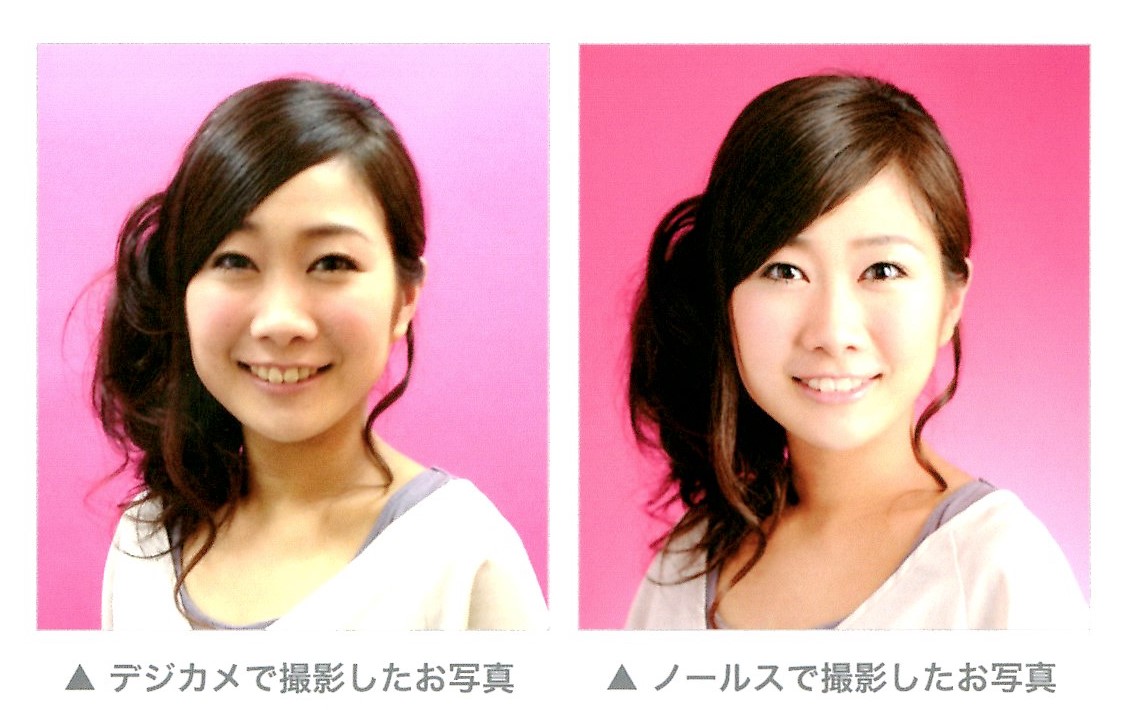
Figure 4. An advertisement from a different Osaka-area photo studio distributed to NNK matchmakers at one of the organization’s monthly meetings.
Figure 4 comes directly from advertisements distributed to NNK matchmakers by another Osaka-area studio.9 It shows the difference between what can be accomplished with an ordinary digital camera, as compared to the studio’s superior equipment (and likely also their retouching software). The photo taken with the studio’s equipment, on the right, has brighter, more saturated colors and higher levels of contrast. The subject’s eyes are also brighter and pop out of the photo clearly. However, in the digital camera version on the left her eyes are shadowed, like the amateur photos on Studio Selfit’s website. In the studio photo, the subject’s teeth are whiter, her skin tone is more even, the bags under her eyes have more or less disappeared, and her lips have a subtle gloss to them. While the person on the left looks like an ordinary, attractive woman, the subtle changes wrought by the professional photographers in the photo on the right highlight key features of the face while minimizing qualia that might suggest tiredness, or age—but also, perhaps, realness. Again, the subject of both the amateur and professional photos is the same. In this instance, they appear to be even the same woman, in very nearly the same moment. However, the livelier colors and bright smooth face in the second photo create a more striking and compelling image—a more expressively and conatively effective image.
As the examples above demonstrate, we can locate the formal qualities of a picture—lighting, posture, etc.—that particularly engage the expressive and conative functions of a photograph. These features are entangled with and perceived at the same time as “obvious” representational elements (the image of a person), and they consist of relatively easy manipulations available to any photographer. That a client should appear “choosable” implies a unity of the expressive function and the conative function of the profile picture: “I’m wonderful—pick me!” Nakanishi Keiji-sensei, a matchmaker and educator who founded and heads the NNK, also met his wife through matchmaking. When lecturing to members of his organization during regular monthly meetings about how best to discharge their responsibilities as matchmakers, I noted that he often spoke of that “one miraculous picture” (kiseki no ichimai) that will be enough to entrance a man so that he feels he absolutely must meet her, the thing he gives ultimate credit to for his lasting personal and professional relationship with his wife. Thus, we might also say that there is a phatic quality to these photographs, that the conative appeal to the viewer is also a first hello in what is hopefully a lasting communicative relationship.
However, as the reader may well suspect by this point in this discussion of different kinds of photographic manipulation, the picture that has the greatest impact on its viewers, or that best succeeds in opening channels for communication and meeting in person, may not be the picture that is the most faithful to its subject, the most “real.” As suggested by Nakanishi Keiji above, matchmakers emphasize what I will summarize here as beauty, by which I mean, the kinds of photographic features discussed above that make a photo “choosable.” These images emphasize the face with bright, even lighting and clearly visible faces. They invite the viewer in with beckoning poses and welcoming smiles. They also use lighting and editing techniques that de-emphasize shadows, tiredness, or signs of age. However, emphasizing beauty—emphasizing the expressive/conative indexical functions of a photograph—comes at a known cost to the ability of a photograph to function as a reference of a person in the world. To the extent that a viewer expects the photograph to index “reality,” impairing its “primary” function makes it a bad index. One might also worry that looking too good might make a client seem unattainably lovely, but at least in my experience, matchmakers and clients don’t discuss it in these terms. More likely, an especially beautiful photo might suggest that it is too good to be true. Clients are savvy enough to know that an appealing picture may deviate to a greater or lesser degree from the person they eventually meet. These same clients are likely to have at least received advice to visit a photo studio. They have probably seen pamphlets or web pages just like the ones described here, and if they have had professional photos taken, they will have witnessed their own transformations, just like Seiko. However, in the pictures we examined above, the differences in appearance were relatively minimal. The subjects of the comparison photos are clearly recognizable as the same person.
Other evidence from my fieldwork suggests that photos are often more heavily manipulated than in the examples given here, and that this manipulation does interfere with recognizability. A common complaint from clients of both genders is that photos don’t match the real person. During the course of my research, one of my closest matchmaker friends persuaded me to be introduced myself to prospective suitors, which was unavoidable while I was young and unmarried. Naturally, I was interested in why the men who applied to meet me were interested in a foreign woman. The first man I met, Noriaki-san, gave photo editing as one reason that he was unwilling to consider a Japanese partner. He seemed to feel deeply that heavily manipulated photos were deceptive, and therefore he wanted to meet a foreign woman, who would presumably have a photo that more accurately represented her. Noriaki-san, then, appears to have possessed a semiotic ideology that privileges referential indexicality, while the willingness to manipulate a photo indexes both Japanese cultural acceptability of manipulated photos, and perhaps, expressively, a deceitful personality incompatible with marriage. While women’s appearances may be more carefully scrutinized, and while Noriaki-san clearly tied photographic practices to national culture in his particular ideologies, female clients also voice clear dissatisfaction with men when they don’t match their pictures. In the summer of 2019, two women that I interviewed about online dating had also tried more formal matchmaking services, and both complained about pictures that were yosugite, “too good.”
Matchmakers can also suffer when profile pictures have been manipulated in ways that make it difficult to match the picture to the person. I originally met my friend Sugawara-sensei when she was an assistant matchmaker at a successful marriage bureau. One Saturday in February 2010, she was working in the lobby of a popular Osaka hotel, introducing one client after another to their matches. She had a paper file of profiles, showing her who she was supposed to introduce to whom. But while showing me the profiles, she confided in me that it was often hard for her to find her clients, since both men and women alike had profile pictures that were so heavily manipulated, they no longer resembled the person they purported to depict. And yet, I’ve also watched Sugawara-sensei at work taking profile photos for new clients: coaching them to smile, bringing in accessories for female clients, or completely restyling male clients’ hair. Much like Seiko, Sugawara-sensei has both criticized the kind of photographs that depart from what a person looks like day-to-day, and has also assisted materially in the kind of restyling required by the genre of the matchmaking profile photo.
As we can see from the examples above, the form of the profile photograph is dictated by its functions. Some aspects of form include lighting, posture, setting, clothing and makeup, the photographic toolkit and, finally, the application of editing software. By looking at the exhortation to get professionally taken photos, and the output of professional photographers who do precisely this work, we can see that the expressive and conative functions are clearly dominant for photographers, for the matchmakers who recommend their services, and for the clients who go to them. Inviting postures, smiling faces, bright light, and gentle editing combine to create a photo depicting a “chooseable” conatively and expressively effective picture.
Photographic Decency and Corporeal Capital
Based on the preceding stories, we might take “interference with recognizability” as a clear sign that a profile picture has been edited beyond the bounds of social acceptability for matchmakers and their clients. In Dataclysm, writing about his experiences running the American-based dating site OKCupid, author Christian Rudder proclaims,
“Your profile is supposed to be you, the true version. If you upload a better-looking person’s picture as your own, or pretend to be much younger than you really are, you will probably get more dates. But imagine meeting those dates in person: they’re expecting what they saw online. If the real you isn’t close, the date is basically over the instant you show up.” (2014, Introduction).
Yet, in the previous section, we saw that heavily restyled and edited photos are consistently used by matchmakers and clients, even when they themselves complain about them. The fact that they continue in use suggests that, while they are “bad” in one sense, they possess other virtues that lead matchmakers and clients alike to continue their production and use.
Although the clients who view the photos may feel deceived upon meeting their subjects in person, the clients who post heavily edited photos very likely do not perceive the alterations as excessive or deceptive. According to a recent article in The New Yorker, photo apps like Beauty Plus are so omnipresent in Chinese social life that it is now considered basic etiquette to beautify a photo before making it available to others to view (Fan 2017). Abidin, discussing Instagram influencers in Singapore, notes that “[g]ood selfie-taking skills comprise the ability to capture a well-framed digital self-portrait and the ability to edit the selfie to maximize ‘likeability’—using the number of ‘Likes’ on a post as a way to quantify its popularity….” (2016, 4). The art of self-portraiture includes somatic knowledge of how to pose and adjust the body, to apply makeup carefully, and to use apps to reshape and retexture one’s face for maximum effect. Nicole Constable, in her discussion of the photos posted online by Chinese women seeking international marriages, talks briefly about the kind of heavily edited “glamor shots” the women often used. In this case, the Western men they sought to meet did indeed view these photos as a kind of deceit, and when the women sent more “natural” pictures, budding relationships would often end, exactly as predicted by Rudder (2014). But Constable notes that from a Chinese perspective: “To look ‘one’s best’ even if it does not look ‘like you,’ is not considered wrong or dishonest” (2003, 21).
Looking at the recent history of vernacular photographic practices in Japan suggests that, much as in China or Singapore, Japanese clients of any gender with heavily edited photos probably have no especially deceptive intent. Moreover, Japanese popular culture also has its own traditions of photo manipulation. “Print Club” photo booths—purikura for short—are becoming rarer in Japan, but they operated from the mid-90s onward, and were quickly picked up by young women as part of cute (kawaii) teen girl (shōjo) culture (Chalfen and Murui 2001).10 In purikura booths, customers—primarily young women—can take pictures alone or with groups of friends for the cost of a few hundred yen. As they pose for beauty or for silliness, the photo booths take their pictures automatically. Chalfen and Murui note that the modifications originally built into the machines were cute frames and backgrounds, featuring popular characters like Hello Kitty, successful music groups, or scenic locations like the sacred island of Miyajima. Technological advances have allowed purikura technology to include other kinds of photo modifications, such as automatic “beautifying” filters that lighten skin and enlarge eyes, just like the technologies built into Beauty Plus. After the photo is taken with its automatic modifications, users have a limited amount of time to modify the pictures directly themselves. Okabe et al. note that “[t]he modding of photos is the most enjoyable part of the experience, and generally takes more time than the photography,” and that these modifications “usually include decoration with cute stamps, such as hearts, stars, or flowers, and annotation of the photo with handwritten text.... Depending on the booth, they can add makeup, different hairstyles, frames, and other special features” (2006, 2). Finally, the booth then prints out the photos as small stickers that can be cut up and shared among friends.
Miller (2003) focuses on the freedom purikura gives girls to resist both norms of corporeal beauty and beautiful Japanese language use. They do this by employing vulgarity in their photo annotations (which Miller discusses as “graffiti”), with ugly handwriting, and with matching ugly faces. She also notes the early interactions between purikura and mobile camera photography, with technologies that enabled photos from mobile phones to be printed as stickers, and graffitied by hand. Apps like Beauty Plus basically put purikura technology in the hands of everyone with a smartphone, for free. Purikura-style images can now proliferate online instead of being exchanged physically, although it is not clear that these app-based forms of image editing are being used in the same subversive fashion as purikura. However, Li and Blommaert, in an examination of some Chinese women’s online presence, focus on the playful aspects of identity work carried out online and “enacted… by elaborate forms of graphic doctoring of images, delicate forms of interaction and joint choreographies of the body and the features of the online apps” (2017, 19), in order to, at times, align the self, and at times distance it, from the beauty ideal of baifumei, or “pale, rich, and beautiful.” This suggests that doctored photos online in China, at least, are doing work that is both playful and deadly serious at the same time. Abidin (2016) similarly treats Singaporean influencer selfies as “subversive frivolity” that can seem vain and pointless, but actually sustains influencers economically.
Of course, the alterations made in profile pictures, at least those depicted here, are not nearly so drastic as the alterations involved in purikura. But even if they were, they would still be well within the far-ranging styles encompassed by popular Japanese photographic techniques. Heavily altered photos produced by technologies like print club booths and smartphone apps produce a cultural context where manipulated photographs are produced as a matter of regular fun and circulate routinely. And they are not just created and circulated by women and girls. Political posters—another kind of photography routinely visible on Japanese streets—have often been visibly doctored (no one’s teeth are as white as those depicted in the photo in Figure 5). In addition to purikura booths, another kind of photo booth is still incredibly common in Japan (Figure 6). These booths are used for taking official photographs to be submitted along with documents like résumés, passports, or drivers’ licenses. However, even these official, bureaucratic photo machines advertise bihada (skin smoothing/brightening) functions. Where British colonial managers first turned to photography in order to use its iconic/indexical, unchanging properties to catalogue and manage populations, in Japan, photos used for these same purposes may still be permissibly doctored, faces permissibly edited not to correspond, point by point, with nature. Given all this, it might be weirder if profile pictures weren’t edited. Photo editing exhibits what Li and Blommaert (2017) call “Care of the Selfie,” a specifically online form of self-presentation that involves attention to how both literal and figurative images of the self are produced, along the lines of established cultural models of beauty or desirability, and like influencer selfies, photo editing is both deeply pragmatic while also imaginative and fun. In spite of the complaints, photographs are distanced from their indexical origins, over and over and over, in the service of non-referential communicative goals. These pictures depend less on indexicality (secondness) and more on symbolic semiosis (thirdness), since they follow cultural rules and conventions about what is beautiful and appealing, such as matchmakers’ guidelines for “chooseability.”
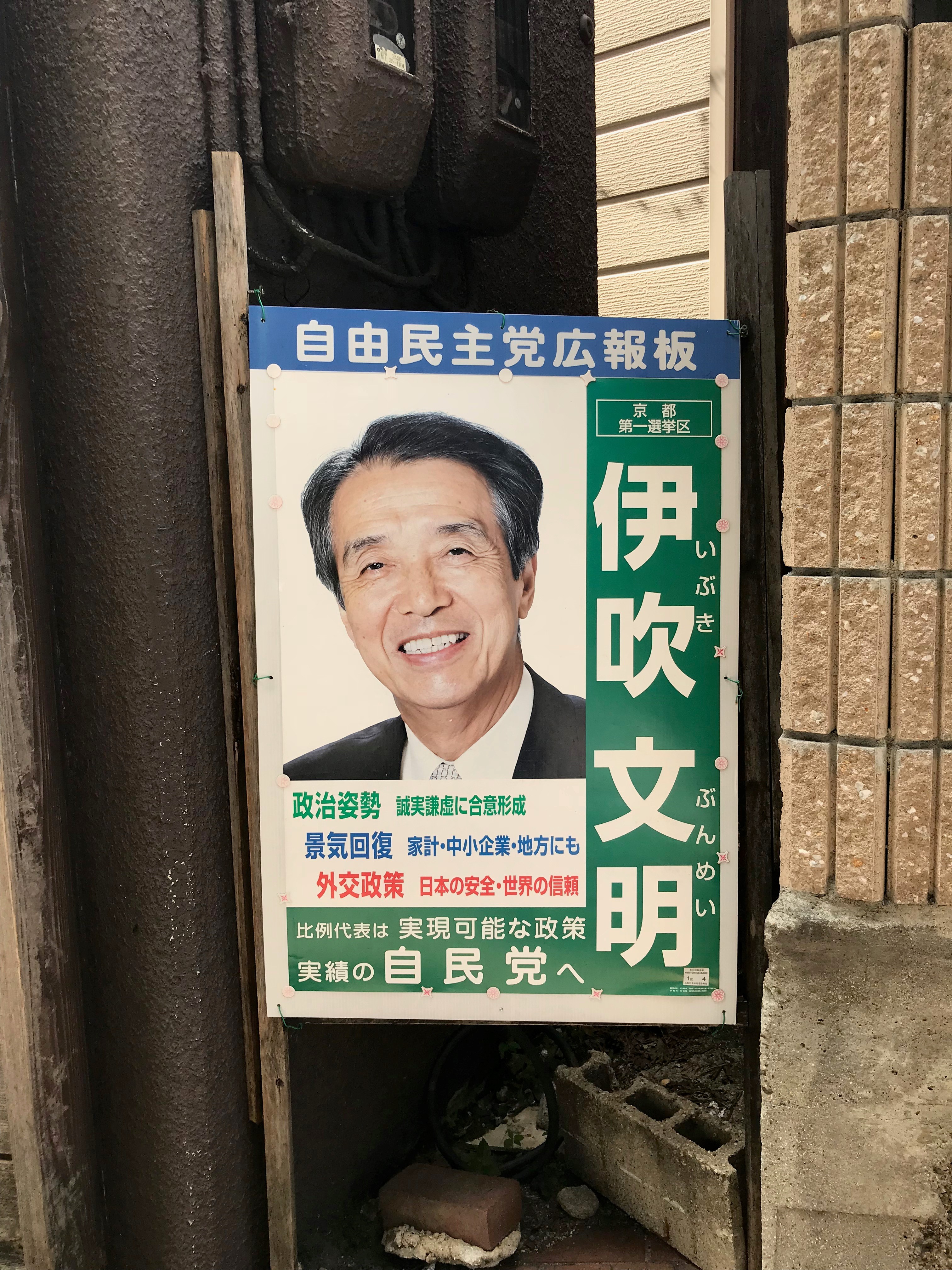
Figure 5. An advertisement for Japanese politician Ibuki Bunmei. Photo taken by the author, Kyoto, 2018.
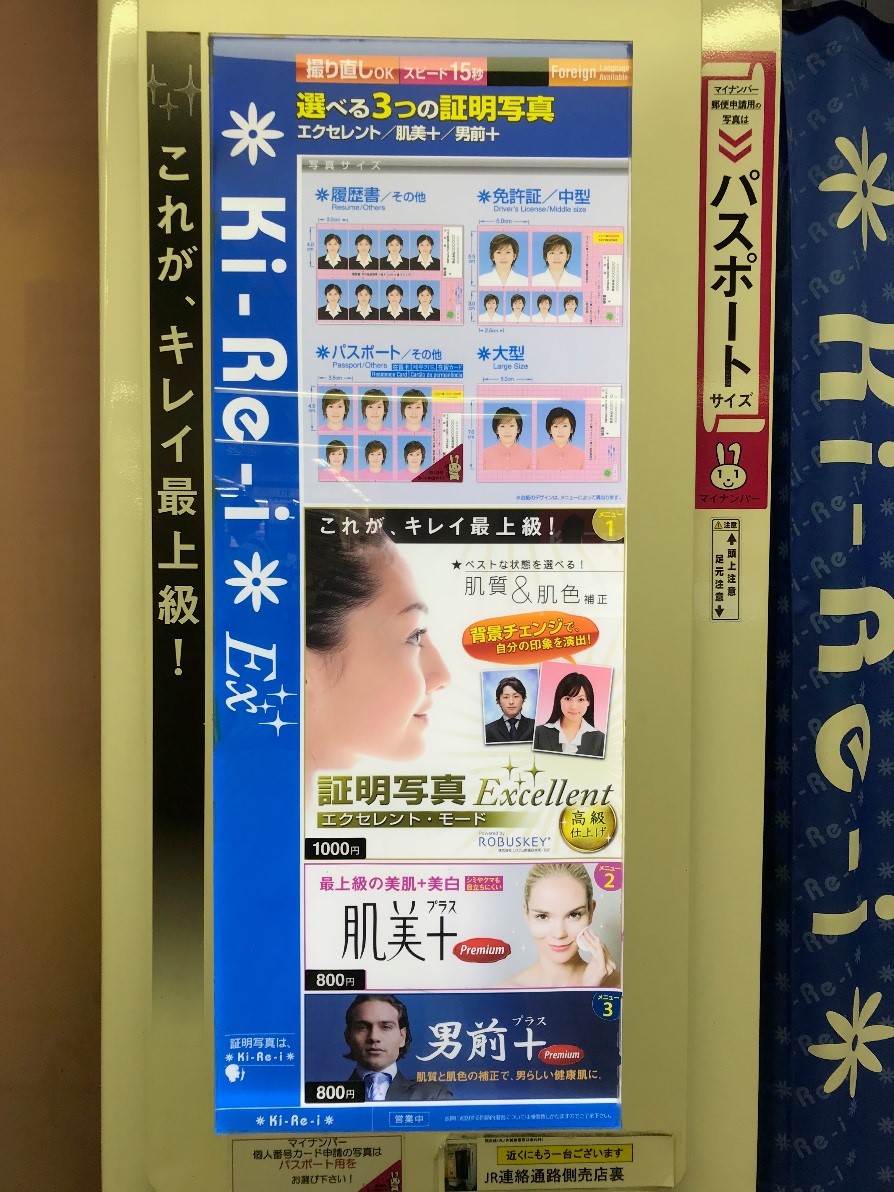
Figure 6. A Ki-Re-I brand photo booth in Tokyo, 2018. Photo taken by author. These are used to take pictures for official documents including drivers’ licenses, passports, and résumés, but the machine also advertises its “beautiful skin” (bihada, 美肌) and “manly look” (otoko-mae, 男前) automatic photo editing functions.
Having examined the various technologies and services available, and the risks inherent in using them, we can see that clients, photographers, and matchmakers make use of several strategies when choosing or creating a profile picture. First, they can prioritize one of the picture’s functions—referential or conative. They can choose to fulfill that function exquisitely, but risk not successfully fulfilling its other functions. So, for example, a photo could be a very faithful and artless likeness, but it would risk not appealing strongly to the viewer (even though the viewer might appreciate the honesty). Or, it could be a very beautiful photo, but heavily edited so that its resemblance to its subject is somewhat tenuous. We have thus far assumed that this produces greater risks for in-person meetings, and seen that clients do often react negatively to people whose pictures are “too good.” Finally, they could choose a photograph that compromises amongst the different functions it is supposed to serve, and perforce does a bad job fulfilling any of them. The second option seems to be the most popular, when we look at what people actually do. Writing about self-presentation in online dating through profile pictures, Hancock and Toma (2009) found that American online daters will choose self-enhancement if forced to choose between attractiveness and “authenticity.” Like Rudder (2014), they originally believed that in-person meetings would exert a constraining force on the degree and extent of discrepancies between online daters and their photographs. They were wrong on both counts. This also seems to be true in the case of the profile photos used by Japanese matchmakers. Despite increasing the risks when actually meeting someone, matchmakers opt for the pictures that pull people in.
Why might the tensions between the different functions of a profile picture be resolved in favor of beauty? Schwarz, studying Israeli teen “self-portraiture” on a local social network, noted that “[m]ost of the social ties in Shox begin when one party bestows the other with a public user-comment complimenting the receiver’s beauty…” (2010, 169). Schwarz posits that beauty is a kind of “corporeal capital” exchangeable for social capital in the Bourdievian sense (Bourdieu 2002 [1986], 286–287). Consequently, users create photos in which they look as good as possible. In the terms of this paper, we might say that visual depictions of persons that emphasize corporeal capital prioritize the conative and phatic functions of photographs, and become exchangeable for social capital by virtue of the affective force they exert on viewers. The conative function—the power of the photo’s aesthetic properties to incite the viewer to action—is what leads to clients actually applying to meet each other. In contrast, if clients never meet, nothing happens at all. This is the opposite of matchmaking. It is the worst thing that can happen. Better to have clients meet and be disappointed, then to have no meetings at all. Yasuda-sensei and Fujii-sensei, in their lectures to clients and fellow matchmakers respectively, emphasized the need for clients to be chosen at multiple points. First, someone must choose to meet a client whose profile they see. After the formal introductory meeting, clients must both choose to continue seeing each other. And after they have dated for some time (up to about six months, maximum), they must choose to marry or part ways and start over. The matchmakers who taught me about their profession always emphasized open-mindedness in face-to-face interaction, a willingness to be surprised by the other person, and to ignore the fact that, perhaps, a bald man shows up to meet you, even if he had hair in his picture.11 This sounds precisely like the kind of advice matchmakers might give if they expected their clients to be frequently disappointed by the physical and interactional deficiencies of partners who looked so good on paper or as pixels. But this is also what clients must do to be chosen in the second and third instances, after their pictures have helped them be chosen in the first, and most crucial, instance.
Finally, it is worth noting that the photo studios who produce professional profile pictures are themselves aware of the photographic tension between faithfulness and beauty, referentiality and conativity. This awareness is evidenced by the fact that one photo studio—Selfit—offers a clever solution for clients worried about the discrepancies between their photos and their “real” selves. In addition to taking photos, their fliers (and also their webpage) advertise “day of” makeup and hair styling services to clients for meeting prospective partners. Rather than simply taking the risks associated with having a non-referential picture, this practice turns iconic-indexicality on its head. Perhaps it is not the photograph that can index the person it depicts, but the person whose appearance can index the photograph, and thereby satisfy partners in face-to-face meetings by appearing as close to their profile photographs in reality as possible. There are certainly limits to this: carrying around studio lighting is surely impossible. One might argue that one cannot physically photoshop or meitu oneself; but then again, some makeup and skin care products promise exactly that. For example, American cosmetic brand ColourPop’s line of “No Filter” concealers and foundation refers to the fact that users of these products can post photos on social media without any photographic manipulation, because the skin-perfecting qualities of the makeup have obviated the need for it.12
Conclusion
Let us end where we began: the location of the profile picture in the profile. As mentioned above, the written section of the profile is almost wholly referential, facts presented with minimal syntax. In NNK profiles—which are typical of profiles used by professional matchmakers more generally in Japan—there is only one column, labeled “remarks” (bikō), where clients and matchmakers can write anything apart from purely referential information. (Even then, these “remarks” are often minimal, written in a highly restrained and conventional fashion.) Is it precisely because of the expressive and conative work done by the photograph that the remainder of the profile can serve these purely referential functions? There is good reason to think that this might be the case. While matchmaking has modernized, its roots as a mass social practice go back to the middle of the 19th century, when the ie (“house”) kinship system was newly being codified into law by the Westernizing Meiji state, and expanding beyond the samurai class to the rest of society (Ueno 1987). Matchmakers still maintain the importance of knowing about a potential partner’s situation in life and the situation of their family—in terms of education, income, and other determinants of social class. Relationships with in-laws are also created by marriage. Nagata-sensei, a freshly-minted matchmaker in his forties at the time I met him in early March 2010, once compared a relationship to a puzzle. With a love match, he said, one starts by assembling the middle of the puzzle—that is, sexual/romantic affection. From there, the couple works outward to the edge pieces of the puzzle, to the kind of concrete information about who the other is—their jobs, families, plans for the future—that determine whether the relationship can last and move towards marriage. But an arranged marriage works the opposite way. Any client’s profile will have all of the most relevant facts about a person’s social status and economic situation (educational background, employment, family circumstances, etc.). Any two people who choose each other via profiles will therefore have all the edge pieces of the puzzle from the very beginning. The only remaining task is to determine whether the middle of the puzzle—the emotional content—can be put together.
When I first had this conversation with Nagata-sensei, I originally took this to be a commentary on the function of conversation between prospective marriage partners: it could be entirely affective, entirely conative, because most of the referential information about the other person was already known, prior to the meeting. Having examined profile pictures in greater detail, I would now say that this is also true of the profile picture. The referential content of the written profile delineates the material conditions that can help partners know whether they come from similar backgrounds, or share similar goals in life. The profile picture does not therefore need to be referential. Rather, the profile photograph is the opening gambit in a conversation meant to determine the possibility of love, and can itself become a neta, or conversation-starter, as Okabe and Ito (2003) describe mobile photography in its early days in Japan. The relationship between subject and photograph is therefore dynamic—elating, disappointing, and subject to change over time, as clients meet and attempt to develop a relationship.13
When Jakobson introduced his concept of multiple functions of language, it was of moment because it challenged the idea that reference was the primary function of language. Linguistic semiosis is not merely a process of abstract signs denoting real-world referents with the cumulative effect of imparting factual information about the world in an interchange between disinterested, rational interlocutors. In Jakobson’s vision, every utterance is a burst of multiple kinds of signs serving a variety of different ends: information exchange, yes, but also art, emotional expression, conversational management, and relationship building. There is a parallel here between the idea that language’s main function is referential, and the Peircian idea that photographs gain their primary meaning from their indexical-iconic representations of real things or people—even though no photograph can ever be a pure representation of an objective, unmediated reality. East Asian photographic practices acknowledge this openly, and make modification part of the art of photography, part of the fun of photography, and to some extent make it an expected part of photography rather than something that injures its potential to make meaning, or that turns a photograph into a “deceptive” proposition.
In order to explore the value that these “bad” photographs have for matchmakers and their clients, I recruited Jakobson’s idea of the conative function (and to some extent also the expressive and phatic functions) in order to explore how photography makes non-indexical, non-iconic meaning, and how the aesthetic aspects of photography incite clients to meet each other. These functions of profile photographs exist in tension with the referential or representational aspects of photography. Frequently, matchmakers and clients opt to resolve this tension by using profile photos that prioritize conative appeal through emphasizing the subject’s “corporeal capital,” even though doing so has logistical and emotional consequences for matchmakers, and for these clients’ matches. However, photographs do not primarily exist for matchmakers and their clients as scientific data, or as attempts to catalogue individuals for future recognition. Rather, it is their social function that is critical—their ability to reach through the screen and enter not just the mind of the interpretant, but the viewer’s imagination.
Acknowledgements
Firstly, I would like to extend my thanks to Meghanne Barker and Perry Sherouse for inviting me along for this special issue, and to Perry especially for his comments on an early draft of this article. Maria Lepowsky is also to be thanked for her comments on an earlier version of this article, and for general cheerleading. I am deeply grateful to Kevin McGowan, who did the brilliant work of showing me where my conclusion actually was, and to Paula Grisell, for invaluable proofreading help. Of course, I am significantly indebted to the reviewers of this piece, for their effusive and patient comments, and to Paul Manning for helping me balance them all out. Finally, I would like to acknowledge the generous organizations that made my research possible: the ITO Foundation for International Education Exchange, which funded my dissertation research between 2009–2011, and the Department of Anthropology at the University of Michigan, which funded both my preliminary research in 2007 as well as assisting with follow-up studies in 2012–2013. Nazarbayev University School of Humanities and Social Sciences assisted with additional funding in 2015–2016, and 2018–2019. The latter two years were funded under award number 090118FD5331.
Endnotes
1 This is the omiai, the formal first meeting that distinguishes brokered marriages from individual arrangements.↩
2 They are sometimes also referred to by the older term tsuri-sho, or “fishing papers.”↩
3 I am grateful to Nakanishi Kiyomi for permission to use this sample profile with her photograph and data.↩
4 All personal names used are pseudonyms, except for those of the Nakanishis and the Nihōn Nakōdo Kyōkai, who have given me permission to use their name and the name of their organization.↩
5 I am grateful to Paul Manning for prompting me along this line of thought.↩
6 While the NNK still partners with photo studios, representatives do not seem to attend the meetings anymore. However, they were regular participants through 2013, when I moved away from Japan.↩
7 While some Japanese speakers may find this an unusual usage of the honorific suffix “-sensei,” it is common for matchmakers to use it to refer to other matchmakers, especially elders in the field.↩
8 The version of the site analyzed can be retrieved from the Internet Archive via https://web.archive.org/web/20170716161053/http://www.studioselfit.com:80/miai.html Last accessed September 12, 2019. The most recent update to the website as of September 2019 features a similar pair of pictures, one taken outside, and one in the studio, with similar results. ↩
9 Many thanks to Studio Norluss in Osaka for permission to use this image.↩
10 Rarer, but still popular. As of June 2019, the arcade Game Panic in Kyoto was advertising their new purikura machines to lure in customers. ↩
11 Yasuda-sensei told me this about this client, who ultimately married her bald suitor.↩
12 https://colourpop.com/collections/no-filter-complexion, last accessed September 12, 2019.↩
13 My thanks to an anonymous reviewer for this insight.↩
References
Abidin, Crystal. 2016. “‘Aren’t These Just Young, Rich Women Doing Vain Things Online?’: Influencer Selfies as Subversive Frivolity.” Social Media + Society 2 (2): 1–17. doi:10.1177/2056305116641342.
Adair, Cassius. 2019. “Licensing Citizenship: Anti-Blackness, Identification Documents, And Transgender Studies.” American Quarterly 71 (2): 569–594.
Alpert, Erika R. 2014. “Language, Gender, and Ideology in Japanese Professional Matchmaking.” PhD diss., University of Michigan.
Ball, Chrisopher. 2014. “On Dicentization.” Journal of Linguistic Anthropology 24 (2): 151–73. doi:10.1111/jola.12046.
Ball, Chrisopher. 2017. “Realisms and Indexicalities of Photographic Propositions.” Signs and Society 5 (S1): S154–77. doi:10.1086/690032.
Barthes, Roland. 1981. Camera Lucida: Reflections on Photography. Translated by Richard Howard. New York: Hill and Wang.
Bourdieu, Pierre. 2002. “The Forms of Capital.” In Readings in Economic Sociology, edited by Nicole Woolsey Biggart, 280–291. Oxford, UK: Blackwell Publishers Ltd. First published 1986. doi:10.1002/9780470755679.ch15.
Chalfen, Richard, and Mai Murui. 2001. “Print Club Photography in Japan.” Visual Sociology 16 (1): 55–73. doi:10.1080/14725860108583826.
Constable, Nicole. 2003. Romance on a Global Stage: Pen Pals, Virtual Ethnography, and “Mail-Order” Marriages. Berkeley: University of California Press.
Fan, Jiayang. 2017. “China’s Selfie Obsession.” The New Yorker, December 11, 2017. Accessed September 13, 2019. https://www.newyorker.com/magazine/2017/12/18/chinas-selfie-obsession.
Fukuda, Nobutaka. 2016. Marriage and Fertility Behaviour in Japan. Singapore: Springer.
Gunning, Tom. 2004. “PLENARY SESSION II. Digital Aestethics. What’s the Point of an Index? or, Faking Photographs.” Nordicom Review 25 (1-2): 39–49. doi:10.1515/nor-2017-0268.
Hancock, Jeffrey T, and Catalina L Toma. 2009. “Putting Your Best Face Forward: the Accuracy of Online Dating Photographs.” Journal of Communication 59 (2): 367–86. doi:10.1111/j.1460-2466.2009.01420.x.
Hertog, Ekaterina. 2009. Tough Choices: Bearing an Illegitimate Child in Japan. Stanford: Stanford University Press.
Inoue, Miyako. 2007. “Things That Speak: Peirce, Benjamin, and the Kinesthetics of Commodity Advertisement in Japanese Women's Magazines, 1900 to the 1930s.” Positions: East Asia Cultures Critique 15 (3): 511–52. doi:10.1215/10679847-2007-004.
Jakobson, Roman. 1980. “Metalanguage as a Linguistic Problem.” In The Framework of Language, 81–92. Ann Arbor, MI: Michigan Studies in the Humanities.
Jakobson, Roman. 1990. “The Speech Event and the Functions of Language.” In On Language, edited by Linda R Waugh and Monique Monville-Burston, 69–79. Cambridge, MA: Harvard University Press.
Li Kunming, and Jan Blommaert. 2017. “The Care of the Selfie: Ludic Chronotopes of Baifumei In Online China.” Tilburg Papers in Cultural Studies, No. 197.
Miller, Laura. 2003. “Graffiti Photos: Expressive Art in Japanese Girls' Culture.” Harvard Asia Quarterly 7 (3): 31–42.
National Institute of Population and Social Security Research. 2016. “The Fifteenth Japanese National Fertility Survey in 2015: Marriage Process and Fertility of Married Couples; Attitudes toward Marriage and Family among Japanese Singles; Highlights of the Survey Results on Married Couples/Singles.” Accessed September 13, 2019. http://www.ipss.go.jp/ps-doukou/e/doukou15/Nfs15_points_eng.pdf
Okabe, Daisuke, and Mizuko Ito. 2003. “Camera Phones Changing the Definition of Picture-Worthy.” Japan Media Review 29. Accessed September 13, 2019. http://www.douri.sh/classes/ics234cw04/ito3.pdf
Okabe, Daisuke, Mizuko Ito, Jan Chipchase, and Aico Shimizu. 2006. “The Social Uses of Purikura: Photographing, Modding, Archiving, and Sharing.” PICS Workshop, Ubicomp 2006. Accessed September 13, 2019. http://www.itofisher.com/mito/okabe.purikura.pdf
Pinney, Christopher. 1997. Camera Indica: The Social Life of Indian Photographs. London:Reaktion Books. Kindle Edition.
Peirce, Charles S. 1955. “Logic as Semiotic: the Theory of Signs.” In Philosophical Writings of Peirce, edited by Justus Buchler, 98–119. New York: Dover Publications.
Peirce, Charles S. 1998. “What is a sign?” In The Essential Peirce: Selected Philosophical Writings, Volume 2 (1893-1913), edited by the Peirce Edition Project, 4–10. Bloomington, IN: Indiana University Press. Originally published 1894.
Rettberg, Jill Walker. 2014. Seeing Ourselves Through Technology. London: Palgrave Macmillan UK. doi:10.1057/9781137476661.
Robins, Alexander. 2014. “Peirce and Photography: Art, Semiotics, and Science.” The Journal of Speculative Philosophy 28 (1): 1–17. doi:10.5325/jspecphil.28.1.0001.
Rudder, Christian. 2014. Dataclysm: Love, Sex, Race, and Identity—What Our Online Lives Tell Us about Our Offline Selves. Crown/Archetype. Kindle Edition.
Schwarz, Ori. 2010. “On Friendship, Boobs and the Logic of the Catalogue: Online Self-Portraits as a Means for the Exchange of Capital.” Convergence: the International Journal of Research into New Media Technologies 16 (2): 163–83. doi:10.1177/1354856509357582.
Sontag, Susan. 2005. On Photography. New York: Rosetta Books. First published 1973.
Ueno, Chizuko. 1987. “The Position of Japanese Women Reconsidered.” Current Anthropology 28: S75–S84.
Yamada, Masahiro, and Tôko Shirakawa. 2008. “Konkatsu” Jidai [the Age of “Marriage-Hunting”]. Tokyo: Discover 21.